 100% Confidential
100% Confidential
100% Confidential
Pompano Beach Addiction Treatment & Mental Health Resources Guide
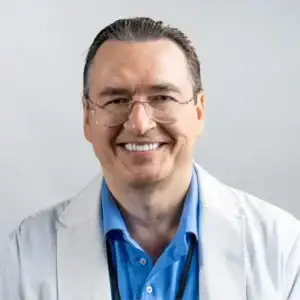
Dr. Rostislav Ignatov, MD
Chief Medical Officer
Pompano Beach is a resilient coastal city of about 114,700 residents. Needs vary across neighborhoods, but a strong local response and countywide safety net make timely, compassionate care possible.
In Broward County, fentanyl remains the most lethal driver of overdose. In 2023, the medical examiner recorded 470 deaths with fentanyl present, including 441 where fentanyl was the cause—underscoring the urgency of evidence-based care and harm reduction. At the same time, lifesaving naloxone (Narcan) has become far more available: EMS administrations rose from 1,180 (2018) to 3,066 (2022), with hundreds more reversals happening before EMS arrival—a sign that community training works. Locally, Pompano Beach Fire Rescue is an ISO Class 1 agency, strengthening citywide emergency response.
This guide shows how to access detox and rehab, medications for addiction treatment (MAT), outpatient therapy, crisis services, and harm-reduction supports in and around Pompano Beach—starting points include the Broward Behavioral Health Coalition (publicly funded services), The Haven Detox – Florida (top addiction and mental health services), and 211 Broward (24/7 navigation). You’re not alone, and help is available today.

CDC’s provisional county counts (12-month periods ending in December) show about 603 deaths in 2021, 659 in 2022, and 538 in 2023—a rise of ~9% from 2021→2022 followed by an 18.4% drop from 2022→2023 (net ~11% decrease over two years). Looking at opioids in 2023 (Medical Examiner District 17 = Broward), fentanyl was detected in 470 deaths and listed as causing 441—most alongside other substances (414 combination vs 27 fentanyl-only); oxycodone appeared in 96 deaths and caused 46, almost entirely in combination (46 combination, 0 oxycodone-only); heroin appeared in 15 deaths and caused 7 (8 present but not causal).
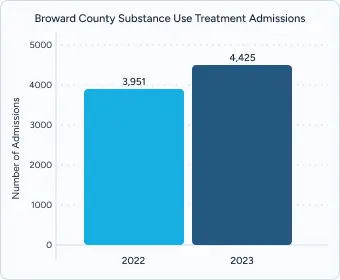
Broward County recorded 4,425 substance use treatment admissions in 2023, a 12% increase from 3,951 in 2022, per United Way of Broward County’s Broward Briefings on treatment admissions. Community engagement continued through mobile naloxone distribution and on-site screenings (e.g., The SPOT mobile clinic). Naloxone use before EMS arrival has risen: 45 (2018), 121 (2019), 234 (2020), 347 (2021), 380 (2022)—increasing from 4% to 11% of all naloxone administrations over that period. Taken together, the data point to increased treatment engagement and stronger overdose response capacity in 2023.

Insurance status is a key access barrier. In 2023, 5.4% of Broward children (<19) and 15.8% of working-age adults (19–64) were uninsured. By race/ethnicity, Black residents (16.8%) faced higher uninsured rates than White (10.2%) or Hispanic/Latino residents (14.3%)—disparities that limit upfront care entry and continuity.
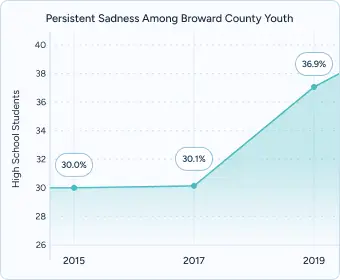
Persistent sadness/hopelessness among Broward County youth: In 2019, 36.9% of Broward County high school students reported feeling so sad or hopeless almost every day for two weeks or more in a row—up from 30.1% in 2017 and 30.0% in 2015.
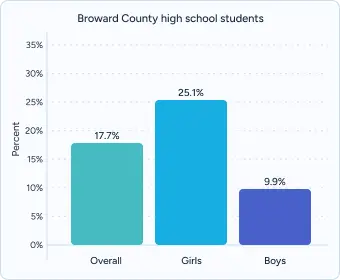
In 2021, 17.7% of Broward County high school students said they seriously considered suicide in the past year—25.1% of girls and 9.9% of boys—showing that young women are at higher risk and that many teens need timely, caring support.
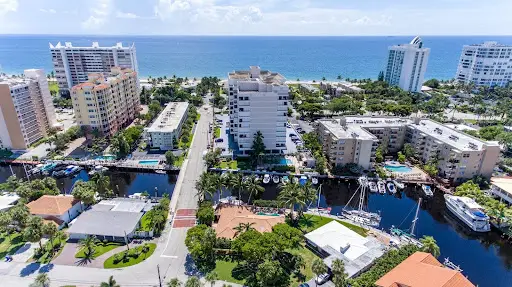
Broward County 211 Helpline serves as the centralized access point for addiction treatment referrals. Available 24/7, callers are connected to detoxification, residential, and outpatient programs, with community health navigators assisting through intake procedures and insurance enrollment.
Mobile Crisis Response Teams and Sheriff’s Co-Responder Units deliver around-the-clock crisis intervention across Pompano Beach. These teams provide on-site stabilization, psychiatric evaluation, and direct linkage to treatment, prioritizing diversion from arrest to care.
Broward County Transit Connections ensure transportation access to all behavioral health facilities. Regular bus service—including paratransit and expanded weekend schedules—links residential neighborhoods such as Westwood Park and Harbordale to key treatment centers via routes 34 and 45.
Florida Medicaid covers medically necessary SUD care—including evaluations, outpatient counseling, and medication-assisted treatment (MAT) such as buprenorphine and naltrexone—as part of behavioral-health medication management. Small copays may apply unless you’re exempt (e.g., $2/day for community behavioral health services).
Broward Health Financial Assistance: Broward Health’s official Financial Assistance Policy offers full charity assistance at ≤200% FPL for emergency/medically necessary care (with nominal copays) and publishes income-based guidelines for reduced charges. Applications and policy documents are available online and in person through Patient Financial Services.
Community Clinics / Sliding-Fee: Department of Health Broward and local FQHCs accept Medicaid/Medicare and offer sliding-fee services; SUD/MAT services are available through the Broward Behavioral Health Coalition provider network. Availability varies by site—call ahead for MAT specifics.
Private facilities eliminate wait times through free insurance verification, comprehensive dual-diagnosis assessment, medical detox availability, and evidence-based therapies including EMDR, family systems therapy, and mindfulness-based relapse prevention.
Private facilities often provide advantages over state-funded programs including:
Insurance processing typically occurs within 48 hours with same-day admission capabilities when clinically appropriate and medically necessary.
The Haven Detox – Florida offers immediate access to evidence-based addiction and mental health treatment serving the Pompano Beach area.
The Florida addiction and mental health treatment facility combines traditional therapies like CBT and DBT with holistic approaches including Reiki, art therapy, yoga, and cutting-edge GeneSight genetic testing to personalize medication selection. With one of the highest staff-to-client ratios in Florida, the facility provides both medical detox and residential treatment in a comfortable, resort-like environment featuring luxury amenities.
Pompano Beach mental health services span key neighborhoods offering specialized support for depression, anxiety, and dual-diagnosis care. Local community behavioral health centers provide culturally competent therapy, trauma-informed programming, and bilingual providers fluent in English, Spanish, and Creole. The Trauma-Informed Care Initiative expanded citywide in 2021, giving residents access to individual and group counseling and handling over 1,200 mobile crisis calls last year.
Neighborhood-specific mental health resources ensure accessibility across Pompano Beach. Westwood Park offers walk-in screenings and weekly support groups with 1,350 counseling sessions per year. Harborplace features culturally responsive group and family therapy, with 950 annual client visits and 24/7 telehealth. Downtown delivers integrated substance abuse and mental health outreach, providing 820 home and community visits in 2024 to connect residents to ongoing services. All resources can be accessed via the Broward County Community Partnerships Provider Directory.
Pompano Beach Peer Connection Center (1501 N Andrews Avenue) offers free, peer-led recovery support groups, one-on-one recovery coaching, and regular sober social events. The center maintains an active online community through Facebook (@PBPeerConnection) and Instagram (@pbpeers), sharing job resources, volunteer opportunities, and calendar updates for all peer-driven activities.
Community Recovery Network – Pompano Beach (520 N Federal Highway) provides specialized peer-led programming for substance use and co-occurring mental health challenges. Services include trauma-responsive counseling, weekend sober outings, and weekly skill-building workshops in life skills, resume writing, and relapse prevention. The facility is fully ADA-accessible and offers bilingual (English/Spanish) groups every evening.
Family & Youth Peer Support at Children’s Services Council (2833 W Hillsboro Boulevard) features family peer specialists who facilitate parent support circles, youth recovery drop-in hours, and teen-focused sober social meetups. Virtual participation options are available via Zoom and on social media channels (@CSCPrBRecovery), ensuring accessibility for families who cannot attend in person.
Recovery Meeting Directory – Broward County Intergroup partners with local venues across Pompano Beach to coordinate over 200 weekly Alcoholics Anonymous and Narcotics Anonymous gatherings. Highlights include the Early Morning Recovery Group at 1000 Powerline Road (7:00 AM), the Newcomers’ Welcome Meeting at 1501 N Andrews Avenue (6:00 PM), and the Women’s Discussion Circle at 870 S Cypress Road (8:00 PM). Transportation assistance and Spanish-language meetings are offered upon request.
FARR-certified recovery residences in Pompano Beach adhere to national standards set by the Florida Association of Recovery Residences (FARR). The FARR directory at farronline.org lists independently inspected homes that provide safe, substance-free environments for individuals in recovery.
Oxford Houses are democratically run, self-supporting sober living homes. Residents share responsibility for rent, utilities, chores, and house governance. Any member who uses alcohol or drugs is immediately expelled, ensuring a rigorously maintained drug-free environment. Oxford Houses in Pompano Beach accommodate 6–15 adults per house, offering long-term stays without a fixed move-out deadline.
Mandy’s House provides a FARR-certified, women-only recovery residence with private and shared rooms in a homelike setting. Services include 1:1 peer mentoring, life-skills workshops, and regular drug testing. Residents participate in house meetings, chore rotations, and nightly check-ins. Social support is bolstered by weekly women’s support circles and guest speaker events.
James Club Recovery offers FARR and MAT-certified sober living for guests engaged in medication-assisted treatment plans. Residences are detached houses with 24/7 staff oversight for secure medication storage and dispensing. Structured programming includes daily recovery meetings, case management check-ins, and coordination with prescribing clinicians. Residents must be actively enrolled in an approved MAT protocol and adhere to house rules regarding curfews, drug testing, and community responsibilities.
The Broward County Intergroup (aabroward.org) coordinates over 300 weekly Alcoholics Anonymous and Narcotics Anonymous meetings throughout Pompano Beach and greater Broward County, with real-time schedule updates on its mobile app. Meetings range from open speaker gatherings and step-study groups to newcomer orientation sessions and LGBTQ+-friendly discussions.
Spanish-Language Meetings serve Pompano Beach’s Latino community at multiple venues, including the Spanish AA Group at 1501 N Andrews Avenue (jueves 7:00 PM) and the Spanish NA Discussion at 1000 Powerline Road (sábado 1:00 PM). An interpreter hotline and bilingual meeting guides are available via the Intergroup website.
Accessibility and Specialty Groups include wheelchair-accessible venues, gender-specific meetings, and trauma-informed sessions for survivors of violence. Early-morning drop-in meetings begin at 6:30 AM weekdays, while late-night “Young Recovery” gatherings cater to ages 18–30 at rotating locations. Transportation assistance can be arranged through the Intergroup’s volunteer network.
Evidence-based approaches are critical for meaningful, lasting recovery. Look for programs that offer:
Availability of MAT is a hallmark of high-quality care. Leading programs integrate FDA-approved medications—buprenorphine (Suboxone), naltrexone (Vivitrol), and methadone—with ongoing counseling and behavioral therapies. According to the 2021 SAMHSA National Survey, over 60 percent of accredited facilities nationwide now offer at least one form of MAT, improving access and outcomes for individuals with opioid or alcohol use disorders.
Culturally competent services ensure everyone feels respected and understood. Seek providers that:
Aftercare coordination should start well before treatment ends, linking clients with outpatient programs, peer support groups, sober living residences, and local community resources. Top Pompano Beach providers maintain active partnerships with area recovery networks—such as Broward County Intergroup and local peer centers—to deliver warm handoffs and seamless transitions to post-treatment care.
Family involvement and support serves a pivotal role in sustained recovery, especially within South Florida’s strong family-oriented cultures. Quality programs offer family educational workshops, multi-family therapy sessions, and bilingual services tailored to diverse populations, ensuring that each client’s home environment becomes an active pillar in their healing journey.
Evidence-based treatment approaches ensure optimal recovery outcomes.
Trauma-Informed Care utilizes EMDR, somatic experiencing, and neurofeedback therapies, with staff maintaining specialized trauma certification and ongoing clinical training in evidence-based interventions.
Alumni Support Networks facilitate long-term recovery through quarterly reunion events, digital peer forums, connecting graduates regionally, and mentorship programs pairing new clients with successful program alumni.
Integrated Support Services include insurance benefits navigation and sliding-scale fee consultations, with dedicated financial advocates and treatment coordinators helping clients access programming without delay.
Professional treatment represents an investment in recovery success, offering immediate access, personalized care, and comprehensive services designed to address the complex nature of addiction and mental health conditions.
Begin your recovery journey with confidential consultation and immediate support.
✓ Free Insurance Verification completes coverage analysis within 24 hours
✓ Same-Day Assessment provides clinical evaluation and treatment recommendations
✓ Expedited Admission offers immediate placement when medically appropriate
Insurance and Benefits Verification confirms coverage details within 48 hours, provides accurate cost estimates for treatment services, emphasizing rapid response and financial clarity for families.
Clinical Assessment and Intake includes same-day mental health evaluations, next-day treatment placement coordination, featuring streamlined processes that minimize delays and support treatment readiness.
Most programs schedule an initial assessment within 48 hours, then connect you with a therapist based on your specific needs and insurance coverage.
Florida Medicaid typically covers individual and group therapy with copays ranging from $0-$75; check your specific plan for eligibility and provider networks.
Yes. Henderson Behavioral Health and community centers offer bilingual peer-support meetings, with Spanish-language facilitators and culturally responsive programming.
Broward County Human Services provides sliding-scale fees and grant-funded treatment; inquire about financial assistance when contacting intake offices directly.
Some programs partner with Broward County Transit and medical transport services to offer free or low-cost transportation vouchers for clients.
Crisis hotlines and mobile response teams operate 24/7—call 988 for immediate mental health support or 954-761-7273 for local crisis intervention.
Yes. Family peer specialists at Children’s Services Council offer confidential coaching and referrals to Al-Anon, family therapy, and intervention services.
Look for centers offering Spanish-language groups, Caribbean community programming, and faith-based support tailored to diverse immigrant communities.
Yes. Broward College offers campus mental health programs, peer-led support circles, and workshops designed specifically for college-aged individuals and emerging adults.
Let’s talk about what’s going on — no judgment. (We’ve been there before ourselves). No one will know you inquired and there is no commitment to call.
24/7 Support
No Commitment
100% Private
There’s no catch. Checking your insurance is simply a way to see what your plan covers — it doesn’t lock you into treatment, notify anyone, or cost you anything. You get answers upfront to decide what makes sense for you.
Protecting your privacy matters! No information or notifications are ever sent to your employer or family — whether you check your insurance online or call. Everything is handled through secure, encrypted systems that meet strict medical privacy laws. You stay in control of your information!
Luckily, most insurance policies cover treatment here. Depending on the healthcare you’ve already had this year, costs could even be zero. Instead of worrying, let’s just find out what your plan covers.
Most likely. We work with major providers like Cigna, Aetna, and United Healthcare, public insurances like Tricare and tribal plans, and even smaller plans like Surest Bind and Harvard Pilgrim. The quickest way to know for sure is to check online or call. It’s a quick, private way to understand what is covered upfront.
Verifying your insurance isn’t a commitment to start treatment — it’s simply a way to see what your options are. Knowing your coverage ahead of time helps you make more informed, confident decisions. It also helps flag a spot, so you’re able to get right in if you ever do decide you’re ready.
You need your policy number to check your specific policy online. If you want general information, just call. You likely have questions beyond insurance anyway. Reaching out now helps you figure out the right fit if or when you’re ready. You don’t have to put off the call until you’re in crisis. Calling is not scary, I promise!