100% Confidential



Fentanyl is a powerful synthetic opioid originally developed for medical use to treat severe pain, especially after surgery or in advanced illness.
Outside of medical settings, illicitly manufactured fentanyl is now widely found in the drug supply and is often mixed into other substances.
In real-world use, fentanyl is commonly found:
Even very small amounts can slow breathing and lead to overdose, which is why fentanyl has become a leading driver of overdose deaths in the United States.
Cychlorphine is a newer synthetic opioid that has recently been identified in overdose cases in the United States. It has already been detected in multiple states, including Tennessee, Texas, Pennsylvania, and California, showing that it is not limited to a single region. ⓘ
Unlike fentanyl, it is not approved for medical use and is typically produced outside of regulated settings, making its strength and composition less consistent. Early data suggest cychlorphine may be significantly more potent than fentanyl, which increases the risk of rapid breathing suppression and overdose. ⓘ
Like fentanyl, it has been found in the drug supply mixed with other substances and individually, making it difficult to detect and increasing the likelihood of unintentional exposure.
Cychlorphine and fentanyl are both synthetic opioids, but they differ in how they appear in the drug supply and the level of risk they carry.
† Based on early in vitro pharmacology data reported by the Center for Forensic Science Research and Education (CFSRE). Real-world effects may vary, and research is still limited. ⓘ
No, it is not possible to tell the difference between cychlorphine and fentanyl based on appearance.
Both substances can be found in powder form, pressed into pills, or mixed into other drugs, often without any visible differences. That means someone may believe they are taking fentanyl or another substance when it actually contains something stronger or entirely different.
Because newer synthetic opioids like cychlorphine are not widely recognized, the risk of unintentional exposure is higher.
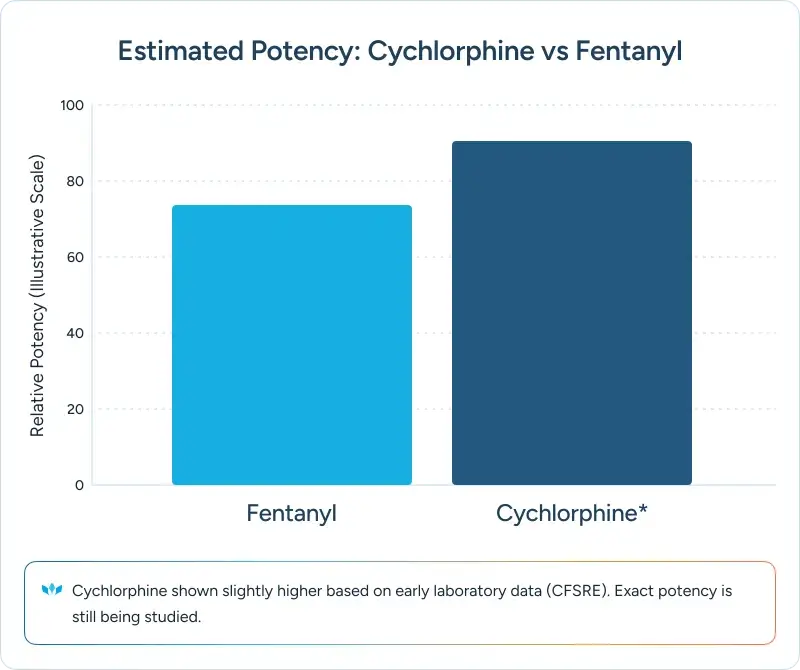
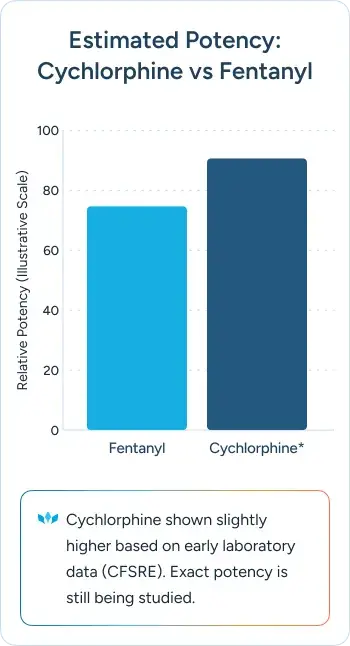
Both fentanyl and cychlorphine are extremely dangerous and can cause fatal overdoses, even in small amounts. Early laboratory data suggest cychlorphine may be around 10 times more potent than fentanyl, which increases the risk that breathing slows or stops very quickly. ⓘ
At the same time, cychlorphine is much newer and less understood. It has already been identified in overdose cases across multiple states, often mixed with other substances or taken without someone realizing it.
Fentanyl is already widespread and highly lethal, but it is at least more recognized. Cychlorphine adds another layer of risk because it is so unfamiliar and unpredictable.
The biggest danger is not just the strength of the drug, but the uncertainty around what is actually in the substance. Someone may believe they are taking fentanyl or another drug, when it may contain something stronger or entirely different. As the drug supply continues to change, that unpredictability is what makes overdose risk higher.
Naloxone (Narcan) can still reverse the effects of both fentanyl and cychlorphine because they act on the same opioid receptors in the brain.
However, stronger synthetic opioids may require multiple doses, and the response may not be immediate. With newer substances like cychlorphine, the potency and duration are less predictable, which can make overdose situations more difficult to manage.
Even if someone responds to naloxone, medical care is still necessary. Breathing can slow again after the medication wears off, so continued monitoring and support are critical.
The difference between fentanyl and newer substances like cychlorphine is not always something you can see.
What matters is how quickly things can change.
Even people with past experience can run into situations where the strength, mixture, or effects are very different from what they expected. That is when the overdose risk increases the most.
Medical detox can help you step out of that cycle safely. Treatment options for opioid use is structured to manage withdrawal, reduce physical stress on the body, and give you space to stabilize before making the next decisions.
If you are unsure how serious the situation is or what kind of help is needed, you can call and talk it through. You will get clear answers about what to expect, what insurance may cover, and what options are available right now.