100% Confidential



7-OH (short for 7-hydroxymitragynine) is a strong compound found in small amounts in the kratom plant. When isolated or concentrated, it acts like a fast-acting opioid, only much stronger than regular kratom powder or tea.
Some estimates indicate it is dozens of times more potent than morphine. This is a powerful chemical compound. The effects are intense, and so are the risks.
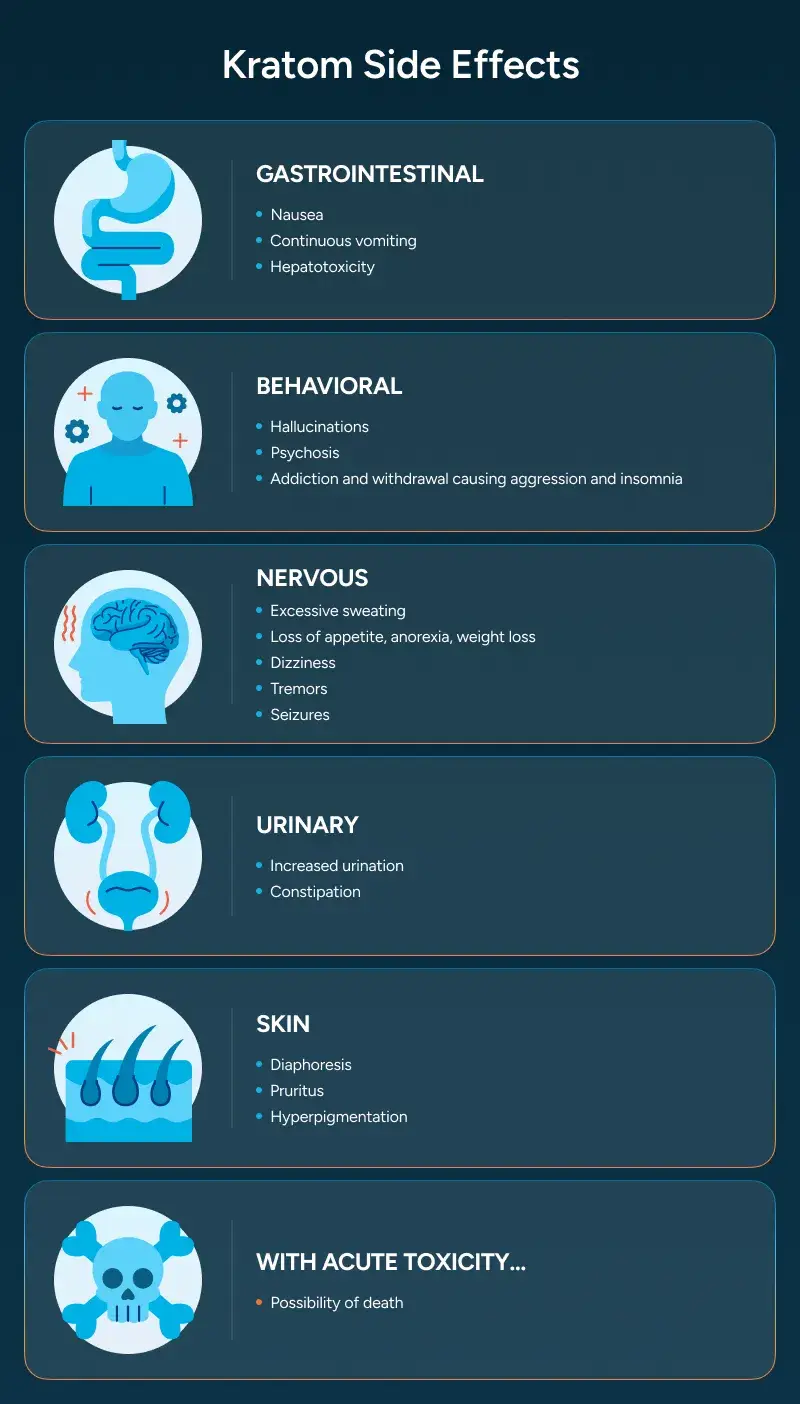
The FDA labeled 7-OH kratom an emerging public health threat. Reported side effects include:
It starts off feeling like relief or focus. But like opioids, the more you use, the more you need. Physical dependence begins exactly this way. Some use it as a way to stop opioid use but it’s ineffective and unsafe.
Kratom products are widely available online and in physical stores. You can find them at gas stations, vape shops, head shops, convenience stores, and online retailers like Kraken Kratom, Kats Botanicals, and Happy Hippo Herbals.
Many sellers market their products as herbal supplements, energy boosters, or mood enhancers. In reality, many of these products, especially gummies and shots, are packed with high concentrations of 7-OH and other extracts.
The packaging is often colorful and appealing, with names like Feel Free, K Shot, or Kratom Bliss. Some even look like candy or energy drinks.
Not all kratom contains high levels of 7-OH. All kratom leaves contain mitragynine, the main active compound. 7-OH is present only in very small amounts in the raw plant, typically less than 2% of the total alkaloid content.
During processing (especially in extracts or concentrates), 7-OH levels increase significantly. These concentrated forms are much more potent and carry a higher risk of addiction and severe side effects.
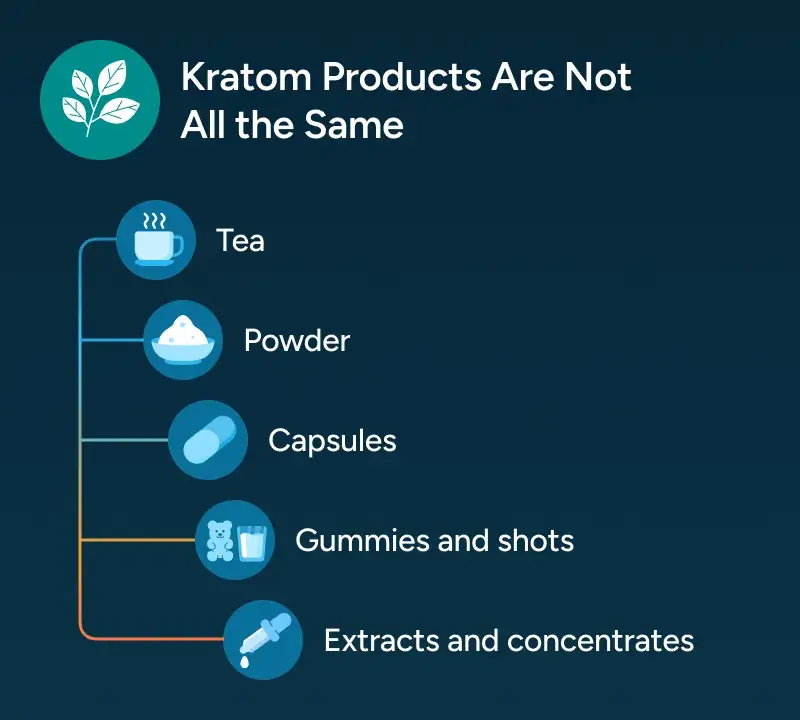
Here is how people consume kratom, from mild to very strong:
Even unprocessed forms like powder and tea cause addiction when used regularly. The 7-OH products, often sold as extracts or drinks, carry far more serious risks in a shorter timeframe.
Familiarity feels safe, but convenience masks the danger. Because kratom comes from a tree, it sounds earthy and harmless. The way it is processed today (especially in concentrated forms) makes it behave exactly like a pharmaceutical drug.
Dr. Ignatov, Medical Director at The Haven Detox Group, sees this pattern in patients who thought kratom was low-risk.
“Kratom addiction can take hold much faster than people expect. Patients are often shocked that something sold as a supplement is now controlling their mood, energy, and daily life.”
Because kratom is legal in many states and sold in common places like gas stations, people underestimate how strong it really is. That convenience leads directly to casual overuse.
You might start with a small dose and feel fine. After a few weeks, your body requires more just to get the same effect. Physical dependence locks in, and stopping becomes incredibly difficult.
Kratom is a tree that grows in Southeast Asia. People in places like Thailand and Malaysia have used its leaves for hundreds of years. Farmers chewed the leaves to feel more awake, reduce pain, and get through long workdays. Kratom was also used as a natural medicine and to help people stop using opium.
In the 1900s, some countries banned it because it acts like a drug and creates dependency. Today, companies sell kratom in the U.S. as a natural product, but medical professionals strongly debate its safety and legality.
The legal status of kratom and 7-OH varies across the United States. It is a patchwork of changing regulations.
States that have banned kratom entirely (including all forms of 7-OH) as of 2025 include Alabama, Arkansas, Indiana, Rhode Island, Vermont, and Wisconsin.
Other states impose specific restrictions:
Most other states allow kratom, though lawmakers introduce new restrictions regularly. Some states adopted the Kratom Consumer Protection Act (KCPA) to regulate product purity, labeling, and sales to minors.
Legal does not mean safe. Even in states with the KCPA, regulators struggle to monitor products. Manufacturers mislabel products or fail to test them, and many contain dangerous levels of 7-OH. Without clear dosage guidelines or consistent quality, regular kratom use turns into a physical trap.
If you or someone you know uses kratom regularly, watch for these signs of physical and psychological dependence:
These are clear medical signs of dependence. They mean it is time to reach out for clinical support.
Kratom addiction can feel confusing because it often starts with something sold as natural or harmless. You may have used it for energy, pain, anxiety, or just to get through the day. That does not mean you failed. It means your body adapted to a substance that can create real physical dependence.
If kratom is controlling your mood, energy, sleep, or ability to function, medical support can make stopping safer and more comfortable. The Haven Detox Group provides private, medically supervised detox with 24/7 physician oversight, substance use and mental health support, and Joint Commission Gold Seal accredited care.
Treatment is covered by many insurance plans, including major commercial plans and Medicaid where available. Call admissions 24/7 to ask questions, check coverage, and find out what getting help could look like today.