
Dr. Rostislav Ignatov, MD
Chief Medical Officer
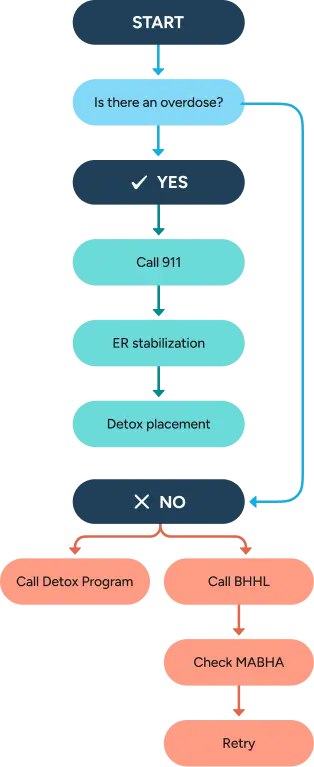
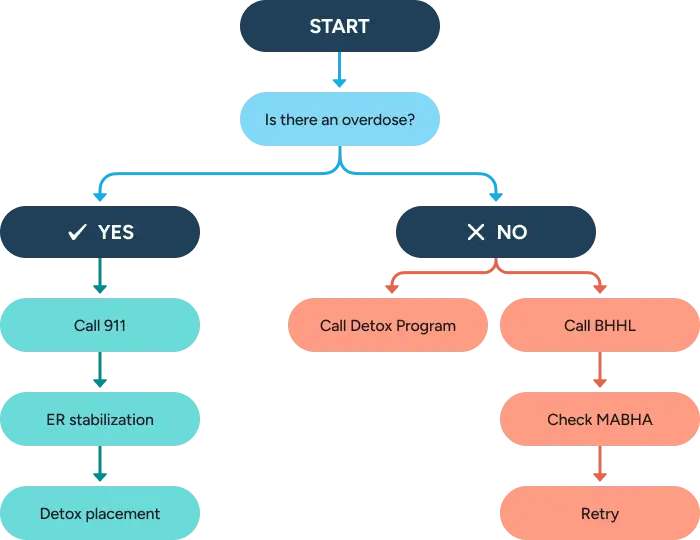
Getting someone into detox in Massachusetts can feel overwhelming, especially when withdrawal or safety concerns are involved. Families often need clear steps to get someone into detox fast and understand how Massachusetts detox admissions really work. This guide explains the fastest path to same-day detox, including when to call 911, how to contact a detox Massachusetts program directly, and which statewide resources can help when time matters.
Key Points:
If someone is unconscious, not breathing well, or showing signs of overdose, call 911 right away. In Massachusetts, emergency responders are trained to handle overdose situations quickly, and calling 911 is the safest way to get immediate overdose help. Overdose can look different depending on the substance, but common warning signs include:
Opioids
Alcohol
Stimulants
If you see any of these, call 911 immediately.
Tell responders about any substances used so they can choose the right medical care. In Massachusetts, the Good Samaritan Law protects you from arrest for personal-use possession when you call for help. Emergency departments can medically stabilize the person and often coordinate direct transfers to an Acute Treatment Services (ATS) detox program once the patient is safe.
Calling a detox program directly is usually the quickest way to secure a same-day admission. Facilities can give you real-time bed availability, ask the right screening questions, and tell you whether the person can come in immediately or needs medical clearance at the ER first as part of typical Massachusetts detox admissions.
The admissions specialist will ask a few brief questions for the detox intake screening, usually taking less than 10 minutes. They may ask about:
You don’t need perfect details — the goal is simply to determine what’s safest and guide you to the next step.
For the fastest placement and immediate insurance verification, call The Haven Detox – New England for 24/7 same-day detox admissions offered through our medical detox in Massachusetts program.
24/7 Admissions: (561) 328-8627
Location: Worcester, MA
Insurance: MassHealth + many commercial plans
Many families also look for more detail about Massachusetts detox center settings, levels of care, and what to expect during admission.
Some families want help comparing statewide detox resources in Massachusetts, reviewing bed status across the state, or deciding whether detox, the ER, or crisis stabilization is safest. These two statewide tools can support you in your search for detox.
The BHHL is a 24/7 statewide resource for people experiencing mental health or substance use concerns.
BHHL Phone: 833-773-2445
MABHA is the state’s public directory for behavioral health services, including ATS detox Massachusetts programs.
Website: mhac.org
Insurance review often influences how quickly a bed can be offered.
Listings are updated manually and may not reflect real-time status. Bed availability often changes after morning or afternoon discharges.
MABHA works best as an overview tool. Always call programs directly, because bed status can change throughout the day.
Sometimes detox programs are full, a person may need ER medical clearance for detox, or they may be unwilling to go, which can create real detox barriers for families. When this happens, Massachusetts has several steps to take when detox is full so the process doesn’t stall.
You may need ER clearance for detox in Massachusetts programs. Some detox programs may ask you to visit a local emergency department before admission if symptoms appear unsafe or unclear. The ER can:
This step is only needed when the detox team believes medical monitoring may be required first.
Mobile crisis teams help when someone is refusing detox, fearful of leaving home, or showing concerning behavior that isn’t a 911 emergency. They provide Massachusetts mobile crisis detox support, which can be essential when you’re trying to figure out how to get someone into detox who refuses.
Access via BHHL: 833-773-2445
Mobile crisis doesn’t replace calling detox programs directly, but it can make the process easier when someone is hesitant or overwhelmed.
Having insurance information available can speed up admission. Most detox programs — including those that accept MassHealth and provide MassHealth detox coverage — use this information to verify insurance for detox in Massachusetts and explain any out-of-pocket costs.
Admissions teams use this information to verify benefits quickly and explain any out-of-pocket costs.
Getting someone into detox quickly can feel overwhelming, but you don’t have to navigate it alone. The Haven Detox – New England offers immediate support, real-time bed checks, and 24/7 admissions so you can get help right away.
Call now: (561) 328-8627

Yes. Many detox programs in Massachusetts offer same-day admission when a bed is available and the person is medically safe to enter detox. A quick screening over the phone helps determine whether they can come in immediately or need ER clearance first. Calling a detox program directly is usually the fastest way to secure a same-day placement.
Yes. Detox (ATS) is a short-term medical service focused on stabilizing withdrawal. While many people continue to residential or outpatient treatment afterward, it isn’t required to be admitted. Staff will still discuss next-step options, but the stay itself is limited to withdrawal management.
Most ATS stays last 3–7 days, depending on the substances used, withdrawal severity, and the person’s medical needs. Some stays may be slightly shorter or longer. The goal is to complete withdrawal safely and transition the person to the appropriate next level of care.
Yes. Family can provide information during the first phone call, help gather insurance details, assist with transportation, and stay involved in planning next steps. Once the person is admitted, communication may depend on privacy laws and the client’s consent.
Many programs can admit someone who is intoxicated as long as they are medically stable, but some may require ER evaluation first. If the person is unable to stay awake, has unstable vitals, or is at risk of alcohol/benzo withdrawal complications, detox will likely ask for hospital clearance before admission.
Yes — but only for specific medical or safety reasons. Programs may redirect someone to the ER if withdrawal appears medically unstable, if they need psychiatric stabilization first, or if the detox census is full. In these cases, staff will usually advise you on the next safest option.
Some detox programs help coordinate transportation when appropriate, especially if the person cannot safely drive or does not have access to reliable transportation. Availability varies by program, so it’s best to ask during the first call.
Yes. Detox is voluntary in Massachusetts unless someone is admitted under a court order (Section 35). Patients can choose to leave early, though staff will discuss risks and help plan a safe discharge if withdrawal is not yet complete.
Polysubstance use is extremely common, and ATS programs are equipped to manage withdrawal from multiple substances at once. Medical staff assess which withdrawal syndrome is most dangerous and tailor medication accordingly.
Get answers about your cost / coverage now.
Your information will be kept private
24/7 Support
No Commitment
100% Private
There’s no catch. Checking your insurance is simply a way to see what your plan covers — it doesn’t lock you into treatment, notify anyone, or cost you anything. You get answers upfront to decide what makes sense for you.
Protecting your privacy matters! No information or notifications are ever sent to your employer or family — whether you check your insurance online or call. Everything is handled through secure, encrypted systems that meet strict medical privacy laws. You stay in control of your information!
Luckily, most insurance policies cover treatment here. Depending on the healthcare you’ve already had this year, costs could even be zero. Instead of worrying, let’s just find out what your plan covers.
Most likely. We work with major providers like Cigna, Aetna, and United Healthcare, public insurances like Tricare and tribal plans, and even smaller plans like Surest Bind and Harvard Pilgrim. The quickest way to know for sure is to check online or call. It’s a quick, private way to understand what is covered upfront.
Verifying your insurance isn’t a commitment to start treatment — it’s simply a way to see what your options are. Knowing your coverage ahead of time helps you make more informed, confident decisions. It also helps flag a spot, so you’re able to get right in if you ever do decide you’re ready.
You need your policy number to check your specific policy online. If you want general information, just call. You likely have questions beyond insurance anyway. Reaching out now helps you figure out the right fit if or when you’re ready. You don’t have to put off the call until you’re in crisis. Calling is not scary, I promise!