What the Opioid Crisis Costs You and Your Family
The Statewide Impact Is Large, but the Personal Impact Is Larger
The 145 billion dollar estimate represents statewide expenses connected to opioid use disorder. The parts that matter most to families are much smaller but far more disruptive. These include:
- Emergency room bills
- Missed work and lost income
- Paying for transportation, housing, or childcare during treatment attempts
- Legal fees
- Emotional exhaustion and stress on relationships
Families often describe the experience as living on high alert. Even on calmer days, the fear of another crisis is always present.
Why Costs Add Up So Quickly
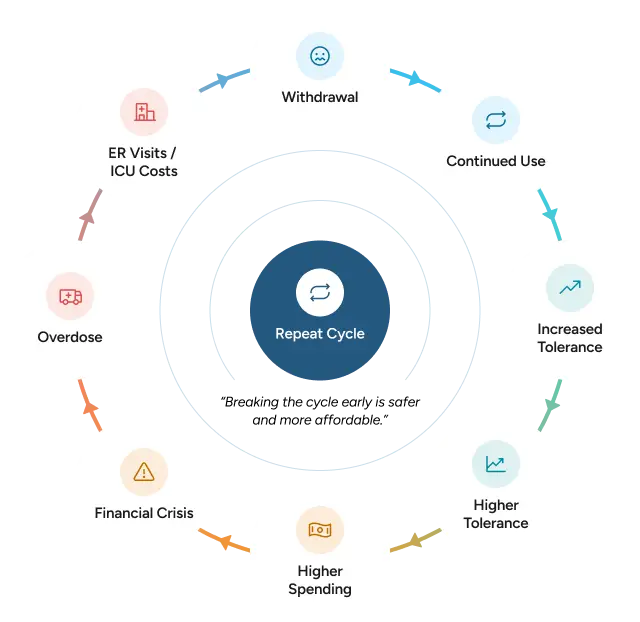
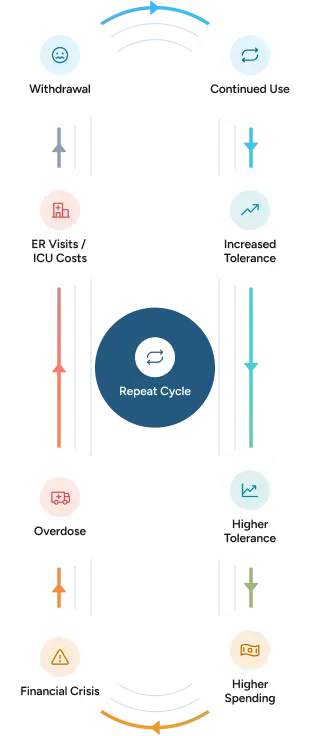
Opioid use creates a cycle that becomes more expensive over time:
- Withdrawal creates intense discomfort, which often leads to continued use.
- Continued use raises the risk of overdose.
- Overdose leads to 911 calls, hospital admissions, and ICU stays.
- Each crisis increases financial pressure and emotional strain.
Breaking this cycle early is safer and more affordable than trying to rebuild after months or years of emergencies.
The Rising Cost of Opioid Use Itself
Statewide numbers show the scale of the opioid crisis, but the financial pressure created by daily opioid use is something families feel long before a medical emergency occurs. Even when someone believes they are managing their use, the cost grows quickly and touches every part of life.
Opioids Are Expensive Even When Someone Feels in Control
Tolerance increases over time, which means the amount needed grows. What once felt manageable becomes more costly each week.
You may already be seeing:
- Paychecks gone before essential bills are paid
- Borrowing money that cannot be repaid
- Missed rent or mortgage payments
- Selling personal belongings
- Savings drained to avoid withdrawal
- Money intended for necessities being diverted to opioids
If you are the one struggling, you may already know the anxiety that comes when money runs out while cravings continue.
“Breaking the cycle early is safer and
more affordable.”
Fentanyl Creates Even Faster Financial Damage
People sometimes believe fentanyl reduces costs because it may be cheaper to purchase. In reality, fentanyl often increases spending because:
- Tolerance rises at a faster rate
- More frequent use is required to avoid withdrawal
- Cravings intensify
- The risk of overdose increases, which leads to hospital bills and missed work
This creates a cycle that accelerates financial strain.
Detox Stops the Financial Bleeding Before the Crisis Deepens
One immediate benefit of entering detox is the halt to daily spending on opioids. Once withdrawal is safely managed, the financial drain slows. Many families describe detox as the first moment they felt they could regain control.
Detox gives you a safe place to stabilize and step out of the cycle that keeps getting more expensive, and many people begin that process through a detox in Massachusetts program that feels structured and supportive.
Why Early Detox Matters
If you are unsure whether detox is needed now, that uncertainty is usually a sign that it is time. Early detox prevents many of the most dangerous parts of opioid use disorder and gives you a stable foundation for the next stage of care.
Detox Keeps You Safe During Withdrawal
Opioid withdrawal is rarely medically dangerous in the same way alcohol withdrawal can be. However, detoxing alone is extremely uncomfortable. Many people return to using opioids simply to stop the physical distress.
A supervised detox provides:
- Comfort medication that reduces withdrawal symptoms
- Monitoring at all hours
- A private space where you can rest and stabilize
- A pause from stressful environments and triggers
- A safe transition into long-term treatment
When withdrawal becomes manageable, the rest of treatment becomes possible.
Detox Creates an Opportunity to Start Medication Treatment
The most effective treatments for opioid use disorder are medications such as buprenorphine. These medications lower overdose risk and help people regain control over cravings.
People who begin medication treatment early experience better outcomes, including:
- Fewer overdoses
- Fewer emergency room visits
- Lower risk of returning to use
- Greater stability in daily life
The timing of opioid detox matters because it allows medications to begin at the right moment.
Detox Helps Address Mental Health Needs Early
Many people experiencing opioid use disorder are also coping with depression, anxiety, trauma, or chronic pain. These conditions make recovery harder. Early treatment of mental health symptoms creates a stronger and more sustainable foundation.
A strong detox near me program evaluates mental health needs right away and provides a plan that does not leave you or your family trying to figure things out alone.
The Financial Benefits of Entering Detox Early
Detox is not only about stopping opioid use. It is also about preventing the events that drain a family’s savings, stability, and emotions.
Early Detox Reduces Emergency Healthcare Costs
A single overdose can result in:
- Ambulance transport
- Emergency department treatment
- Intensive care monitoring
- Time away from work for the patient and family members
Entering detox early significantly reduces the likelihood of these emergencies.
Early Detox Protects Long-Term Health
Delaying treatment increases the risk of infections and medical complications. These conditions often require long hospital stays and cost thousands of dollars. Early detox helps prevent these problems before they start.
Early Opioid Detox Lowers Emotional Costs for the Entire Family
Families often describe the early stages of treatment as the first time they felt a sense of relief. There is a shift from constant crisis to a period of stability that allows everyone to breathe and begin to rebuild trust.
What Early Detox Looks Like at The Haven Detox Massachusetts
When you are trying to help someone immediately or when you need help yourself, the environment and approach of the detox program matter. The Haven Detox in Massachusetts is designed to meet those needs with stability, compassion, and medical expertise.
Continuous Medical Monitoring
You are never left to manage withdrawal alone. Nurses and medical staff monitor you around the clock and adjust comfort medications when needed. This is especially important for anyone who has been using fentanyl, which often causes more intense withdrawal.
A Comfortable and Private Setting
Detox is a vulnerable experience. With one of the lowest patient-to-staff ratios in the state, the calm environment helps you rest, think clearly, and begin to regain confidence.
Medication Support for Withdrawal Management and Mental Health
Medication-assisted treatment can begin at the appropriate time to reduce cravings, lower overdose risk, and support long-term recovery. When mental health symptoms are part of what you are facing, GeneSight testing helps your clinicians understand which psychiatric medications may work best for you and which are more likely to cause side effects. This makes your overall treatment plan more personalized and easier to tolerate as you stabilize.
Mental Health and Co-occurring Disorders Support from the Start
The team screens for depression, anxiety, bipolar disorder, trauma, and other mental health conditions. This allows you to understand why you are using and receive care that does more than manage the surface symptoms.
A Clear Plan for the Next Steps
Before discharge, you receive a personalized plan for what comes after detox. This might include:
You will not leave without support for the next stage.
When You Should Ask for Help
It is time to call if:
- Withdrawal symptoms are affecting daily life
- Overdoses have happened or nearly happened
- Mood or mental health symptoms are intense
- Family routines are falling apart
- You feel unsafe or overwhelmed
- You want to stop but cannot do it alone
There is no reason to wait for another crisis. Detox can begin sooner than you think.
Take the First Step Today
The opioid crisis has already taken too much from individuals and families across Massachusetts. Early detox can break the cycle and create a path to safety and stability. The Haven Detox in Massachusetts offers medical care, emotional support, and a clear plan that guides you into the next stage of treatment.
Whether you are reaching out for yourself or for someone you love, this can be the moment that brings relief and direction. The admissions team can help you understand your options and begin the process today.
Frequently Asked Questions
How do I know when detox is actually necessary?
Detox becomes necessary when withdrawal symptoms, cravings, or daily instability feel hard to control on your own. You may notice that work, school, or relationships are slipping. You may also see that you are using more than you intended or that stopping by yourself feels impossible. If there have been nonfatal overdoses, rapid tolerance increases, or worsening mental health symptoms, supervised detox is the safest option.
What happens if someone refuses treatment but clearly needs it?
Many families face this situation. You cannot force an adult into detox unless there is a court order, but there are ways to encourage change. This can include setting clear boundaries at home, limiting access to money that fuels use, and talking openly about overdose risk. Treatment providers can also guide you on how to approach the conversation in a way that lowers fear and defensiveness.
What is the difference between detox and long-term treatment?
Detox helps you get through withdrawal safely. Long-term treatment helps you understand why you use and what you need to stay stable. After detox, most people move to residential treatment, outpatient care, medication support, or therapy. Detox prepares your body and mind so the deeper emotional and behavioral work can begin.
Can mental health symptoms get worse during detox?
Yes, this can happen. As your body adjusts to the absence of opioids, feelings like anxiety, irritability, sadness, or restlessness may intensify. This is temporary. The clinical team monitors both physical and emotional symptoms and adjusts your care plan as needed. Many people find that detox is the first time their emotional symptoms finally make sense.
How long does opioid detox usually take?
Most people stay in detox for five to seven days. The length of stay depends on the type of opioids used, the presence of fentanyl, mixing substances, and any medical or psychiatric needs. Some people need more time for stabilization. The goal is to help you feel safe and clear-headed enough to move into the next level of care.
What if I want treatment but I am worried about missing work or responsibilities at home?
Many people hesitate to enter detox because they are afraid of losing their job or falling behind at home. The Haven Detox Group can guide you through options like FMLA and can provide the paperwork needed to protect your job during medical leave. The stay is also short, which makes it easier to adjust schedules, arrange childcare, or plan for a few days away from home.


 100% Confidential