


 100% Confidential


When someone you care about is struggling with opioid use, the situation takes over every part of your life. You may be trying to hold things together at home, at work, and within your family, while also carrying the constant fear that something could go wrong at any moment. If you are the one struggling, you might already feel the weight of withdrawal, cravings, unstable routines, and a growing sense that life is getting harder to manage.
Massachusetts continues to face one of the most significant opioid crises in the country. In 2024, the economic impact was estimated at nearly 145 billion dollars. This number includes hospital costs, emergency responses, lost productivity, disability, and early death. What it does not capture is the emotional cost that families feel every single day. The worry that this time could be too much and the tension in the home are hard enough on their own, especially when you keep hoping that tomorrow will finally be the day you can quit.
You do not need to wait for the situation to become worse. Early drug detox can change the direction of this crisis for you or a loved one.



Key Points:
The 145 billion dollar estimate represents statewide expenses connected to opioid use disorder. The parts that matter most to families are much smaller but far more disruptive. These include:
Families often describe the experience as living on high alert. Even on calmer days, the fear of another crisis is always present.
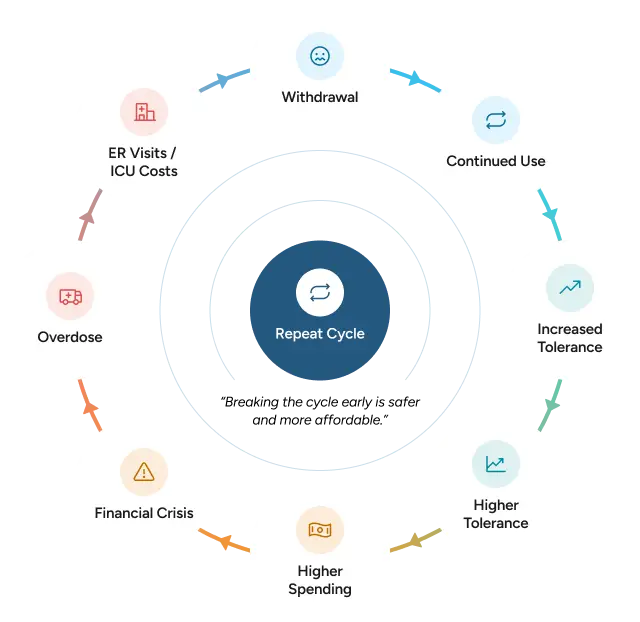
Opioid use creates a cycle that becomes more expensive over time:
Breaking this cycle early is safer and more affordable than trying to rebuild after months or years of emergencies.
Statewide numbers show the scale of the opioid crisis, but the financial pressure created by daily opioid use is something families feel long before a medical emergency occurs. Even when someone believes they are managing their use, the cost grows quickly and touches every part of life.
Tolerance increases over time, which means the amount needed grows. What once felt manageable becomes more costly each week.
You may already be seeing:
If you are the one struggling, you may already know the anxiety that comes when money runs out while cravings continue.
People sometimes believe fentanyl reduces costs because it may be cheaper to purchase. In reality, fentanyl often increases spending because:
This creates a cycle that accelerates financial strain.
One immediate benefit of entering detox is the halt to daily spending on opioids. Once withdrawal is safely managed, the financial drain slows. Many families describe detox as the first moment they felt they could regain control.
Detox gives you a safe place to stabilize and step out of the cycle that keeps getting more expensive, and many people begin that process through a detox in Massachusetts program that feels structured and supportive.
If you are unsure whether detox is needed now, that uncertainty is usually a sign that it is time. Early detox prevents many of the most dangerous parts of opioid use disorder and gives you a stable foundation for the next stage of care.
Opioid withdrawal is rarely medically dangerous in the same way alcohol withdrawal can be. However, detoxing alone is extremely uncomfortable. Many people return to using opioids simply to stop the physical distress.
A supervised detox provides:
When withdrawal becomes manageable, the rest of treatment becomes possible.
The most effective treatments for opioid use disorder are medications such as buprenorphine. These medications lower overdose risk and help people regain control over cravings.
People who begin medication treatment early experience better outcomes, including:
The timing of opioid detox matters because it allows medications to begin at the right moment.
Many people experiencing opioid use disorder are also coping with depression, anxiety, trauma, or chronic pain. These conditions make recovery harder. Early treatment of mental health symptoms creates a stronger and more sustainable foundation.
A strong detox near me program evaluates mental health needs right away and provides a plan that does not leave you or your family trying to figure things out alone.
Detox is not only about stopping opioid use. It is also about preventing the events that drain a family’s savings, stability, and emotions.
A single overdose can result in:
Entering detox early significantly reduces the likelihood of these emergencies.
Delaying treatment increases the risk of infections and medical complications. These conditions often require long hospital stays and cost thousands of dollars. Early detox helps prevent these problems before they start.
Families often describe the early stages of treatment as the first time they felt a sense of relief. There is a shift from constant crisis to a period of stability that allows everyone to breathe and begin to rebuild trust.
When you are trying to help someone immediately or when you need help yourself, the environment and approach of the detox program matter. The Haven Detox in Massachusetts is designed to meet those needs with stability, compassion, and medical expertise.
You are never left to manage withdrawal alone. Nurses and medical staff monitor you around the clock and adjust comfort medications when needed. This is especially important for anyone who has been using fentanyl, which often causes more intense withdrawal.
Detox is a vulnerable experience. With one of the lowest patient-to-staff ratios in the state, the calm environment helps you rest, think clearly, and begin to regain confidence.
Medication-assisted treatment can begin at the appropriate time to reduce cravings, lower overdose risk, and support long-term recovery. When mental health symptoms are part of what you are facing, GeneSight testing helps your clinicians understand which psychiatric medications may work best for you and which are more likely to cause side effects. This makes your overall treatment plan more personalized and easier to tolerate as you stabilize.
The team screens for depression, anxiety, bipolar disorder, trauma, and other mental health conditions. This allows you to understand why you are using and receive care that does more than manage the surface symptoms.
Before discharge, you receive a personalized plan for what comes after detox. This might include:
You will not leave without support for the next stage.
It is time to call if:
There is no reason to wait for another crisis. Detox can begin sooner than you think.
The opioid crisis has already taken too much from individuals and families across Massachusetts. Early detox can break the cycle and create a path to safety and stability. The Haven Detox in Massachusetts offers medical care, emotional support, and a clear plan that guides you into the next stage of treatment.
Whether you are reaching out for yourself or for someone you love, this can be the moment that brings relief and direction. The admissions team can help you understand your options and begin the process today.