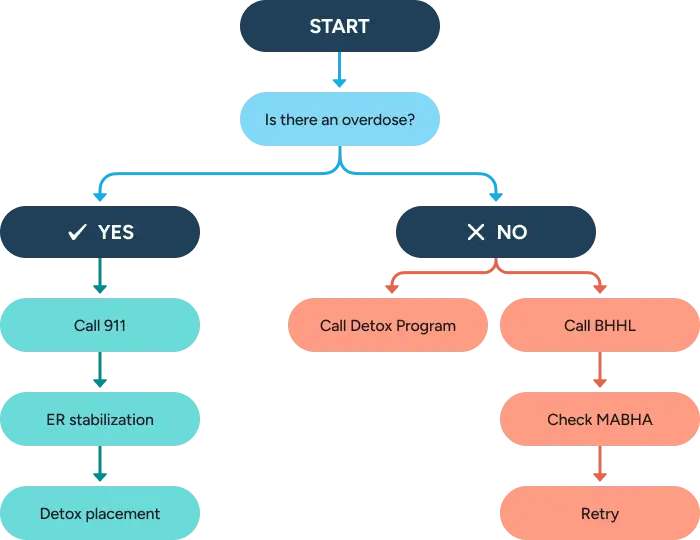
If There Is an Overdose or Immediate Medical Risk, Call 911
If someone is unconscious, not breathing well, or showing signs of overdose, call 911 right away. In Massachusetts, emergency responders are trained to handle overdose situations quickly, and calling 911 is the safest way to get immediate overdose help. Overdose can look different depending on the substance, but common warning signs include:
Opioid overdose signs:
- Slow, shallow, or stopped breathing
- Blue or gray lips or fingertips
- Pinpoint pupils
- Limp body or inability to wake up
- Gurgling, snoring, or choking sounds
Alcohol or sedative overdose signs:
- Vomiting while unconscious
- Slow heart rate
- Cold, clammy skin
- Seizures
- Confusion, hallucinations, or inability to stay awake
Stimulant overdose (cocaine, meth) signs:
- Chest pain
- Extreme agitation or panic
- Very high body temperature
- Irregular heartbeat
- Seizures or loss of consciousness
If you see any of these, call 911 immediately.
Tell responders about any substances used so they can choose the right medical care. In Massachusetts, the Good Samaritan Law protects you from arrest for personal-use possession when you call for help. Emergency departments can medically stabilize the person and often coordinate direct transfers to an Acute Treatment Services (ATS) detox program once the patient is safe.
Call a Detox Program Directly for the Fastest Placement
Calling a detox program directly is usually the quickest way to secure a same-day admission. Facilities can give you real-time bed availability, ask the right screening questions, and tell you whether the person can come in immediately or needs medical clearance at the ER first as part of typical Massachusetts detox admissions.
What to Expect When You Call
The admissions specialist will ask a few brief questions for the detox intake screening, usually taking less than 10 minutes. They may ask about:
- Substances used and the time of last use
- Current withdrawal symptoms
- Medical conditions or medications
- Mental health concerns such as anxiety, confusion, or suicidal thoughts
- Insurance information
You don’t need perfect details — the goal is simply to determine what’s safest and guide you to the next step.
“Breaking the cycle early is safer and
more affordable.”
Get Help Now: The Haven Detox – New England
For the fastest placement and immediate insurance verification, call The Haven Detox – New England for 24/7 same-day detox admissions offered through our medical detox in Massachusetts program.
24/7 Admissions: (561) 328-8627
Location: Worcester, MA
Insurance: MassHealth + many commercial plans
How the Admissions Team Helps
- Get same-day detox admission help
- Confirms whether direct admission or ER clearance is appropriate
- Verifies insurance in minutes
- Supports you if the person is resistant or unsure
- Helps plan next steps if beds are limited
Why Families Choose The Haven Detox – New England
Many families also look for more detail about Massachusetts detox center settings, levels of care, and what to expect during admission.
Massachusetts Statewide Detox Resources: BHHL and MABHA
Some families want help comparing statewide detox resources in Massachusetts, reviewing bed status across the state, or deciding whether detox, the ER, or crisis stabilization is safest. These two statewide tools can support you in your search for detox.
Massachusetts Behavioral Health Help Line Detox Support (BHHL)
The BHHL is a 24/7 statewide resource for people experiencing mental health or substance use concerns.
BHHL Phone: 833-773-2445
How the BHHL Can Support You
- Searches for statewide detox (ATS) availability
- Helps decide whether detox, ER care, or stabilization is most appropriate
- Connects you to local mobile crisis teams
- Explains how different detox programs operate in Massachusetts
When the BHHL Is Most Helpful
- You want to compare multiple detox programs quickly
- You’re unsure whether ER medical clearance is needed
- The person is in crisis but not ready to enter detox
- Detox programs you’ve called are full or not answering
Massachusetts Behavioral Health Access (MABHA)
MABHA is the state’s public directory for behavioral health services, including ATS detox Massachusetts programs.
Website: mhac.org
How to Use MABHA
1
Select “Search for Services.”
2
Choose “Acute Treatment Services (ATS).”
3
Review listings labeled:
- Open – beds likely available
- Limited – call to confirm
- Waitlist – beds may open later in the day
Insurance review often influences how quickly a bed can be offered.
Important Notes
Listings are updated manually and may not reflect real-time status. Bed availability often changes after morning or afternoon discharges.
MABHA works best as an overview tool. Always call programs directly, because bed status can change throughout the day.
What to Do When Someone Can’t Go Directly Into Detox
Sometimes detox programs are full, a person may need ER medical clearance for detox, or they may be unwilling to go, which can create real detox barriers for families. When this happens, Massachusetts has several steps to take when detox is full so the process doesn’t stall.
If Detox Recommends Medical Clearance, Go to the ER
You may need ER clearance for detox in Massachusetts programs. Some detox programs may ask you to visit a local emergency department before admission if symptoms appear unsafe or unclear. The ER can:
- Stabilize medical concerns
- Rule out complications
- Arrange a direct transfer to detox once the person is cleared
This step is only needed when the detox team believes medical monitoring may be required first.
Use Mobile Crisis Services If the Person Won’t Go Voluntarily
Mobile crisis teams help when someone is refusing detox, fearful of leaving home, or showing concerning behavior that isn’t a 911 emergency. They provide Massachusetts mobile crisis detox support, which can be essential when you’re trying to figure out how to get someone into detox who refuses.
Access via BHHL: 833-773-2445
Mobile Crisis Teams Can:
- Meet the person at home or another safe place
- Talk with them calmly and assess symptoms
- Help determine whether detox is appropriate
- Recommend ER evaluation if safety is a concern
- Coordinate next steps, including detox referrals
Mobile crisis doesn’t replace calling detox programs directly, but it can make the process easier when someone is hesitant or overwhelmed.
Have Insurance Information Ready (Most Programs Accept MassHealth)
Having insurance information available can speed up admission. Most detox programs — including those that accept MassHealth and provide MassHealth detox coverage — use this information to verify insurance for detox in Massachusetts and explain any out-of-pocket costs.
- Insurance ID
- Date of birth
- Plan type
Admissions teams use this information to verify benefits quickly and explain any out-of-pocket costs.
Start With The Haven Detox – New England
Getting someone into detox quickly can feel overwhelming, but you don’t have to navigate it alone. The Haven Detox – New England offers immediate support, real-time bed checks, and 24/7 admissions so you can get help right away.
Call now: (561) 328-8627
FAQ: Getting Someone Into Detox Quickly in Massachusetts
Can someone get into detox the same day in Massachusetts?
Yes. Many detox programs in Massachusetts offer same-day admission when a bed is available and the person is medically safe to enter detox. A quick screening over the phone helps determine whether they can come in immediately or need ER clearance first. Calling a detox program directly is usually the fastest way to secure a same-day placement.
Can someone go to detox without wanting to stay longer-term?
Yes. Detox (ATS) is a short-term medical service focused on stabilizing withdrawal. While many people continue to residential or outpatient treatment afterward, it isn’t required to be admitted. Staff will still discuss next-step options, but the stay itself is limited to withdrawal management.
How long does detox usually last in Massachusetts?
Most ATS stays last 3–7 days, depending on the substances used, withdrawal severity, and the person’s medical needs. Some stays may be slightly shorter or longer. The goal is to complete withdrawal safely and transition the person to the appropriate next level of care.
Can family members be involved in the detox admission process?
Yes. Family can provide information during the first phone call, help gather insurance details, assist with transportation, and stay involved in planning next steps. Once the person is admitted, communication may depend on privacy laws and the client’s consent.
Do detox programs accept people who are drunk when they arrive?
Many programs can admit someone who is intoxicated as long as they are medically stable, but some may require ER evaluation first. If the person is unable to stay awake, has unstable vitals, or is at risk of alcohol/benzo withdrawal complications, detox will likely ask for hospital clearance before admission.
Can someone be turned away from detox?
Yes — but only for specific medical or safety reasons. Programs may redirect someone to the ER if withdrawal appears medically unstable, if they need psychiatric stabilization first, or if the detox census is full. In these cases, staff will usually advise you on the next safest option.
Is transportation provided to detox?
Some detox programs help coordinate transportation when appropriate, especially if the person cannot safely drive or does not have access to reliable transportation. Availability varies by program, so it’s best to ask during the first call.
Can a person leave detox early?
Yes. Detox is voluntary in Massachusetts unless someone is admitted under a court order (Section 35). Patients can choose to leave early, though staff will discuss risks and help plan a safe discharge if withdrawal is not yet complete.
What if the person is using multiple substances?
Polysubstance use is extremely common, and ATS programs are equipped to manage withdrawal from multiple substances at once. Medical staff assess which withdrawal syndrome is most dangerous and tailor medication accordingly.


 100% Confidential