


 100% Confidential


Cychlorphine is a synthetic opioid, meaning it is made in a lab rather than derived from natural sources like morphine.
It belongs to a group of highly potent opioids that act on the brain’s mu-opioid receptors. These receptors control pain, reward, and breathing. When activated, they can create strong pain relief and euphoria, but they also slow down the body’s breathing.
Cychlorphine is not approved for medical use in the United States and is considered an emerging substance in the illicit drug supply. It has only recently been identified in toxicology reports and drug testing, which means there is still limited clinical research available.
Because it is new and not well-studied, much of what is known comes from early forensic data and comparisons to similar synthetic opioids.
Cychlorphine does not have a consistent or recognizable appearance.
It may be found as:
In many cases, it cannot be identified by sight alone, especially when combined with other drugs.
At this time, there is no widely recognized street name for cychlorphine.
That can make it more dangerous, because people are less likely to know if they are being exposed to it. Instead of being sold on its own, it is more often found mixed into other substances.
Because of this, someone may believe they are taking a familiar drug when the actual substance and strength are very different.
Cychlorphine is typically pronounced: sigh-CLOR-feen
Because it’s a newer and less commonly known substance, you may hear slight variations in pronunciation.
Cychlorphine has already been identified in overdose cases across the United States, with reports confirmed in multiple states including Tennessee, Texas, Pennsylvania, and California.
A forensic alert from the Center for Forensic Science Research and Education reported at least 25 confirmed overdose deaths involving cychlorphine, along with more than 100 additional toxicology cases where the drug was detected. ⓘ
In some cases, cychlorphine was the only opioid present. In others, it was found alongside substances like fentanyl, cocaine, and benzodiazepines, increasing the strain on the brain and body.
Cychlorphine has also been detected in seized drugs, showing that it is actively circulating in the illicit drug supply.
In many situations, it is not sold on its own. Instead, it is mixed into other opioids or substances without clear labeling.
Someone may believe they are taking a familiar drug, while the actual substance and strength are very different. New synthetic opioids like cychlorphine are often not identified by standard drug tests right away. This means exposure can go unnoticed until it becomes dangerous.
Because standard drug testing does not always identify newer synthetic opioids, the true number of cases may be higher than what has been officially reported. Early patterns suggest it may be following a similar path to fentanyl, first appearing in isolated areas and then spreading more widely as it becomes mixed into existing drug supplies. These patterns help explain why cychlorphine is raising concern so quickly.
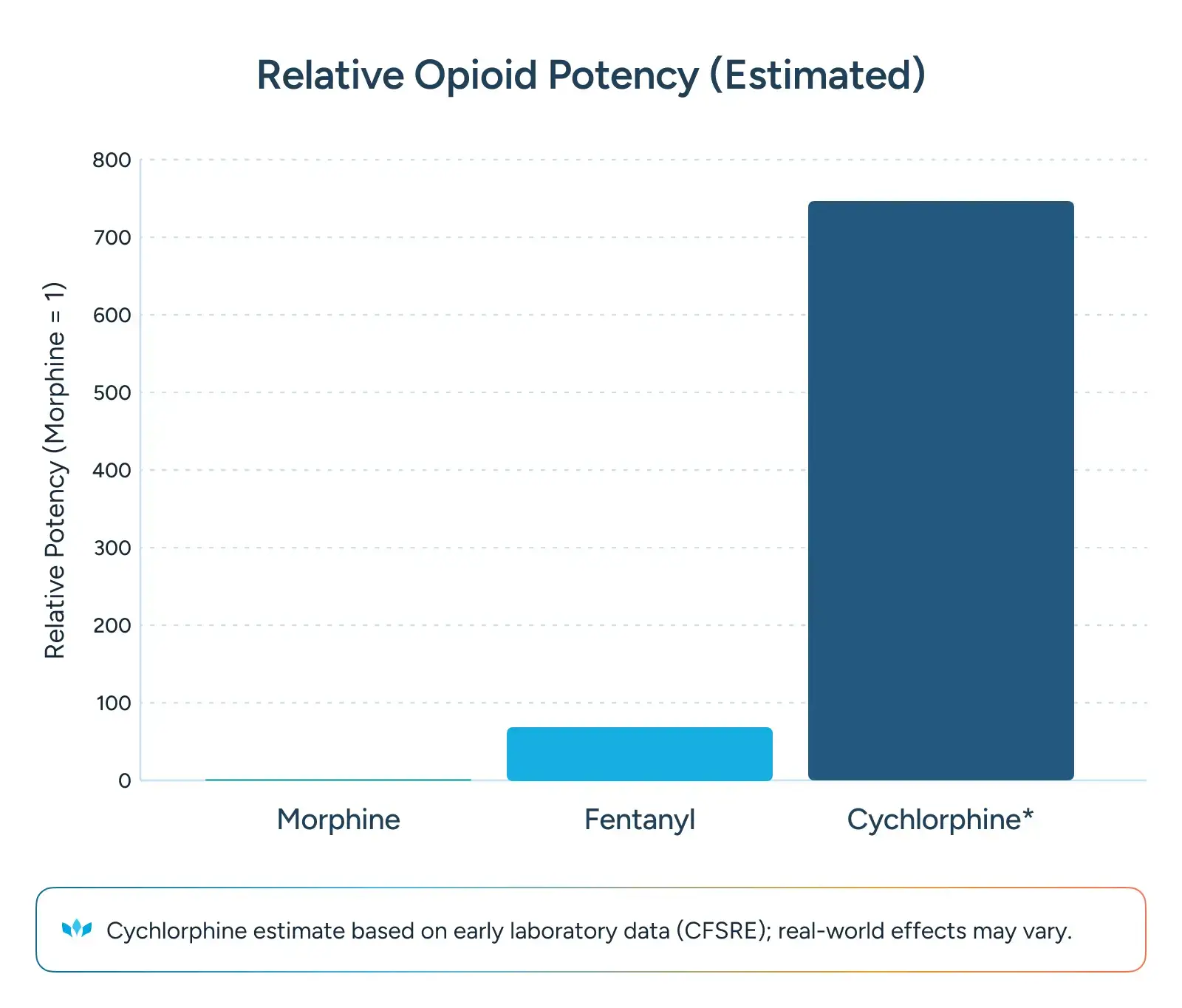
Cychlorphine is especially dangerous because of how strong it may be and how unpredictable exposure can be.
Early reports suggest it could be significantly more potent than fentanyl, though research is still developing. Even small differences in potency can have a major impact on the body, especially when it comes to breathing.
Opioids slow breathing by affecting the brainstem. With stronger synthetic opioids, that slowdown can happen faster and with less warning, increasing the risk of sudden respiratory depression.
Another major concern is that people may not know they are taking it. When cychlorphine is mixed into other drugs, it becomes much harder to judge dose, tolerance, or safety. What felt manageable before can quickly become life-threatening.
There are also concerns about overdose reversal. Naloxone (Narcan) can still help, but stronger opioids may require multiple doses or faster intervention. This combination of high potency, unknown exposure, and limited data makes cychlorphine a serious emerging risk in the current drug supply.
If you’re trying to understand how dangerous it is, it helps to look at how cychlorphine compares to fentanyl in real-world use.
Because cychlorphine acts on the same parts of the brain that control breathing and awareness, its effects can become dangerous quickly.
Common side effects may include:
These effects are not theoretical. Cychlorphine has already been identified in at least 25 fatal overdose cases, along with more than 100 additional toxicology detections. ⓘ
In some of these cases, it was the only opioid present, while in others it was combined with substances like fentanyl, cocaine, and benzodiazepines, increasing the strain on the body. Because of this, what starts as sedation or slowed breathing can quickly progress into a life-threatening overdose.
An opioid overdose can happen quickly, especially with high-potency substances like cychlorphine. Recognizing the signs early can save a life.
Common warning signs include:
These symptoms mean the brain is not getting enough oxygen, and the body is beginning to shut down.
If an overdose is suspected:
Even if naloxone is given, medical care is still necessary. Stronger synthetic opioids may require additional doses and monitoring to fully restore breathing. To manage this overdose and withdrawal, some people need opioid withdrawal is managed with medication, especially when symptoms are severe.
Relapse has always carried risk, but the drug supply today is very different from what it was even a few years ago. In the past, someone might return to a substance they were familiar with and had used before. Now, that same situation can be much more unpredictable.
Substances may contain newer synthetic opioids like cychlorphine without any clear indication, meaning the strength, effects, and risks are no longer consistent from one use to the next. Tolerance also does not offer the same level of protection. After a period of not using, the body becomes more sensitive, while the drugs themselves may be stronger than expected.
This combination can put significant strain on the brain and body, especially the systems that control breathing. What someone believes is a small or familiar amount can quickly become life-threatening.
Stronger synthetic opioids like cychlorphine are changing the risk. What used to feel manageable can suddenly become dangerous, even at the same amount.
That shift is not something to ignore.
Medical detox can help stabilize the body safely, especially when withdrawal or overdose risk is high. Around-the-clock care, comfort medications, and monitoring can reduce complications while your system clears the drug.
From there, treatment options for opioid use can address what is driving use in the first place, including anxiety, depression, trauma, or stress that makes stopping difficult.
You can call at any time to talk through what is happening and what level of care actually makes sense. Even a short conversation can help you understand your options and next steps.