100% Confidential


One in five heavy alcohol drinkers have liver issues, but most don’t know it. The first stage of alcohol-induced liver disease is inflammation, which often has no obvious symptoms.
If warning signs are noticed, it usually indicates the second stage of alcoholic liver disease where scar tissue has already built up enough to impede proper liver function.
Early Symptoms of Liver Issues
However, these early symptoms tend to be non-specific and may not necessarily indicate liver disease without more direct markers (e.g., jaundice or abnormal liver enzymes).
The liver is located in the upper right quadrant of your abdomen. It sits above the stomach but beneath the diaphragm. The size is similar to a football.
Any pain or abnormalities in this area could signal liver problems.
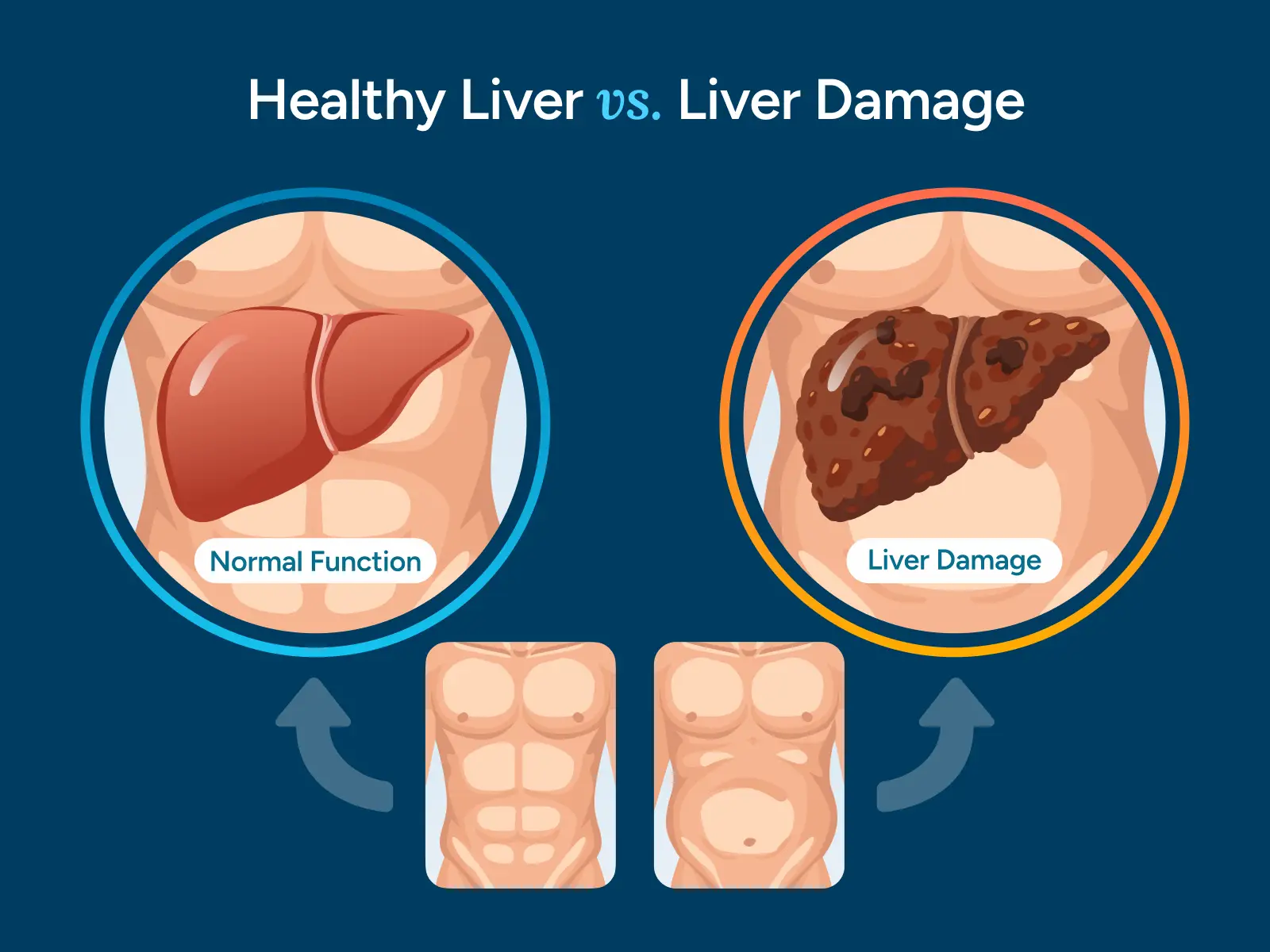
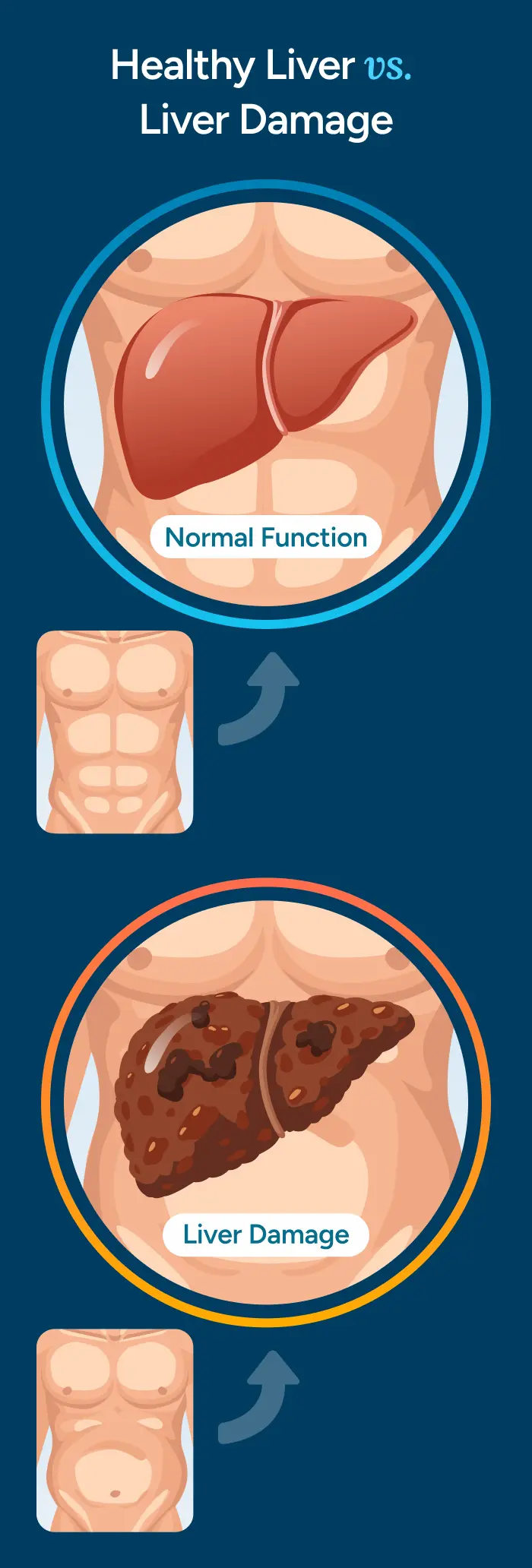
Liver issues from alcoholism progress through three distinct diseases:
As the liver goes through the stages, it’s less likely the liver cells can recover and treatment becomes more complicated.
Once diagnosed with cirrhosis of the liver, the damage cannot be reversed. However, abstaining from alcohol and adhering to treatment protocol prevents the disease and its symptoms from getting worse.
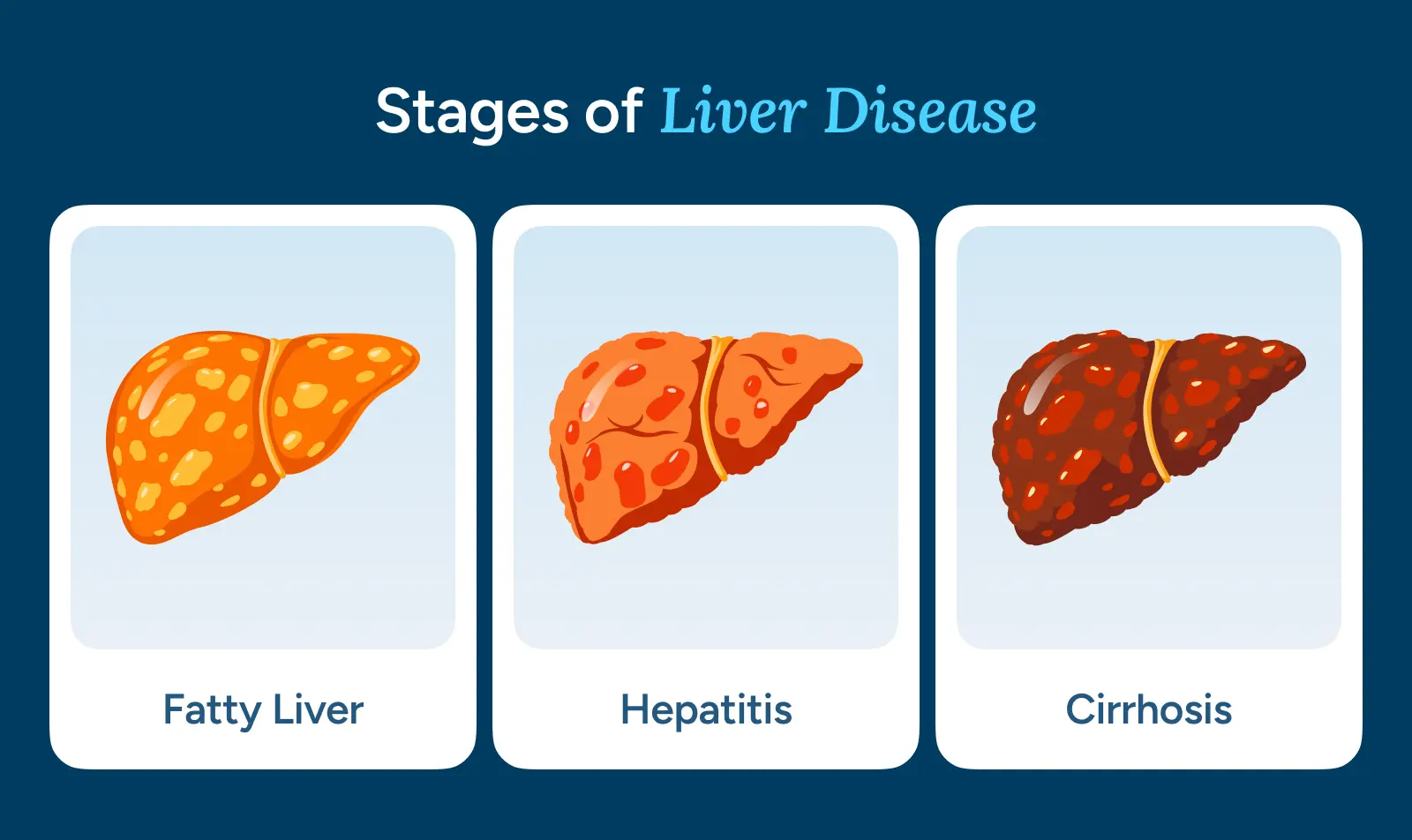
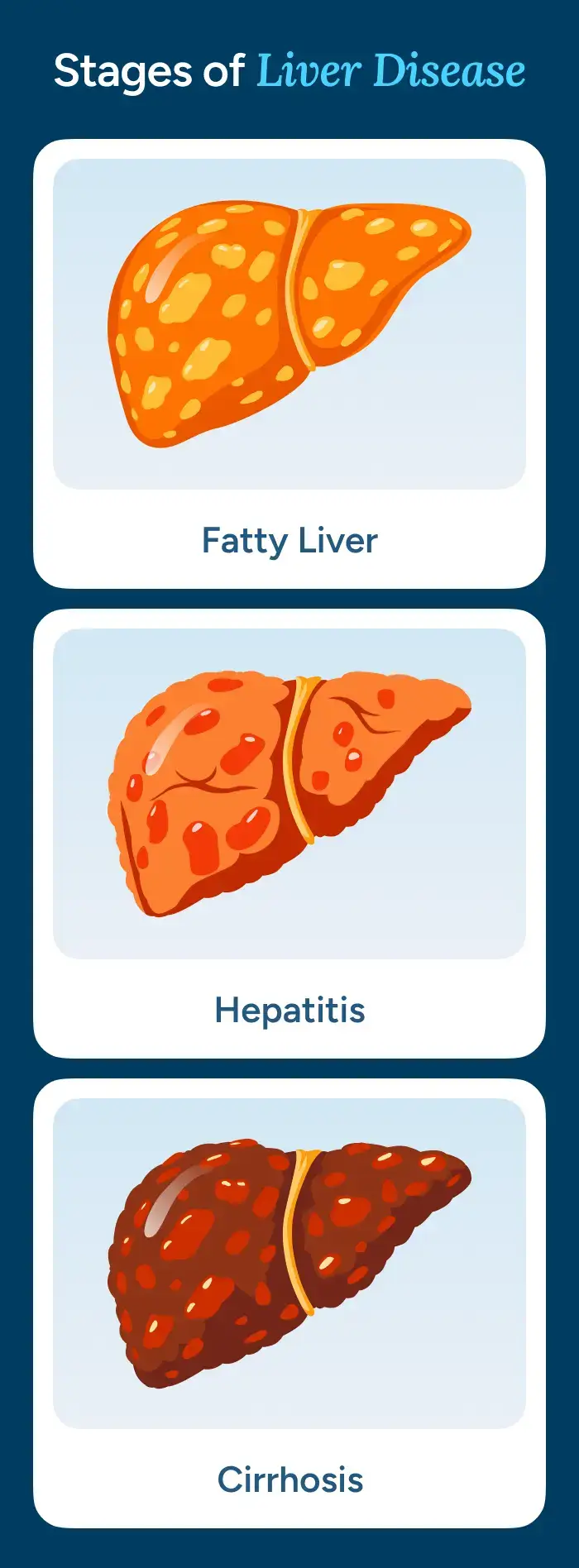
Alcoholic fatty liver disease is usually a reversible condition where heavy drinking causes fat to build up in the liver (hepatic steatosis). The build-up of fat deposits leads to inflammation that reduces liver function.
Alcoholic fatty liver disease impacts 20% of heavy drinkers.ⓘ
Alcoholic hepatitis is a condition where the liver becomes so inflamed that liver cells become damaged.
Usually, no symptoms or symptoms so minor most people fail to realize something is wrong. Most diagnoses come from a liver biopsy, after warning signs from a lab test or abdominal scan (ultrasound, CT, MRI).
As the disease gets worse, clinical symptoms in this stage may include: ⓘ
Yellowing of the skin and eyes is a symptom of liver disease known as jaundice. Jaundice occurs when the liver is unable to process waste material that is normally excreted in the feces. ⓘ
If the liver is unable to remove waste material, it builds up and starts to alter the color of the skin and eyes.
Alcoholic Hepatitis can usually be treated, and some of the damage will heal. If drinking continues, 40% will develop into cirrhosis. Death can also occur at the hepatitis stage without developing full cirrhosis.
Alcoholic cirrhosis is the most serious alcohol-induced liver disease where scar tissue overwhelmingly replaces healthy liver tissue. Blood flow and other critical components of healthy liver function are impaired.
According to the National Institute on Alcohol Abuse and Alcoholism, alcoholic cirrhosis impacts 10-15% of people with alcoholism.
Many people still do not realize they have liver issues, even though cirrhosis has distinguishable symptoms and can show on lab tests and radiographic scans.
All of the symptoms of alcoholic hepatitis often occur since the diseases happen in progression.
While 30-40% of cirrhosis cases are discovered at autopsy never noticing symptoms, the distinct symptoms of this stage include:
Late-Stage Alcoholic Cirrhosis Symptoms
The 5–year survival rate for people with cirrhosis who stop drinking is ~90%. However, for late-stage cirrhosis, the rate drops to only 60% for those who stop drinking and 35% for those who do not.
Cirrhosis is the most serious consequence of alcoholism for the liver, but other organs will also start to suffer damage from this level of drinking.
See also: What is Wet Brain?
There is one clear indicator that you are incurring liver damage: heavy or frequent drinking.
If you have a problematic relationship with alcohol and are experiencing symptoms like drinking shakes or severe anxiety when hungover, you are damaging your liver even if you don’t feel any symptoms.
Liver damage can be detected in bloodwork early because liver cells are dying at a higher rate than normal.
An abdominal ultrasound with a doppler, an MRI or a CT scan can show abnormalities like enlargement that also indicate an issue.
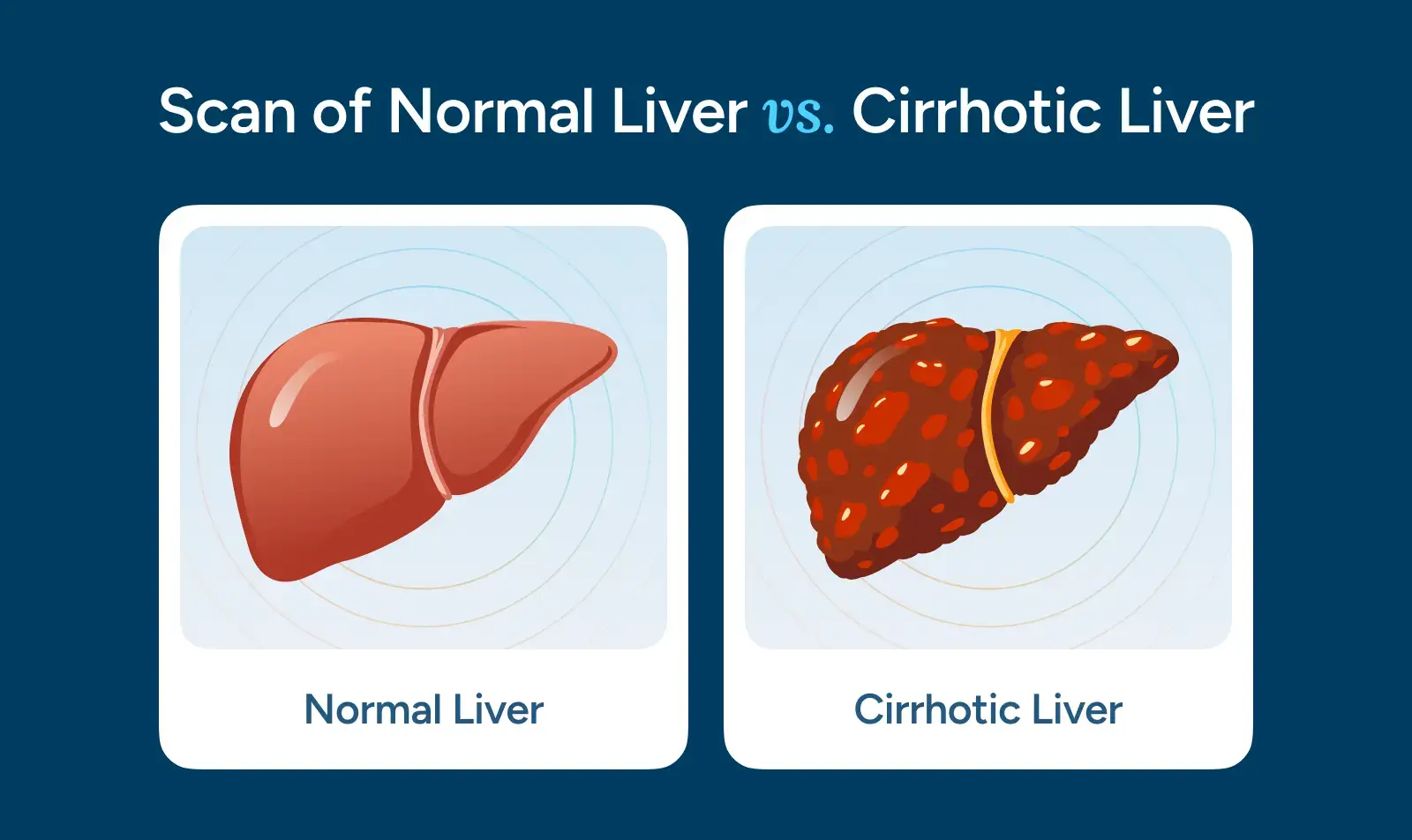
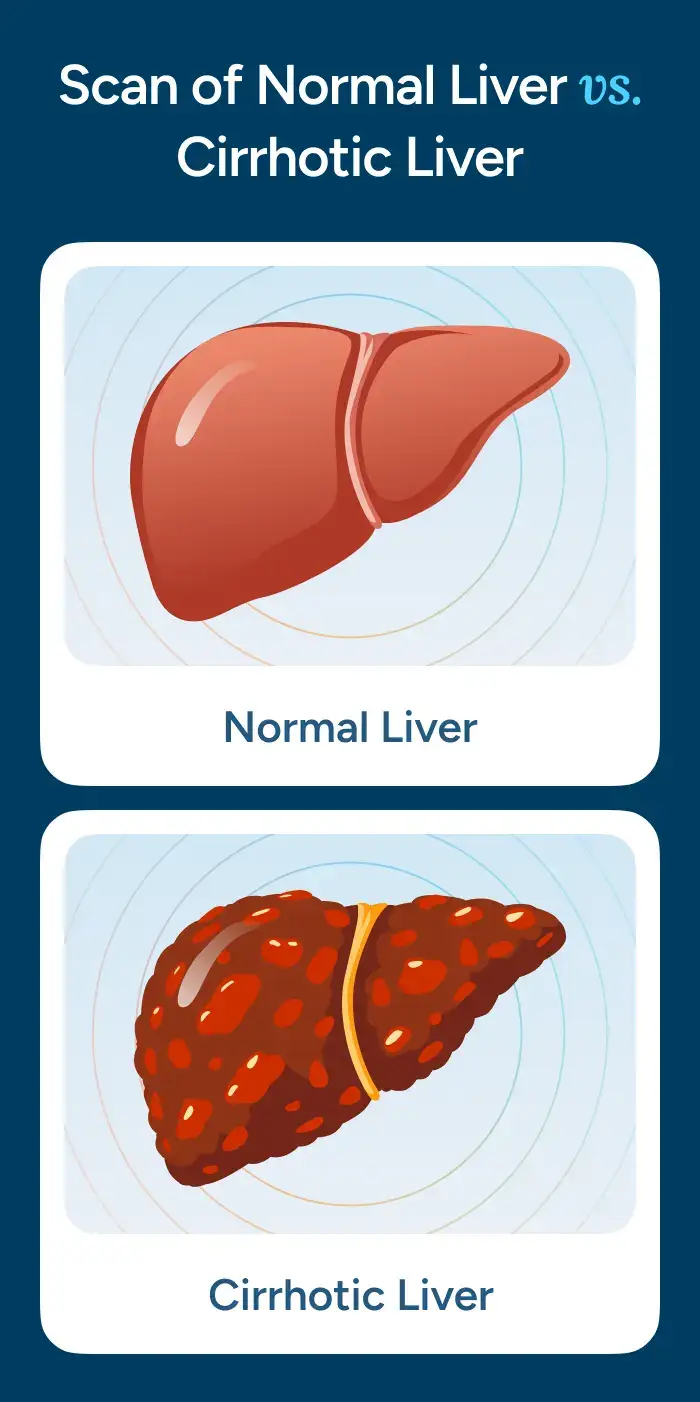
If lab work or scans come back showing issues, a liver biopsy can confirm a diagnosis and identify the severity.
Liver biopsies are an outpatient procedure that takes five minutes. The area is numbed and a small incision is made to collect the liver tissue.
You should have your liver checked if you meet any of the following criteria:
Most people develop liver damage after years of daily drinking. However, research from the Neurology Department at UCSF suggests sporadic binge drinking over just seven weeks causes liver issues. ⓘ
Pending you’re not pregnant, on medications or have any health concerns, I suggest sticking with the CDC recommendations. ⓘ
Everyone’s biology and genetics are different, but exceeding these amounts puts you at greater risk of damage to your liver, brain or other organs.
The damage from chronic alcohol use is usually reversible until it’s not. There isn’t an amount or even many warning signs before permanent damage sets in.
Note: over 30% of adults in the U.S. don’t drink alcohol. That’s always the healthiest option.
In most cases, yes. Liver cells regenerate more easily than other organs. Patients can partially or wholly restore liver function by:
A liver transplant is only required if the organ has already become mostly scar tissue. Drinking will need to be permanently stopped to qualify for the transplant list.
| Stage | Reversible | Treatment |
| Fatty Liver | Usually | Stop Drinking |
| Hepatitis | Somewhat | Stop Drinking + Medications |
| Cirrhosis | Not Usually | Stop Drinking + Medications + Transplant |
As you can see, treatment for alcoholic liver disease centers around treatment for alcohol dependency.
If you or a loved one is struggling with alcohol use, The Haven Detox Group offers medically supervised alcohol detox and addiction treatment at locations across the country. Explore our treatment options and find a center near you to get help.
Sources