100% Confidential



Yes, in specific situations.
Starting a structured program at The Haven Detox Group doesn’t change the original charge. It creates a clear record of how you’re responding. Data shows a significant percentage of DUI cases involve repeat behavior. Because of that, courts look beyond the charge itself to understand risk. They want to know if you’re likely to repeat the behavior and if you’re taking steps to address what led to it. ⓘ
A DUI is a criminal offense, but it ties directly to alcohol use and decision-making under the influence. Because of that, courts balance three things:
If the situation looks like a one-time lapse in judgment, the outcome may be different than if there are signs of ongoing risk. That’s where treatment can come into the conversation.
When you enter a structured program, you change the narrative of your case.
It shows you’re taking responsibility
Starting treatment voluntarily signals you aren’t ignoring or minimizing the situation.
It addresses the root behavior
Treatment helps demonstrate that you’re working on the underlying issue, not just the legal consequences.
It lowers future risk
Consistent participation shows the court you are actively lowering the chance of a repeat offense.
It opens alternative doors
In some cases, treatment becomes an alternative to jail time or a probation condition. This varies widely by state and by case.
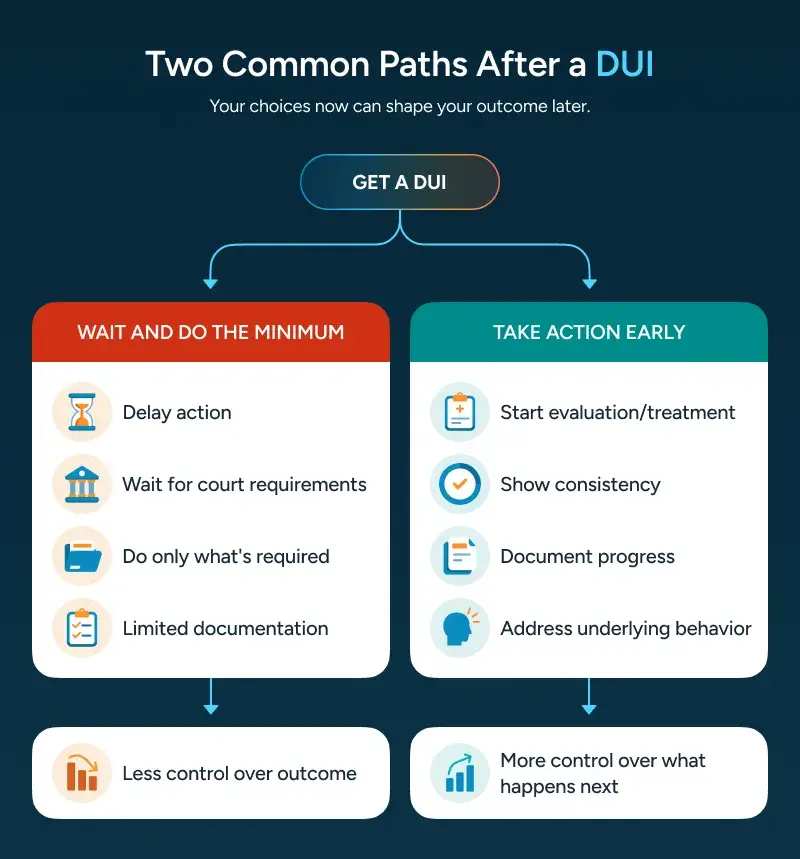
People who receive treatment show significantly lower repeat offense rates than those who only go through legal penalties. ⓘ
Treatment tends to carry more weight when:
There are situations where treatment won’t significantly reduce the legal consequences, including:
It’s not enough to say you’re getting help. Courts look for consistency and follow-through.
That usually includes:
Showing up matters. An engaged, consistent person looks very different to a judge than someone doing the bare minimum. You need a facility holding the Joint Commission Gold Seal, a standard achieved by fewer than 10 percent of treatment centers nationally. This clinical credential carries significant weight in proving the legitimacy of your care to the legal system.
Starting early helps. You show initiative and build a track record of consistency before sentencing. Coordinate with a DUI attorney who understands your local court system to decide what steps make sense for your specific situation.
Choose a highly structured program. Courts take accredited clinical treatment far more seriously than informal or online-only options.
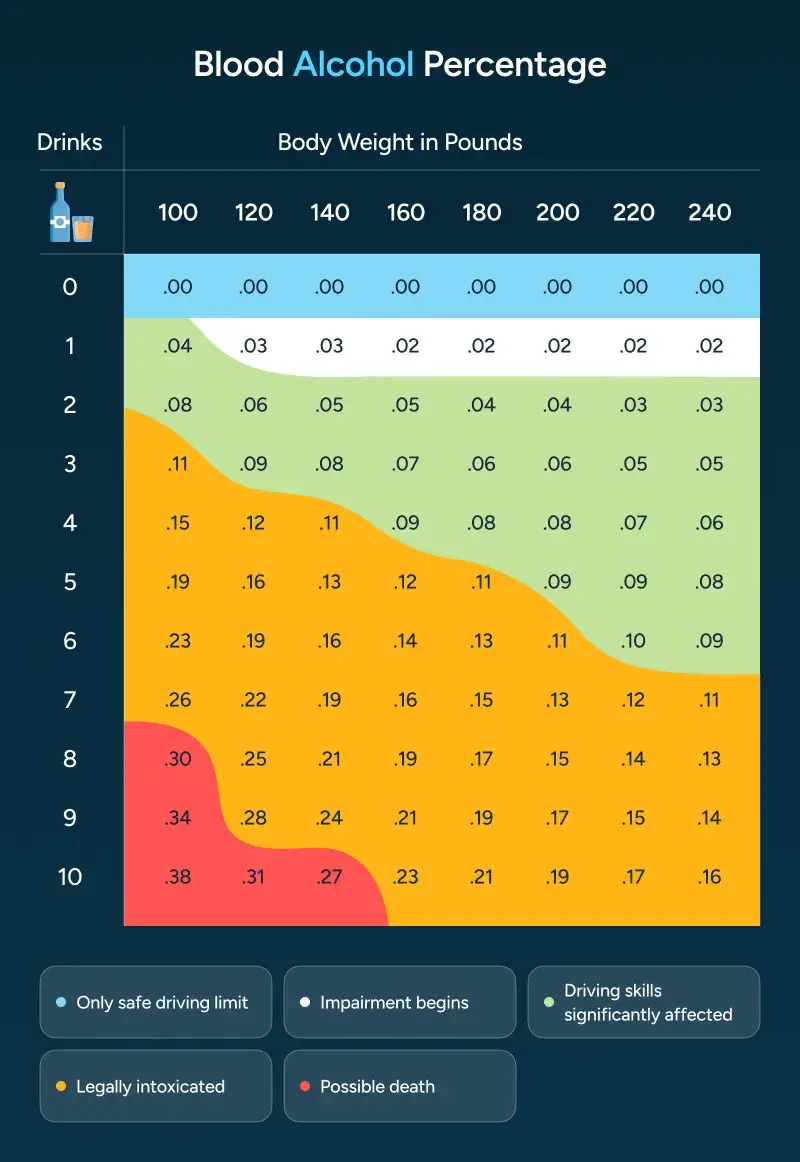
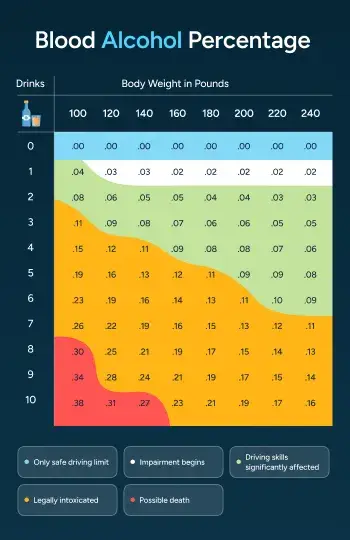
DUI laws vary by state. Most dictate that you face charges if your BAC is 0.08% or higher or if you’re impaired by alcohol or drugs. The core question courts ask is always the same: is this likely to happen again? Some states have strict, mandatory penalties while others offer structured alternative programs.
How DUI Consequences Differ by State
Florida has structured DUI laws with defined penalties, but courts still have some flexibility.
You can be charged if:
After an arrest, your license is typically taken immediately. You’re issued a temporary permit and usually have 10 days to request a hearing to challenge the suspension. ⓘ
What a First DUI Can Involve
Where Treatment Fits In
In Florida, time spent in a residential treatment program sometimes counts toward a jail sentence. This is where a private, medically supervised reset with dedicated programs and 24/7 physician oversight satisfies stringent legal and clinical requirements while giving you the space to actually recover.
Key takeaway: Treatment won’t remove consequences, but it can influence how they’re carried out—and how the court views your level of risk.
Arizona is one of the strictest states when it comes to DUI enforcement.
You can be charged if:
A first DUI involves mandatory jail time, license suspension, fines, and an ignition interlock device. Arizona separates criminal penalties (court) and administrative penalties (license), which happen at the same time. ⓘ
Where Treatment Fits In
Arizona allows some penalties to be reduced or modified if you complete alcohol screening, education, or treatment. Most start with detox or residential programs in Arizona.
In Arkansas, impaired driving is usually charged as DWI (Driving While Intoxicated). ⓘ
You can be charged if:
What a First Offense Can Involve
Like other states, Arkansas also separates:
Where Treatment Fits In
Arkansas often requires alcohol education, substance use evaluations, and treatment as part of probation. Courts sometimes allow program completion to satisfy part of a sentence.
Massachusetts uses the term OUI (Operating Under the Influence). ⓘ
You can be charged if:
What a First Offense Can Involve
A Key Difference: First-Offender Programs
Massachusetts offers structured alternatives for many first-time cases.
Through a first-offender program, the court may:
Where Treatment Fits In
Treatment and education are often part of the process—and in some cases, completing them can directly affect the outcome of the case.
New Jersey handles DUI differently than most states.
Most cases are treated as traffic offenses rather than criminal charges, but penalties are still serious. ⓘ
What a First Offense Can Involve
Where Treatment Fits In
The IDRC includes:
In more serious cases, courts may require structured treatment programs.
Oklahoma enforces DUI laws with a strong focus on public safety and preventing repeat offenses.
You can be charged if:
What a First DUI Can Involve
Penalties increase with higher BAC levels, prior offenses, or dangerous behavior. ⓘ
Where Treatment Fits In
Most DUI cases in Oklahoma include:
Important: Treatment is often required—not optional—and is part of how the state reduces repeat offenses. Oklahoma has limited treatment options but you can now stay in state for detox and residential treatment.
There’s a difference between choosing to start treatment and being required to do it. Voluntary treatment shows initiative and awareness. Court-ordered treatment fulfills a requirement. Both help you move forward, but starting on your own has a stronger impact on how the legal system views your situation.
A DUI sometimes points to patterns like drinking more than intended or taking unusual risks. For some, it is a one-time decision. For others, it is the first clear warning that something needs attention. Understanding which one applies makes a difference for your case and your life.
Research shows that many people charged with DUI meet criteria for alcohol use disorder, which means their drinking is affecting judgment, behavior, or decision-making in ways that are hard to control. This can look like:
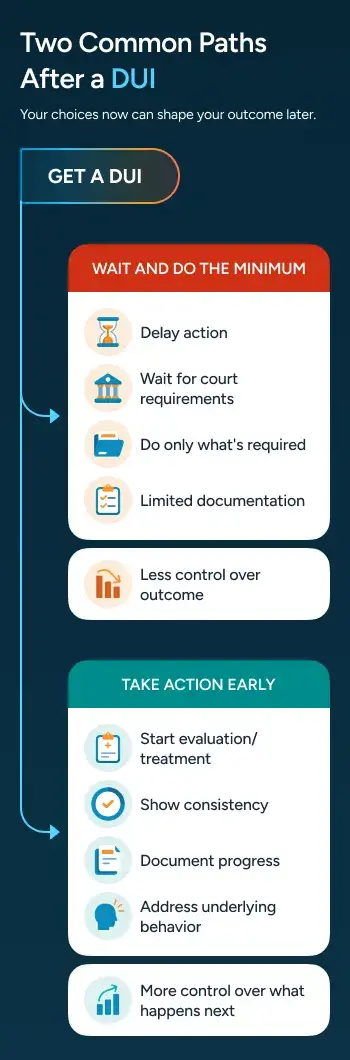
One of the biggest mistakes is waiting. People commonly put everything off until the court date, do the minimum required, or assume it won’t happen again without making changes. Courts notice the difference between someone who takes early, consistent action and someone who reacts at the last minute.
If you’ve been charged with a DUI, a few steps can help you move forward:
You don’t have to have everything figured out immediately. Taking a step in the right direction early gives you options.
When people hear “treatment” after a DUI, they picture a short class or a box to check. Those programs meet minimum legal requirements, but they rarely address what led to the situation.
Structured detox and residential treatment looks entirely different. It includes:
The goal is to understand what happened and ensure it never happens again.
Look beyond the legal minimums. Find a program that actually helps you change. Look for:
You can’t change the DUI, but you can influence what happens next.
What you do now—before your court date—can help show how seriously you’re taking the situation and whether the risk of it happening again is being addressed.
At The Haven Detox Group, treatment is structured, documented, and often covered by insurance, including Medicaid in some cases. That means you may be able to start quickly without paying out of pocket.
If you’re not sure where to begin, the easiest first step is checking your coverage and understanding your options.
Check your insurance and see your treatment options