100% Confidential


Valium is the brand name for diazepam, a medication that slows down activity in the brain and nervous system.
Diazepam belongs to a class of drugs called benzodiazepines, which are often used to treat anxiety, muscle tension, and seizures. These medications work by calming overactive signals in the brain.
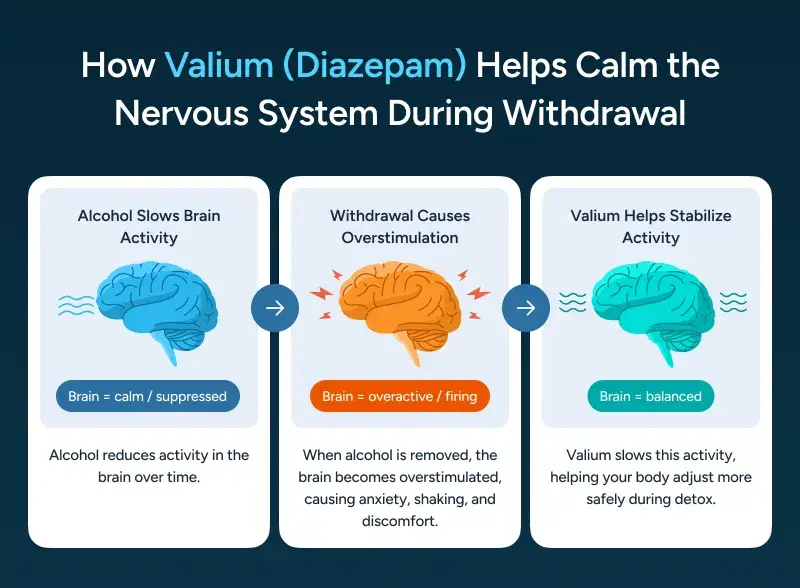
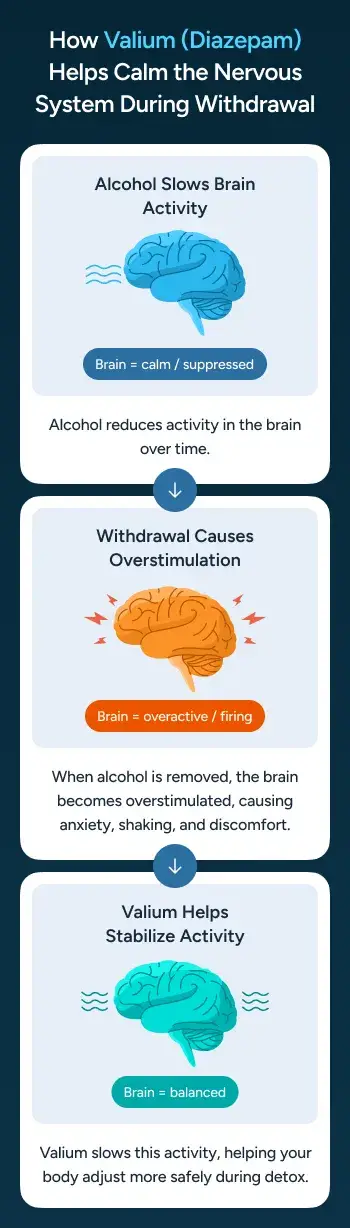
That same effect is what makes diazepam useful during alcohol withdrawal.
When you stop drinking, your brain becomes overstimulated. Alcohol has been slowing things down, and once it’s removed, your system reacts in the opposite direction. This is what leads to symptoms like anxiety, restlessness, shaking, and trouble sleeping.
Diazepam helps bring that activity back down. By calming the nervous system, it reduces the intensity of these symptoms and lowers the risk of more serious complications.
Because it works relatively quickly and lasts longer than some other medications, it is often used in detox to help keep symptoms more stable instead of constantly rising and falling.
Yes, Valium can be addictive if it is used long-term or without medical supervision.
It belongs to a class of drugs called benzodiazepines, which can lead to physical dependence over time. This is especially true when it is taken regularly or in higher doses than prescribed.
That’s why people often question why it’s used during detox.
In medical detox, Valium is used differently. It is prescribed short-term, closely monitored, and gradually reduced as your symptoms improve. The goal is not to replace alcohol with another substance, but to help your body stabilize safely during withdrawal.
This is very different from taking it on your own, where there is a higher risk of misuse or dependence.
Valium is a long-acting medication, which means its effects can last several hours and it can stay in your system for several days.
Most people begin to feel its calming effects within a relatively short period of time. Those effects can last for much of the day, which is one reason it is commonly used during alcohol withdrawal.
Because it stays in the body longer than some other medications, Valium helps keep symptoms more stable instead of wearing off quickly and causing symptoms to spike again.
Even after the noticeable effects fade, the medication continues working in the background. This longer duration helps reduce sudden increases in anxiety, shaking, or restlessness during detox.
Over time, your body gradually processes and clears it. That slower process is part of what makes it useful in a controlled medical setting.
Valium can be detected in different parts of the body for varying lengths of time:
These timeframes can vary based on your metabolism, dosage, and how long the medication was used.
Yes, it is possible to overdose on Valium, especially if it is taken in high doses or combined with other substances like alcohol.
Valium slows down the central nervous system. When too much is taken, or when it is mixed with alcohol or other sedatives, it can slow breathing, cause extreme drowsiness, or lead to loss of consciousness.
This is one of the reasons it should not be used at home to detox.
In medical detox, this risk is carefully managed. Valium is prescribed in controlled doses, monitored closely, and adjusted based on how your body responds. Your symptoms and vital signs are tracked throughout the process to keep you safe.
That level of oversight is what makes using medications like Valium much safer in a medical detox setting compared to trying to manage it on your own.
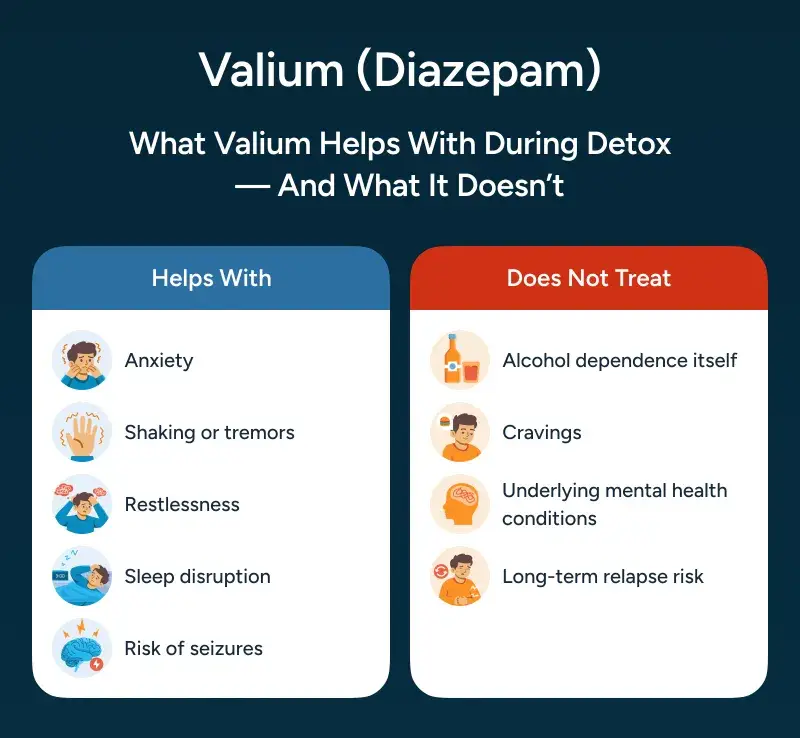
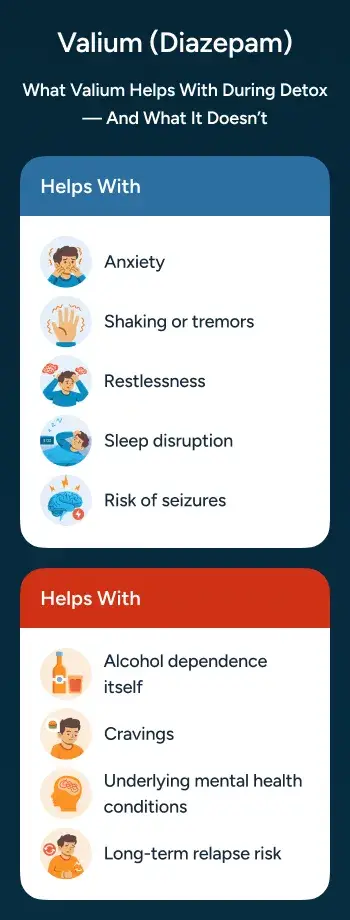
Detoxing from alcohol at home can be unpredictable and, in some cases, fatal.
Withdrawal symptoms often start off manageable but build over the first few days. What begins as anxiety or trouble sleeping can turn into shaking, severe discomfort, or confusion. In more serious cases, it can lead to seizures or delirium tremens (DTs).
By the time symptoms peak, your body is under a lot of stress. Many people end up drinking again just to make the symptoms stop. That is not a lack of willpower, it is your body trying to stabilize.
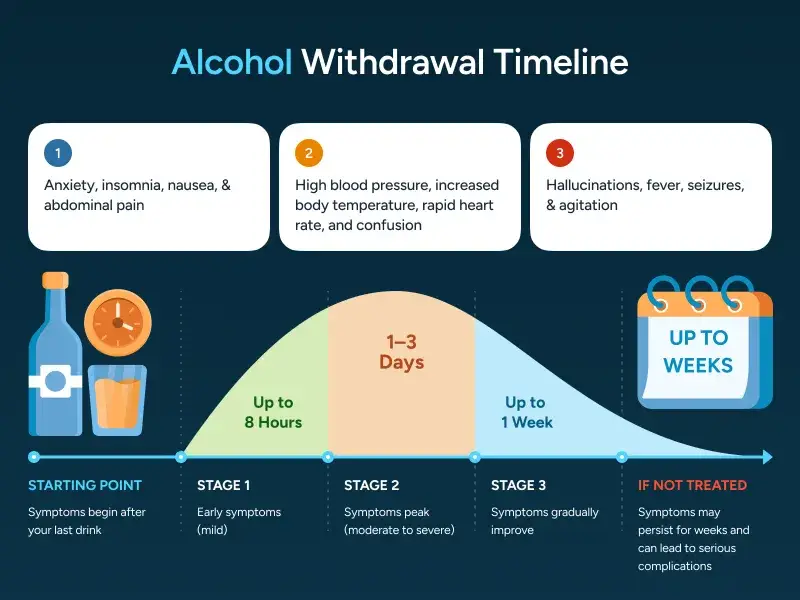
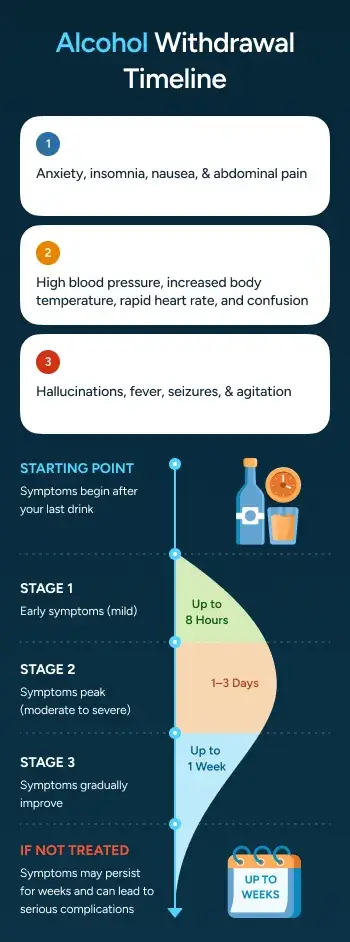
During medical detox, your symptoms are tracked and treated in real time while your body goes through withdrawal and adjusts to the absence of alcohol.
Instead of trying to manage symptoms on your own, you are supported through each stage of withdrawal.
This typically includes:
Care is not one-size-fits-all. Your treatment is adjusted in real time depending on how your body responds.
If symptoms become more severe, there is a medical team there to step in immediately.
For most people, this makes the process feel more manageable. You are not left guessing what is happening or how to handle it.
Medical detox is safer because withdrawal symptoms can change quickly and become dangerous without warning.
Alcohol withdrawal does not follow a predictable path. Symptoms can escalate from mild discomfort to severe complications like seizures or delirium tremens (DTs), sometimes within a short period of time.
Having medical support in place means those changes are recognized and treated early, instead of reacting once symptoms become severe.
At The Haven Detox Group, care follows strict clinical standards. Every location holds Joint Commission Gold Seal accreditation, a distinction earned by fewer than 10 percent of treatment facilities nationwide.
You are cared for by medical professionals who understand how withdrawal works and how to respond as symptoms change.
Being in a separate environment also helps. You are removed from the stress and triggers that make it harder to stop, so your focus can stay on getting through withdrawal safely.
Detox is the first step, but it does not address the underlying reasons for alcohol use.
Once your body stabilizes, the focus shifts to understanding what led to drinking in the first place and how to prevent relapse.
This may include:
The Haven Detox Group offers clinically separated programs for mental health, substance use, and dual diagnosis. You are treated alongside others who share your specific challenge, not mixed into a general population. This includes peer coaching from clinical staff with lived experience of the conditions you are treating.
Treatment is highly personalized. GeneSight pharmacogenomic testing matches your psychiatric medication to your genetic profile. This testing looks at how your body processes medications, which removes the trial-and-error process and helps avoid unnecessary side effects. The goal is to build on the progress you make during detox, not lose it once symptoms improve.
Alcohol withdrawal symptoms can intensify quickly and, in some cases, become dangerous without support.
If you are already experiencing symptoms or thinking about stopping, it helps to understand what to expect before things get worse.
You can talk with someone who understands what you are dealing with, ask questions, and get a clear idea of what detox would look like for you.
Many commercial insurance plans and Medicaid cover medical detox, so you may have more options than you think.
There is no pressure to commit. The goal is simply to help you figure out the safest next step.
Yes. Valium (diazepam) is commonly used during alcohol withdrawal to reduce symptoms and help prevent serious complications like seizures and delirium tremens (DTs). In medical detox, it is used short-term and carefully monitored.
Valium is the brand name for diazepam, a benzodiazepine that slows down activity in the brain and nervous system. During alcohol withdrawal, it helps calm overactive brain activity, which can reduce symptoms like anxiety, shaking, and restlessness.
Yes. Valium can be addictive if it is used long-term or without medical supervision. In medical detox, it is prescribed short-term, monitored closely, and tapered as symptoms improve.
Valium is a long-acting medication. Its effects can last several hours, depending on the dose and your body. This is one reason it is often used during alcohol withdrawal.
Valium can stay in your system for several days, and sometimes longer. It breaks down slowly, which helps keep withdrawal symptoms more stable during detox.
Yes. It is possible to overdose on Valium, especially if it is taken in high doses or combined with alcohol or other sedatives. In medical detox, dosing is controlled and monitored to reduce this risk.
Alcohol detox at home can be unpredictable and, in some cases, dangerous. Withdrawal symptoms can escalate quickly and may lead to seizures or delirium tremens, which is why medical detox is often the safer option.
During medical detox, symptoms are tracked and treated in real time while your body goes through withdrawal. This includes monitoring vital signs, adjusting medications like Valium, and responding quickly if symptoms become more severe.