100% Confidential


During withdrawal from drugs or alcohol, it’s common to experience:
Benzodiazepines like clonazepam help calm the nervous system which relieve these uncomfortable symptoms, makes withdrawal symptoms more bearable, and increases the success rate of addiction treatment.
Clonazepam isn’t the standard first choice for drug or alcohol withdrawal. Doctors often prefer longer-acting benzodiazepines because they provide a smoother, more gradual withdrawal, making tapering off during detox easier. ⓘ
However, there are some situations where Clonazepam makes sense. The most common situations where clonazepam is used in drug and alcohol detox are:
When someone drinks heavily over time, their brain becomes used to alcohol constantly stimulating their brain receptors. As a result, the brain reduces its natural calming ability and becomes dependent on alcohol to maintain balance.
The symptoms of Alcohol Withdrawal Syndrome can begin as soon as the brain’s GABA receptors no longer feel the effects of alcohol, which can be as early as a few hours. The most common symptoms of Alcohol withdrawal syndrome are:
Benzodiazepines are cross-tolerant with alcohol, which means that clonazepam works on the same receptors in the brain as alcohol.
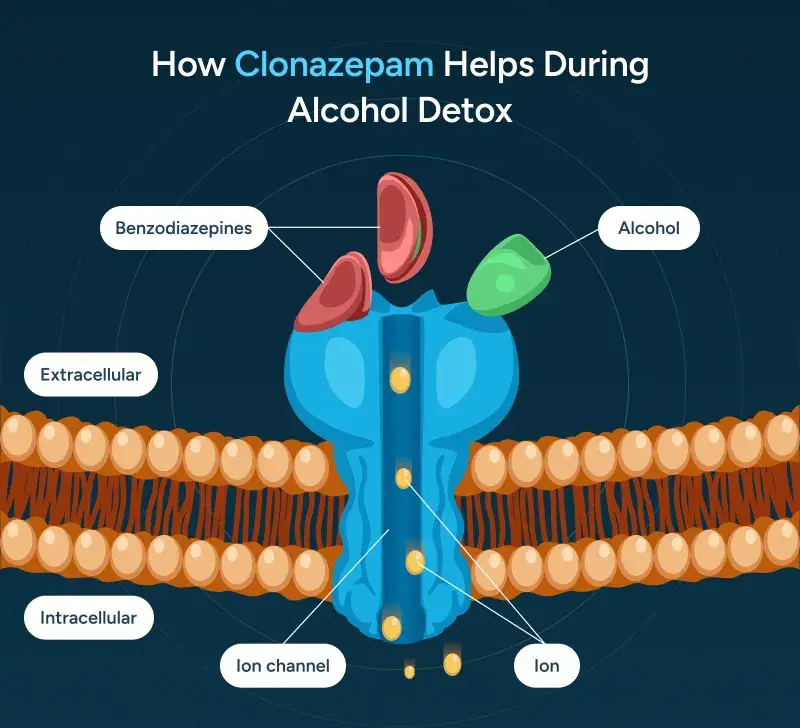
Doctors prescribe clonazepam early in the treatment process to ease the symptoms of Alcohol Withdrawal Syndrome. Then the dosage is gradually reduced at a safe rate in a recovery-friendly environment with plenty of medical support from addiction specialists.
Clonazepam is also used to help people detox from other benzodiazepines. Abruptly stopping any benzodiazepine can cause seizures, sometimes even resulting in death. Doctors reduce the dosage slowly and carefully to prevent these complications during detox. ⓘ
While it may seem counterproductive to replace one benzodiazepine with another, clonazepam is different because it remains in the body longer. The longer duration of action helps in three ways:
Which benzos can clonazepam help with?
Clonazepam is used to help people who are withdrawing from other benzodiazepines, such as:
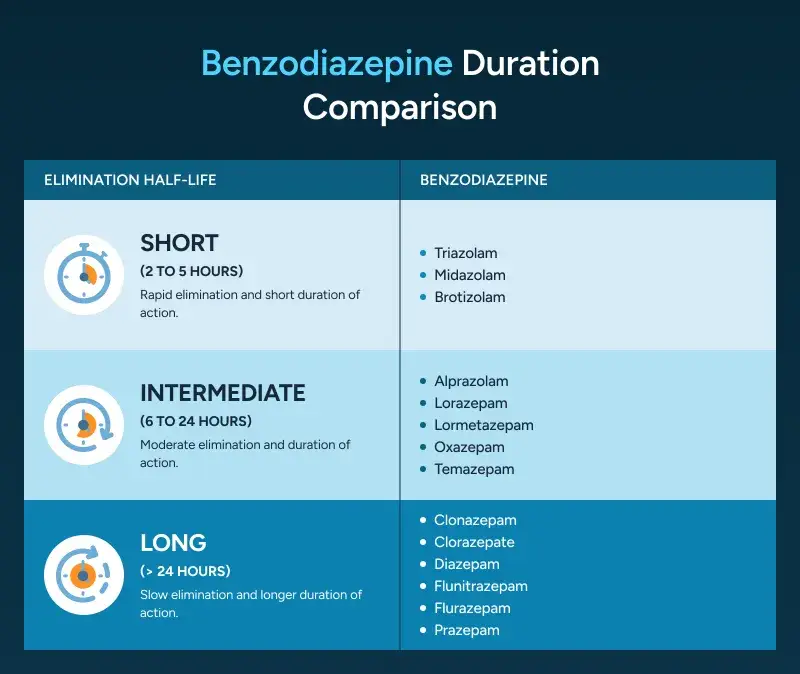
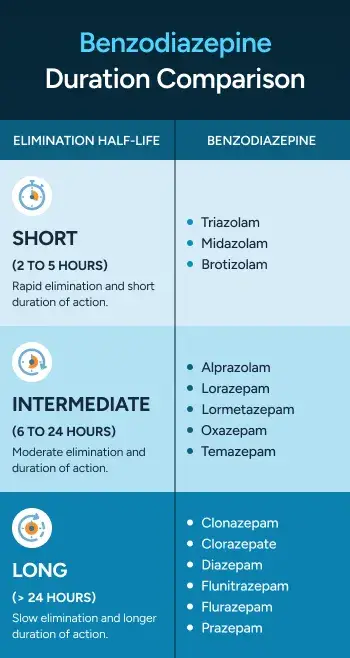
Some benzodiazepines have a shorter duration than others. Clonazepam is one of the longer-acting benzos, which means it stays in the body longer than alprazolam or lorazepam.
Yes! Whether it’s drugs or alcohol, medications like Klonopin can make all the difference in a successful detox. Without constant uncomfortable withdrawal symptoms, you’re free to focus on healing from your addiction and start actually feeling better.
Important: Detox from alcohol and benzos should always be done under direct medical supervision at a licensed detox center.
Never try to detox yourself from drugs or alcohol at home or try to taper off of any drug yourself. Doing so can be dangerous (even deadly) and often makes uncomfortable symptoms even worse.
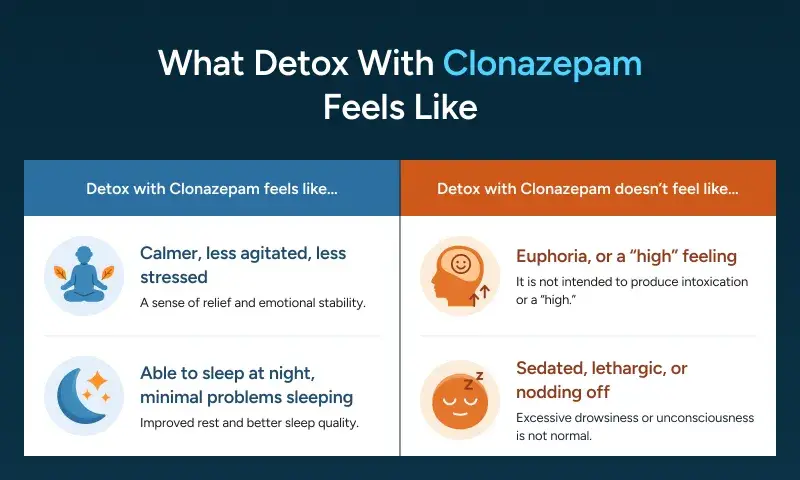
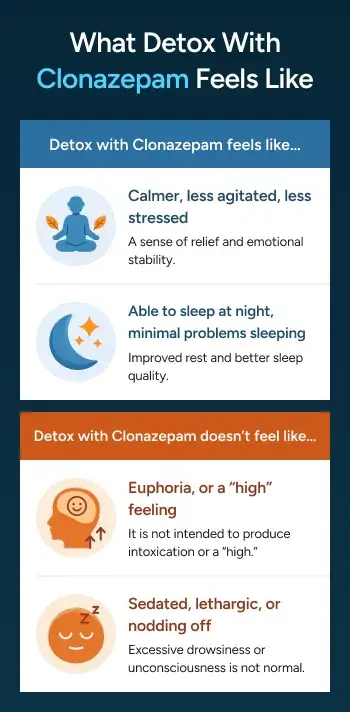
What does detox with Clonazepam feel like?
Clonazepam usually starts to take effect within 30 minutes to an hour after taking a dose. As it builds in the body, people often notice:
However, the full stabilizing effect may take a bit longer, especially in early detox when withdrawal symptoms are strongest.
Key Takeaway: When properly dosed, clonazepam is meant to stabilize—not intoxicate.
Clonazepam is usually taken as an oral tablet. It comes 0.5, 1, and 2 milligram strengths, but 0.5 is the most common for detox.
Doctors use a tapering schedule, meaning the dose is slowly reduced over several days or weeks. This helps prevent severe withdrawal symptoms.
When dosed appropriately, clonazepam should not be intoxicating during any stage of the detox process.
Doctors prescribe benzos for alcohol and drug withdrawal with a taper, or a gradual reduction in dosage that lasts anywhere from seven days to three weeks.
This gradual reduction minimizes uncomfortable symptoms, reduces cravings, and makes a successful detox more likely.
Clonazepam should be started when the first noticeable signs of withdrawal occur. For alcohol, this can be as soon as six hours after the last drink. For benzodiazepines, it can take several days to a week for peak withdrawal symptoms to occur. ⓘ
Clonazepam can be used alongside other detox medications, but only under the direct supervision of a medical detox. Detox is highly individualized, and medication combinations are chosen based on each person’s health history, substance use, and withdrawal severity.
Clonazepam has a depressant effect on the central nervous system, which also controls breathing, heart rate, and alertness. When it is combined with other substances that have similar effects, the results can become unpredictable. ⓘ
Doctors carefully monitor medication combinations during detox to:
The most common side effects of taking clonazepam are sleep issues, drowsiness, and feeling dizzy or lightheaded. You may feel a little sleepier than normal, especially after taking the first couple doses.
Most people don’t experience any negative side effects from taking clonazepam in the short term for detox. However, when any benzodiazepine, including clonazepam, is taken for years, it can have some long-term effects.
Taking clonazepam in the short-term during detox is safe, especially when monitored under the care of a licensed medical facility that specializes in drug and alcohol detox. However, there are risks when taking clonazepam long-term or when it’s misused or abused.
Long term effects of problematic clonazepam use include:
Not when taken as directed during detox. When properly dosed, clonazepam is meant to stabilize—not intoxicate or get you hooked.
Like any benzodiazepine, clonazepam can cause dependence if used long term, which is why it should be administered under the care of a doctor at a licensed detox facility.
Remember: Clonazepam is not recommended as a long-term solution for those with addiction, which is why it’s only given in the short term during detox. The longer someone continues taking benzos, the more the risk of dependence outweighs the rewards.
No, While Klonopin (clonazepam) can be addictive if misused, it is a powerful tool to help overcome alcohol and drug detox when taken as directed and under doctor supervision.
However, Klonopin can also become addictive when people try to self-administer it to fight off detox symptoms.
No, you should not use Klonopin or any other benzodiazepine to detox at home. Whether it’s alcohol or benzos, withdrawal can be dangerous, even deadly, without proper medical supervision, so it requires inpatient detox.
Taking benzos also multiplies the risk of fatal overdose from alcohol, which means relapse during the detox phase can be extremely dangerous and even fatal.
Always consult medical professionals, such as those at The Haven Detox Group, who have helped thousands of people through the detox process in a safe, comfortable environment. This level of supervision is what makes medication-assisted detox significantly safer than trying to manage withdrawal alone.