100% Confidential
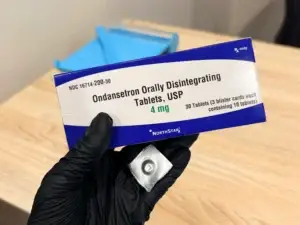


Librium is the brand name for chlordiazepoxide, a medication in a class called benzodiazepines. These medications calm the central nervous system.
During alcohol withdrawal, your brain becomes overactive. That is why symptoms like anxiety, shaking, sweating, and agitation happen. In more severe cases, this chemical spike leads to seizures or delirium tremens. ⓘ
Librium helps slow that activity down. Medical professionals use it primarily for:
Doctors have used it safely for decades under medical supervision specifically for alcohol detox.
Medical providers evaluate your specific health profile before prescribing Librium. A doctor may choose a different approach if:
In those cases, a physician chooses a different medication or a different level of care to keep you safe.
What Changes During Detox With Librium
| Symptom | Without Medication | With Librium |
|---|---|---|
| Anxiety | Intense and constant | More controlled and manageable |
| Shaking | Moderate to severe | Reduced intensity |
| Sleep | Very difficult | Able to rest |
| Heart Rate | Can spike unpredictably | More stable |
| Seizure Risk | Higher in heavy use | Significantly reduced |
| Overall | Unpredictable | More controlled |
Long-term alcohol use changes how your brain regulates stress and stimulation. When you suddenly remove alcohol, your system swings in the opposite direction. Your nervous system becomes severely overstimulated.
That chemical imbalance makes withdrawal feel intense and unpredictable.
Librium intervenes by:
The goal is to keep your body stabilized while it adjusts.
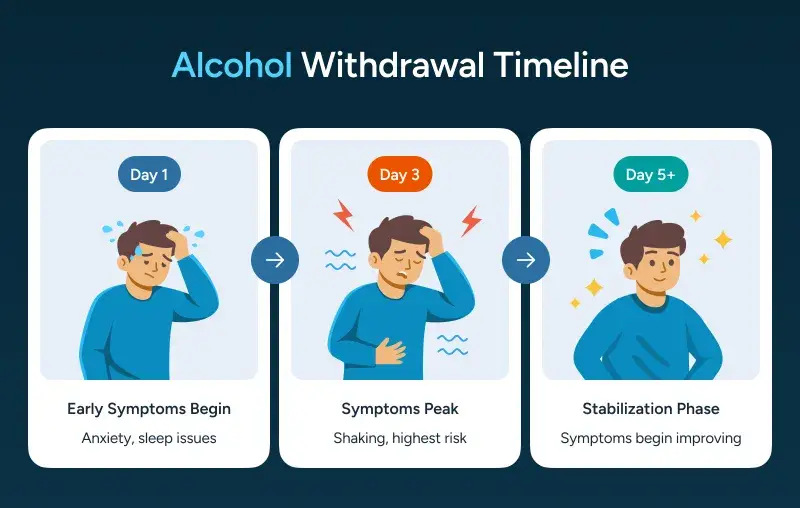
When Alcohol Withdrawal Symptoms Usually Peak
Alcohol withdrawal does not happen all at once.
Physicians usually prescribe Librium as part of a structured detox protocol. That protocol might look like:
The exact approach depends on how severe your withdrawal symptoms are, your history with alcohol or other substances, and your overall health.
Because Librium can cause drowsiness and affect breathing at higher doses. Medical staff adjust your protocol in real time to keep things safe and controlled.
This is usually the biggest question. Most people describe feeling:
You may also notice:
For some people, especially early in detox, the relief is immediate. The constant edge or panic starts to ease. For others, it takes the intensity down enough to help you get through the process safely. The medication reduces physical symptoms and prevents complications rather than creating a high.
They are all benzodiazepines, but they work differently. Librium lasts longer in the body, which makes it useful for alcohol withdrawal because it provides more stable symptom control over time.
Need Answers Now?
If you’re already experiencing symptoms, don’t wait to see how bad it gets. A quick call to The Haven Detox Group helps you understand what level of withdrawal you’re likely to face, whether our physicians would use Librium, and how your insurance covers the treatment. Talk to our team now and get a clear answer before symptoms escalate.
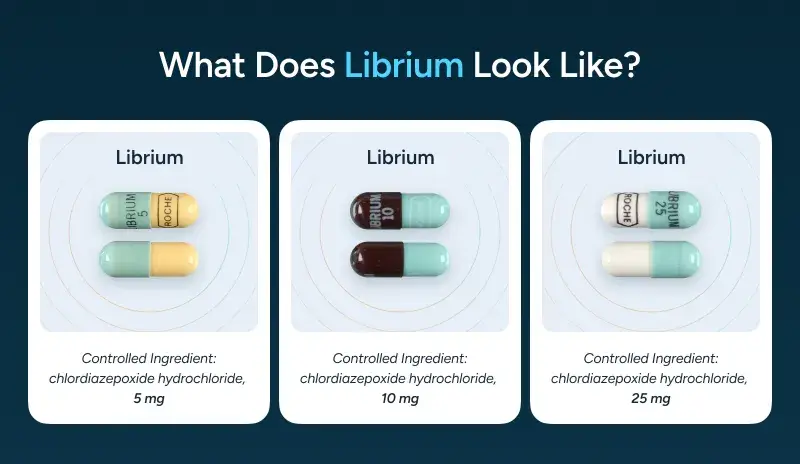
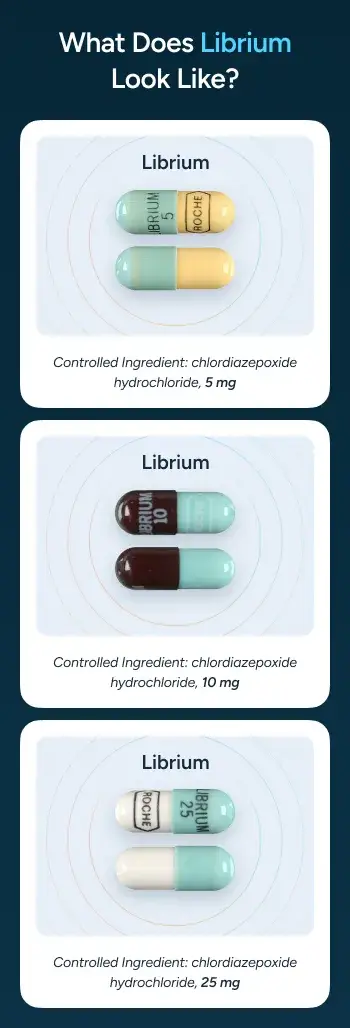
Librium is typically prescribed in capsule form, most commonly in:
Depending on the manufacturer and dose, capsules can look different. Some common versions include:
The exact color and imprint can vary by pharmacy. Because of that, the safest way to identify the medication is by the label and prescription rather than just the color.
Doctors use Librium for short-term stabilization. Most detox protocols use it for several days, or up to about a week in some cases.
The dose is often reduced gradually rather than stopped suddenly.
This matters because benzodiazepines can cause their own withdrawal symptoms if used long-term and stopped abruptly.
In a detox setting, the goal is:
No. It does not eliminate withdrawal, but it can significantly reduce symptoms and lower the risk of serious complications like seizures and severe agitation.
Librium carries a risk of dependence. It is a benzodiazepine, and medications in this class have the potential for dependence when used long-term or without supervision.
However, short-term, medically supervised use in detox differs completely from long-term or recreational misuse. In a certified detox program, physicians dose it carefully, monitor it closely, and taper it gradually. The clinical focus remains entirely on your safety.
No. This is the most critical safety rule regarding this medication.
Librium slows down your central nervous system. Alcohol, opioids, and many other drugs do the same thing. When they are combined, the effects don’t just add up. They multiply rapidly.
That combination leads to:
Even small amounts of alcohol can be dangerous when Librium is in your system.
This warning also applies to:
The risk escalates faster than most people expect. You may feel fine at first, then suddenly become extremely sedated without warning.
There is also a behavioral risk.
During withdrawal, people sometimes try to self-medicate. They might drink a little to take the edge off or take something else to sleep. When Librium is already in your system, self-medicating turns a difficult situation into a medical emergency. If a provider prescribes Librium during detox, do not mix it with alcohol or other substances.
Certain patients require more intensive observation while taking Librium. This includes:
In these situations, dosing may be adjusted or a different approach may be used.
Librium is just one option.
Other medications may be used depending on the situation, including:
If you want a full breakdown, you can review detox medications and how they are used.
On paper, taking a medication like Librium might seem straightforward. In reality, alcohol withdrawal is not predictable, and the dosing is not one-size-fits-all. Symptoms can change quickly over the first few days.
You might start with:
Then rapidly escalate into:
Physicians must adjust Librium dosing in real time based on those changes. At The Haven Detox Group, every location holds Joint Commission Gold Seal accreditation, a standard held by fewer than 10 percent of treatment facilities nationally. In this level of medical detox:
At home, you have no way to measure whether your dose is correct, catch early warning signs of severe withdrawal, or respond quickly to a medical emergency.
Withdrawal symptoms do not always peak right away. Some of the most dangerous symptoms can show up 24 to 72 hours after your last drink, sometimes later. That delay is where people get caught off guard. ⓘ
Medical detox is not just about comfort. It is about:
If you’re reading this, there’s a good chance something doesn’t feel right.
A quick conversation helps you understand your withdrawal risk, your medication options, and how your insurance covers the cost of care. Call our admissions team now to get the clear answers you need to take the next step.