

 100% Confidential


Withdrawal places the body under significant stress. When alcohol or drugs are removed, the nervous system often shifts into an overactive state. This can cause anxiety, restlessness, sweating, nausea, itching, and an inability to sleep, even when someone is physically exhausted. These symptoms are common across many substances and can make early detox feel unmanageable.
Hydroxyzine is sometimes used during medical detox to help calm this physical stress response. It does not work by numbing emotions or producing a high. Instead, it helps reduce the body’s level of agitation so basic needs like sleep, hydration, and nutrition become easier to maintain during withdrawal.
Anxiety during withdrawal is different from everyday anxiety. It is often driven by changes in the nervous system rather than thoughts or emotions alone. As substances leave the body, stress signals increase, the heart rate may rise, muscles stay tense, and the body can feel constantly “on edge.”
Hydroxyzine can help reduce this physical tension. By calming certain pathways involved in arousal and discomfort, it may lower restlessness and make anxiety feel less overwhelming during detox.
During the early stages of detox, the goal is stability. Severe anxiety, insomnia, and physical discomfort can interfere with sleep, fluid intake, and the ability to tolerate other necessary medications. When symptoms escalate, the risk of leaving detox early or turning back to substances increases.
Comfort medications like hydroxyzine are used to help people stay regulated enough for detox to continue safely. This support can make the difference between someone being able to remain in care versus feeling unable to cope with withdrawal symptoms.
Hydroxyzine is typically used during the early phase of detox, when symptoms are most intense. It is not intended for long-term anxiety management during detox and is not a substitute for comprehensive treatment.
As withdrawal symptoms ease and the nervous system begins to stabilize, the need for medications like hydroxyzine often decreases. Ongoing care then focuses on treating the underlying substance use disorder treatment needs and any co-occurring mental health conditions. For some patients, continuing care may also include medication-assisted treatment to support long-term recovery.
Hydroxyzine is used during detox to help manage specific physical and emotional symptoms that often peak as the body adjusts to the absence of alcohol or drugs. It is not a cure for withdrawal and is not appropriate for every situation. Understanding what it can and cannot help with is important for setting realistic expectations.
Hydroxyzine may be included in a detox plan when symptoms are driven by nervous system overactivity rather than severe medical complications.
It is just as important to understand the limitations of hydroxyzine during detox.
Hydroxyzine is approved by the FDA for anxiety and certain allergic conditions. In detox settings, it may also be used off label for related symptoms when clinicians believe it can help support comfort and stability.
Hydroxyzine is sometimes used to help with insomnia during early withdrawal. While it can make falling asleep easier, it is not approved as a sleep medication and may cause next-day grogginess. For this reason, it is typically used short term and under supervision during detox.
Some clinicians use hydroxyzine to help with nausea or generalized discomfort during withdrawal. In many cases, detox teams rely on more targeted medications for nausea, depending on symptoms and substance history.
Off-label use does not mean inappropriate use. It means the medication is being used thoughtfully for symptom relief based on clinical experience and safety considerations.
During detox, managing anxiety requires balancing relief with safety. While benzodiazepines can reduce anxiety quickly, they also carry risks that are especially important to consider during withdrawal, particularly when alcohol, opioids, or multiple substances are involved.
Hydroxyzine is sometimes chosen because it can help calm anxiety without adding another addictive substance or significantly increasing overdose risk during a medically unstable period.
Benzodiazepines act as central nervous system depressants. When combined with alcohol, opioids, or other sedating substances still present in the body, they can increase the risk of excessive sedation, slowed breathing, and other serious complications.
Many people entering detox have used more than one substance. In these cases, adding strong sedatives can compound effects on breathing and alertness. Hydroxyzine does not suppress respiration in the same way, which can make it a safer option for managing milder anxiety symptoms early on.
Benzodiazepines can cause physical dependence, even when used for the short term. Introducing a medication with its own withdrawal risks during detox can complicate care and extend discomfort once detox is complete.
In early detox, the goal is not complete symptom elimination. The goal is stabilization. Medications that blunt symptoms too aggressively can mask warning signs or create new risks that outweigh their benefits.
Hydroxyzine provides a more conservative approach. It can reduce agitation and support sleep while allowing clinicians to monitor symptoms closely and adjust care as the body stabilizes.
Hydroxyzine does not produce a high and is not reinforcing. This makes it useful in situations where avoiding new dependencies is a priority. When used appropriately, it can help people remain comfortable enough to continue detox without increasing the risk of misuse.
Hydroxyzine is not used the same way in every detox situation. The substance involved, the severity of symptoms, and whether multiple substances are present all influence when and how it may be included. Its role remains supportive, helping manage discomfort while primary detox medications address medical risks.


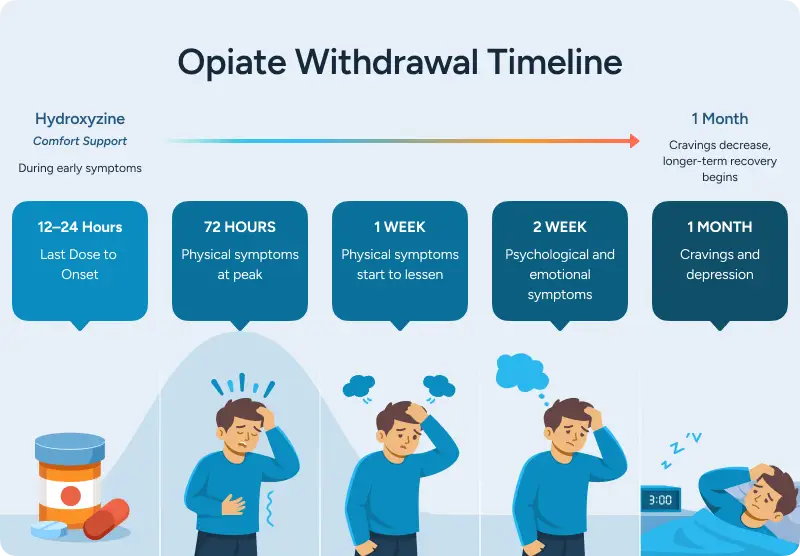
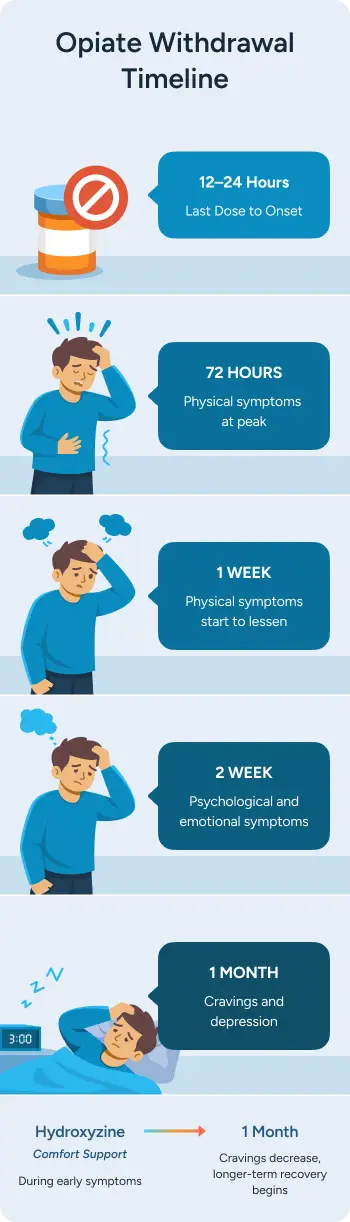
Opioid withdrawal commonly triggers anxiety, restlessness, muscle tension, and intense physical discomfort. Many people also experience itching, nausea, and difficulty sleeping as the body adjusts to the absence of opioids.
Hydroxyzine may be used to help reduce physical agitation and itching that can accompany opioid withdrawal. By calming the nervous system, it can make symptoms feel less overwhelming during the early days of detox.
Sleep disruption is common during opioid detox. Hydroxyzine can support sleep without interacting with opioid receptors or increasing respiratory risk, which is especially important when opioids are still present in the body.
Hydroxyzine does not treat opioid dependence and does not reduce cravings. Medications specifically designed for opioid withdrawal and long-term treatment play that role. Hydroxyzine is used alongside those medications, not instead of them.
Alcohol withdrawal can range from mild to life-threatening. Anxiety, agitation, and insomnia are common early symptoms, but serious complications such as seizures require specific medical treatment.
Hydroxyzine may be used to help manage anxiety during alcohol detox when symptoms are present but do not require additional sedatives. It can provide calming support while primary withdrawal medications address seizure risk and other dangers.
Sleep disturbance and agitation can interfere with stabilization during alcohol detox. Hydroxyzine can help reduce restlessness without significantly increasing sedation when used appropriately under medical supervision.
Hydroxyzine does not prevent seizures or delirium and is never used as a sole treatment for alcohol withdrawal. Medical detox is essential for monitoring and managing alcohol-related risks safely.
Polysubstance use adds complexity to detox care. When multiple substances are involved, medication choices must account for overlapping effects and increased safety risks.
Hydroxyzine may be considered when anxiety and agitation are present but adding stronger sedatives could increase overdose risk. Its non-addictive profile and lack of respiratory suppression make it a more cautious option in certain cases.
In polysubstance detox, minimizing unnecessary sedation is critical. Hydroxyzine can help manage discomfort while allowing clinicians to monitor symptoms closely and adjust care as substances clear from the body.
Hydroxyzine is often misunderstood, especially when it’s prescribed during detox. Because it is not a controlled substance and is sometimes described as “mild,” people may assume it isn’t appropriate for serious withdrawal symptoms. Others expect it to work like stronger anxiety medications and feel confused when it does not. Clearing up these misunderstandings can make detox decisions feel more logical and less frustrating.
Hydroxyzine was originally developed as an antihistamine, but it has long been used in medical settings for its calming effects. During detox, it is not being used to treat allergies. It is used to help reduce physical agitation, itching, nausea, and anxiety that come from an overstimulated nervous system.
Calling it “just an allergy medication” overlooks how antihistamines can be used clinically to support comfort and stability during withdrawal.
Hydroxyzine and diphenhydramine (Benadryl) are in the same general class of medications, which is why people often compare them. The way hydroxyzine is used in detox, however, is different. It is selected deliberately for calming support and is monitored as part of a medical plan, not taken casually for sleep or allergies.
The goal during detox is not sedation for its own sake. It is controlled symptom relief that allows the body to stabilize safely.
Withdrawal-related anxiety is often physical. It can show up as restlessness, muscle tension, pacing, or an inability to settle, even when someone knows they are safe. Hydroxyzine is sometimes effective for this type of anxiety because it helps calm the body, not because it changes thoughts or emotions.
That said, it does not work for everyone and is not meant to eliminate anxiety entirely. Its role is to reduce intensity, not to make withdrawal symptom-free.
How hydroxyzine feels can depend on timing, symptoms, and the situation in which it is used. A medication that felt unhelpful in the past may be more useful during detox when anxiety and sleep problems are driven by withdrawal rather than long-term mental health conditions.
This is why hydroxyzine is typically used short term and under supervision during detox, rather than as a standalone solution.
Hydroxyzine is generally considered safe when used appropriately during medically supervised detox, but like any medication, it comes with considerations. Its use is guided by symptoms, overall health, and what substances are involved, which is why supervision matters during withdrawal.
Most side effects of hydroxyzine are related to its calming properties and are usually mild when the medication is used short term.
Sleepiness is common, especially in the early days of detox when the body is already exhausted. In a medical setting, this effect is monitored to ensure it supports rest without interfering with safety or responsiveness.
Some people notice dry mouth or lightheadedness. These effects are typically temporary and are watched closely during detox, particularly if someone is dehydrated or has difficulty eating.
Hydroxyzine is meant to reduce physical agitation and support rest, not to cause heavy sedation.
These symptoms may signal that adjustments are needed or that a different approach is safer during detox.
Hydroxyzine is not intended for long-term use during detox. It is typically used during the period when anxiety, restlessness, and sleep disruption are most intense.
As withdrawal symptoms ease and the nervous system begins to regulate, the need for comfort medications often decreases. Ongoing care then focuses on treating substance use disorder and any co-occurring mental health conditions with more targeted therapies and medications when appropriate.
Hydroxyzine is not the right choice in every detox situation. Certain medical conditions, medication interactions, or the presence of severe withdrawal symptoms may require different approaches.
For example, hydroxyzine is not used to manage seizures, delirium, or other dangerous withdrawal complications. These situations require primary detox medications and close medical monitoring during withdrawal care.
This is why medical detox is important. It allows medications like hydroxyzine to be used thoughtfully, adjusted as needed, or avoided entirely when they are not the safest option.
During detox, medication choices matter because the body may be dehydrated, nutritionally depleted, or clearing multiple substances at once.
In rare cases, hydroxyzine has been associated with changes in heart rhythm, particularly in people who already have heart conditions, low electrolytes, or are taking other medications that affect heart rhythm. This is one reason medical monitoring is important during detox, especially when symptoms like dizziness, faintness, or palpitations occur.
Hydroxyzine can add to the sedating effects of other medications. Detox teams pay close attention when someone is taking:
Sharing a complete medication list with a detox provider helps reduce risk and guide safer choices.
Withdrawal does not always look dramatic from the outside, but anxiety and sleep problems can quietly make it harder to get through detox safely at home. Even when symptoms do not seem severe, they can build over time and interfere with the body’s ability to stabilize.
Anxiety and insomnia often affect more than just mood during withdrawal.
Going without sleep places added stress on the body and nervous system. As exhaustion builds, anxiety, irritability, and physical discomfort often
intensify, making other withdrawal symptoms harder to manage.
Constant pacing, inability to sit still, or panic that does not ease can signal that the nervous system is struggling to regulate. These symptoms can make it difficult to drink fluids, eat, or follow a care plan.
Nausea, anxiety, and fatigue often feed into one another. When hydration and nutrition decline, withdrawal symptoms can worsen and recovery can stall.
Medical detox provides structure and monitoring during a period when symptoms can change quickly. Medications like hydroxyzine can be used thoughtfully to support comfort, adjusted if symptoms shift, or stopped if they are not helping.
Just as important, medical supervision helps ensure that anxiety or sleep problems are not masking more serious withdrawal risks that require different treatment.
Needing help during detox is common. Anxiety, restlessness, and lack of sleep are not signs of weakness or failure. They are signals that the body is under strain and may need additional support to stabilize safely.
Medical detox can offer that support while reducing risk and helping people move through withdrawal with greater comfort and safety.