

 100% Confidential
Toms River Addiction Treatment & Mental Health Resources Guide

Dr. Rostislav Ignatov, MD
Chief Medical Officer
Toms River, located in Ocean County, faces significant behavioral health challenges that align with broader trends across New Jersey. In 2023, the state recorded 2,816 unintentional overdose deaths, down from 3,171 in 2022—the first broad decline in more than a decade, though overdose rates remain among the highest nationally. Within Ocean County, Toms River accounts for a substantial share of substance-use treatment admissions, with thousands of residents accessing detoxification, residential, and outpatient services annually.
The behavioral health system in Toms River includes community health centers, county crisis screening services, school-based programs, and peer recovery networks. Public insurance coverage through NJ FamilyCare (Medicaid) includes comprehensive mental health and substance use counseling in Ocean County. New Jersey has also expanded integration of behavioral health into managed care, streamlining coordination and reducing barriers to treatment with recovery networks like The Haven Detox – New Jersey.
This guide is designed to help Toms River residents navigate available addiction, mental health, and recovery resources both locally and throughout Ocean County.
If you or someone you love is struggling, get professional addiction and mental health care near you. Our admissions team can explain detox, residential treatment, and mental health care options.
Available Now
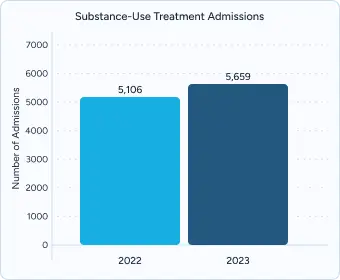
Substance-Use Treatment Admissions
Ocean County reported 5,659 substance-use treatment admissions in 2023, among the highest numbers in the state. Toms River residents make up a significant share of these cases, reflecting the city’s central role in regional treatment demand. This represents an increase from 5,106 admissions in 2022.
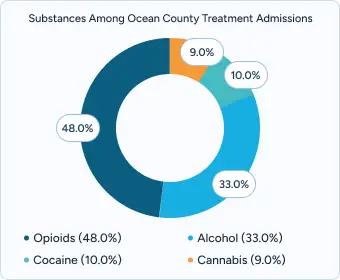
Substances Among Ocean County Treatment Admissions
Among Ocean County residents admitted to treatment, heroin/opioids (43%) and alcohol (30%) were the most common primary substances, followed by cocaine (9%) and cannabis (8%).
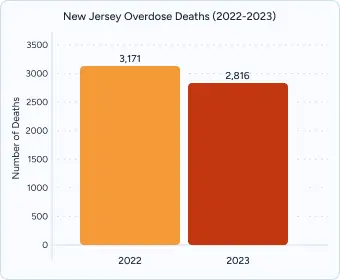
New Jersey Overdose Deaths (2022-2023)
New Jersey recorded 2,816 overdose deaths in 2023, compared with 3,171 in 2022, marking the first broad decline across all racial and ethnic groups in nearly ten years.
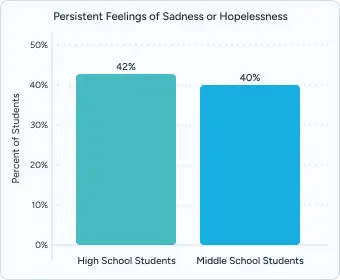
Persistent Feelings of Sadness or Hopelessness
A Rutgers/New Jersey State Policy Lab review found that approximately 42% of New Jersey high school students reported persistent feelings of sadness or hopelessness, with similar trends appearing in middle school populations.

New Jersey Children with Anxiety/Depression
Kids Count data show that 10.7% of New Jersey children (≈168,000) were reported to have anxiety and/or depression in 2020, compared with 7.6% in 2016—reflecting a sharp increase in just four years.
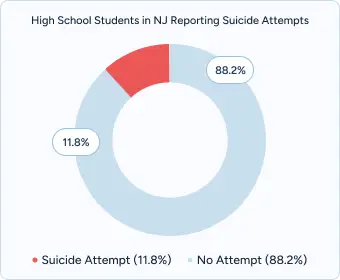
High School Students Reporting Suicide Attempts
According to the 2021 New Jersey Student Health Survey, about 11.8% of high school students statewide reported attempting suicide in the prior 12 months, underscoring the severity of the youth mental health crisis.

Toms River and the wider Ocean County area are supported by both statewide and local behavioral health resources that provide access to addiction and mental health care. New Jersey has expanded its crisis response network through the 988 Suicide & Crisis Lifeline and Mobile Crisis Outreach Response Teams (MCORTs), which operate statewide to address non-life-threatening behavioral health and substance use crises. These teams can be dispatched for in-person evaluations, de-escalation, and linkage to follow-up services when needed.
For children and adolescents, Children’s Mobile Response and Stabilization Services (CMRSS) are available in Ocean County, offering on-site interventions for youth up to age 21. These services help stabilize crises in community settings to avoid inpatient or more restrictive placements.
Local community health centers and Ocean County screening facilities ensure 24/7 psychiatric evaluations, crisis stabilization, and referrals to treatment. Mobile crisis units also extend services to neighborhoods where transportation is a barrier, improving accessibility for residents across the region.
The Haven Detox – New Jersey, located in Blackwood, NJ, delivers comprehensive treatment services for individuals throughout the state. The facility provides both medical detoxification and residential care in a supportive, recovery-centered setting designed to encourage healing and comfort.
Programs at The Haven Detox Group integrate evidence-based therapies such as cognitive behavioral therapy with residential amenities, including recreational therapy and professionally prepared meals, to enhance the treatment experience. To further individualize care, The Haven Detox Group also offers GeneSight® genetic testing, enabling clinicians to identify the most effective medications tailored to each client’s needs.
For more information about programs and admissions, call the 24/7 helpline at (856) 677-5226 to receive confidential, individualized guidance.
Toms River is supported by a broad network of behavioral health resources that serve residents across the lifespan, from children to older adults. Local community health centers and Ocean County-supported programs provide 24/7 Psychiatric Emergency Screening Services (PESS) for crisis evaluation, stabilization, and referral to appropriate care for individuals experiencing mental health or substance use emergencies.
For youth, the Ocean County Hub of the New Jersey Statewide Student Support Services (NJ4S) initiative provides school-based prevention and intervention programming. These services offer brief counseling, crisis support, and linkage to community resources for students and families, ensuring early identification and access to care within school and neighborhood settings.
Toms River residents have access to peer-driven recovery resources that focus on long-term stability and relapse prevention. The Mental Health Association in New Jersey (MHANJ) operates the Peer Recovery WarmLine (877-292-5588), staffed by trained peer specialists who provide non-clinical emotional support, lived-experience guidance, and help navigating behavioral health services.
Peer recovery is formally recognized by the New Jersey Division of Mental Health and Addiction Services (DMHAS) as part of the treatment continuum, enabling residents to include peer- and family-run support in their recovery plans.
Local community-based organizations in Ocean County also provide group support, peer coaching, family-inclusive programs, and workshops designed to help individuals transition from clinical care into sustainable recovery within the community. These programs emphasize social connection, practical skills, and community healing.
For individuals in Toms River transitioning from higher levels of care, sober living homes provide structured, substance-free environments that support recovery while encouraging independence. Multiple Oxford Houses operate in Ocean County, including in Toms River, where residents share responsibilities, participate in recovery meetings, and maintain accountability through democratic, peer-run structures.
Additional transitional housing opportunities are available through directories such as the Sober House Directory and ChooseHelp, which list recovery residences in Toms River and surrounding Ocean County communities. These homes typically include expectations such as regular attendance at support groups, adherence to house rules, random substance screenings, and ongoing engagement in treatment or work. This structure helps residents reduce relapse risk and strengthen long-term recovery.
Toms River hosts a wide range of peer-led recovery meetings, reflecting the diversity of the community. Alcoholics Anonymous (AA) meetings are held daily throughout Ocean County, including open speaker sessions, beginner groups, and private closed meetings for those seeking a more confidential setting. Spanish speaking residents also have access to bilingual and culturally relevant AA meetings.
Narcotics Anonymous (NA) has a strong presence in the Toms River area, offering meetings in multiple neighborhoods, in both English and Spanish. Online directories allow participants to filter by meeting type, location, or focus, including LGBTQ+ affirming groups and bilingual sessions. Together, AA and NA provide peer-led networks that complement clinical care by offering accountability, mentorship, and fellowship, supporting individuals at all stages of recovery.
Selecting a treatment center in Toms River or greater Ocean County means looking for programs that combine clinical quality with personalized support. Key elements to prioritize include:
Many people seeking addiction counseling in Ocean County enter care with both mental health and substance use challenges. The best programs treat conditions such as depression, anxiety, or PTSD alongside addiction rather than addressing them separately.
Effective recovery begins with a comprehensive assessment of each person’s history and needs. Strong programs then build treatment plans tailored to the individual, rather than relying on one-size-fits-all approaches.
Proven medications such as buprenorphine, methadone, and naltrexone should be available when clinically appropriate. Pairing MAT with counseling and therapy increases the likelihood of sustained recovery.
Look for programs that offer therapies supported by research, such as cognitive behavioral therapy (CBT), dialectical behavior therapy (DBT), trauma-focused therapy, and contingency management.
Facilities accredited by organizations such as The Joint Commission demonstrate compliance with rigorous clinical and safety standards, giving residents and families confidence in the quality of care.
By focusing on these features, Toms River residents can find programs that not only address immediate treatment needs but also build a strong foundation for long-term recovery.
A strong continuing care plan in Toms River begins before discharge, ensuring that individuals remain supported beyond initial treatment. Effective programs schedule follow-up appointments, provide relapse-prevention coaching, and offer step-down care such as intensive outpatient programs (IOPs), outpatient counseling, or peer recovery check-ins.
Family involvement also enhances recovery outcomes. Many New Jersey treatment systems incorporate family therapy and structured education to improve communication, establish healthy boundaries, and strengthen relapse prevention. For those who cannot safely involve family, peer groups and recovery coaching offer alternative support networks.
Statewide resources such as Certified Community Behavioral Health Clinics (CCBHCs) and Mobile Crisis Outreach Response Teams (MCORTs) further ensure rapid return-to-care if relapse or mental health deterioration occurs, helping Toms River residents avoid gaps in treatment.
Toms River’s behavioral health system emphasizes both immediate stabilization and long-term recovery support. Aftercare planning usually begins during treatment and may include relapse-prevention coaching, scheduled follow-ups, and step-down care such as outpatient therapy or peer recovery check-ins.
Structured recovery housing, such as Oxford Houses in Ocean County, provides sober, peer-run environments that encourage accountability and independence during early recovery.
Family engagement is also a priority, with many programs offering family therapy or educational groups to strengthen support systems. For those without family involvement, peer-led recovery groups and community-based networks ensure ongoing connection.
Finally, statewide programs like CCBHCs and MCORTs provide critical safety nets, enabling residents to quickly return to care if relapse occurs or symptoms worsen. These resources reflect New Jersey’s focus on coordinated, continuous treatment across communities such as Toms River.
Professional treatment represents an investment in recovery success, offering immediate access, personalized care, and comprehensive services designed to address the complex nature of addiction and mental health conditions.
Residents of Toms River, NJ can access immediate crisis intervention and linkage to treatment through New Jersey’s public behavioral health system and community-based providers.
Insurance verification in Toms River is supported by NJ FamilyCare and its managed care partners (Horizon NJ Health, Amerigroup, UnitedHealthcare, Aetna Better Health, and WellCare). These plans cover outpatient and inpatient behavioral health services, crisis stabilization, and medication-assisted treatment (MAT). For uninsured or underinsured residents, Ocean County and nonprofit organizations provide financial assistance, sliding-scale fees, and connections to county-funded services. Case managers and intake coordinators frequently assist with benefit verification and prior authorization to minimize delays in starting care.
Most behavioral health access points in Ocean County provide same-day crisis assessments with individualized treatment recommendations. Intake specialists coordinate “warm handoffs” between crisis units, detox services, and longer-term residential care or outpatient programs, reducing gaps in care. Providers often maintain communication with families, schools, and primary care physicians to promote continuity of care and engagement in treatment.
Most Toms River–area behavioral health providers schedule intake assessments within a few days, though timelines depend on demand. The Ocean County Psychiatric Emergency Screening Service (PESS) offers same-day crisis evaluations, and some local community health centers provide walk-in assessments. In urgent cases, outpatient therapy may begin the same or next day when clinically appropriate, reducing delays during a crisis.
Yes. NJ FamilyCare, New Jersey’s Medicaid program, covers individual, family, and group counseling, psychiatric services, and medication management for eligible residents, generally with no out-of-pocket costs. Managed care partners (Horizon NJ Health, Amerigroup, UnitedHealthcare, Aetna Better Health, and WellCare) also include behavioral health and crisis coverage. Copayments for behavioral health services have been eliminated for Medicaid members, lowering financial barriers to care.
Yes. Ocean County hosts Spanish-language recovery meetings through Alcoholics Anonymous (AA) and Narcotics Anonymous (NA). In addition, community health centers and nonprofit organizations employ bilingual staff and offer Spanish-language counseling, ensuring that care is accessible and culturally responsive.
Yes. Federally Qualified Health Centers (FQHCs) in Ocean County provide behavioral health services regardless of insurance status. Programs supported by the NJ Division of Mental Health and Addiction Services (DMHAS) also offer sliding-scale or grant-funded services. Statewide hotlines, including 988, remain free and available to all residents.
Yes. NJ Transit provides reduced fares through its Reduced Fare Program for seniors, individuals with disabilities, and income-eligible riders. Medicaid members may also qualify for non-emergency medical transportation (NEMT) arranged through state-contracted providers, which includes coverage for behavioral health appointments.
New Jersey operates a 24/7 crisis system. Residents can call or text 988, which connects directly to trained crisis counselors and local providers. Ocean County’s PESS is also available around the clock for in-person psychiatric evaluation, crisis stabilization, and admission if necessary.
Yes. Family peer specialists are available through DMHAS-supported programs, offering confidential support and coaching. NAMI New Jersey also provides education, guidance, and peer-led support groups for families coping with treatment resistance.
Toms River and Ocean County offer culturally responsive care, including Spanish-language counseling and LGBTQ+-affirming support groups. Statewide initiatives, such as NAMI NJ’s Latino Mental Health and LGBTQ+ outreach, expand access to culturally specific education and peer support.
Yes. Peer-led youth recovery circles and support programs are available through community organizations and statewide initiatives. NAMI NJ also runs young adult peer programs, while local colleges, including Ocean County College, partner with providers to offer wellness initiatives for students.
Let’s talk about what’s going on — no judgment. (We’ve been there before ourselves). No one will know you inquired and there is no commitment to call.
24/7 Support
No Commitment
100% Private

Why Wait?
Get Answers Now
You’re here because you know you need help. Let’s talk through it together. There’s no commitment and it’s 100% confidential even to check your insurance.
100% Confidential
