100% Confidential


Methadone treats opioid use disorder in two ways:
This combination of effects helps you to focus on your recovery while you are in treatment, rather than on the physical and psychological effects of addiction. It also makes it more likely for those with an opioid addiction to accept help because it relieves some of the fear around painful withdrawals and obsessive cravings.
Because it is a powerful prescription opioid with pain-relieving properties, Methadone is also used to treat long-term, chronic pain from conditions like cancer.
Methadone can be used to treat opioid addiction:
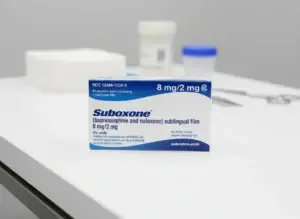
However, when it comes to treating opioid withdrawal with inpatient detox, doctors usually prefer other medications like suboxone. Methadone is almost always used in a long-term, maintenance setting.
Methadone is prescribed for opiate use disorder as part of a maintenance program. In methadone maintenance, you go to a dedicated treatment facility every day to take your daily dose of medication while being supervised by nursing staff. It’s not just substituting one drug for another; the point is to satisfy the opioid receptors in the brain without the individual having to use illicit street drugs.
Methadone maintenance is a long-term commitment that is typically reserved for those who do not respond well to other medications or have repeatedly tried other medications and treatments unsuccessfully.
Unlike other typical prescriptions, where you can take your medicine at home, Methadone is dispensed to patients at an Opioid Treatment Program to ensure precise dosing and medical supervision. This reduces the risk of people double-dosing or being inconsistent with treatment.
People who are prescribed methadone can only take home their prescription after a period of successful treatment, at the discretion of their doctor.
Methadone is prescribed to treat opioid use disorder, but it’s less common than newer medications for opioid treatment, like Suboxone. This is because Methadone lacks several important advantages that Suboxone has, like:
Despite the disadvantages, there are times when Methadone treatment makes more sense, for example:
No one medication or treatment is better; it just depends on the individual and their specific needs.
Methadone works by activating the same opioid receptors in your brain as drugs like heroin, fentanyl, or oxycodone, but in a much safer and controlled way under the supervision of a doctor.
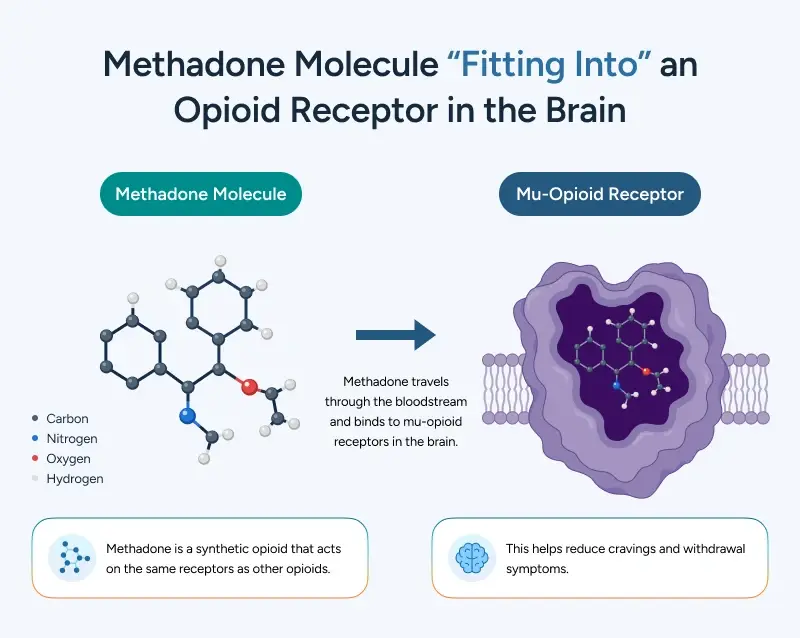
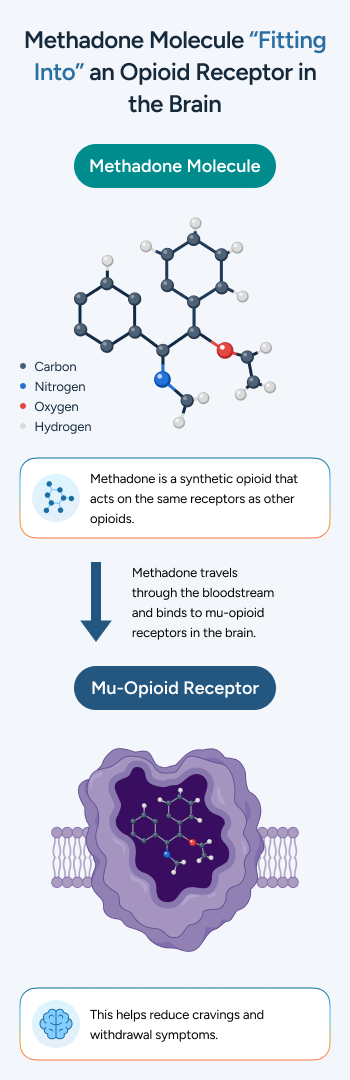
Activation of these Mu-opioid receptors helps control opioid cravings and alleviate withdrawal symptoms, allowing individuals to function normally without the cycle of repeated opioid use needed to avoid withdrawal. This combined effect plays a critical role in supporting long-term recovery from opioid use disorder.
For many people, Methadone is a life-saver because they can maintain a job, spend time with loved ones, and live a normal life without having to fuel their addiction.
The minimum recommended length of time for methadone treatment is 1 year. This is because stopping methadone requires a slow, gradual tapering off process to minimize withdrawal symptoms.
Some people take methadone for a year and then immediately start tapering off, while others choose to stay on methadone treatment for years. It depends on the individual and their plan for treatment.
The most important thing is that you don’t stop taking methadone abruptly or try to go cold turkey by yourself because it can cause harmful withdrawal. A licensed drug and alcohol treatment center that specializes in detox can help you safely taper off of methadone, even if you have been taking it without a prescription.
No, methadone does not cause a euphoric “high” feeling when it is dosed appropriately. It’s more about what you won’t feel – uncomfortable detox symptoms and heavy cravings to use drugs.
Methadone treatment doesn’t feel like much of anything. The medication starts relieving opioid withdrawal symptoms within the first 30 minutes to an hour, and the effects should last until it’s time for your next dose.
Your medical team will work with you to find a dose that doesn’t make you feel high, but still gives you relief and allows you to function.
Every patient is different, and opioid tolerance can vary widely from person to person. That said, there are some general guidelines for methadone dosing:
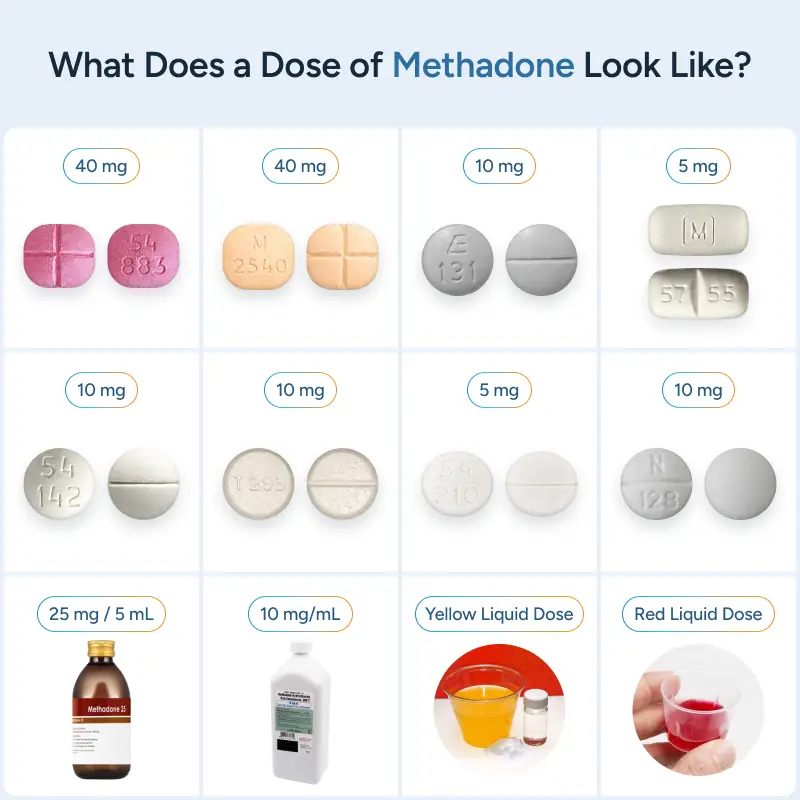
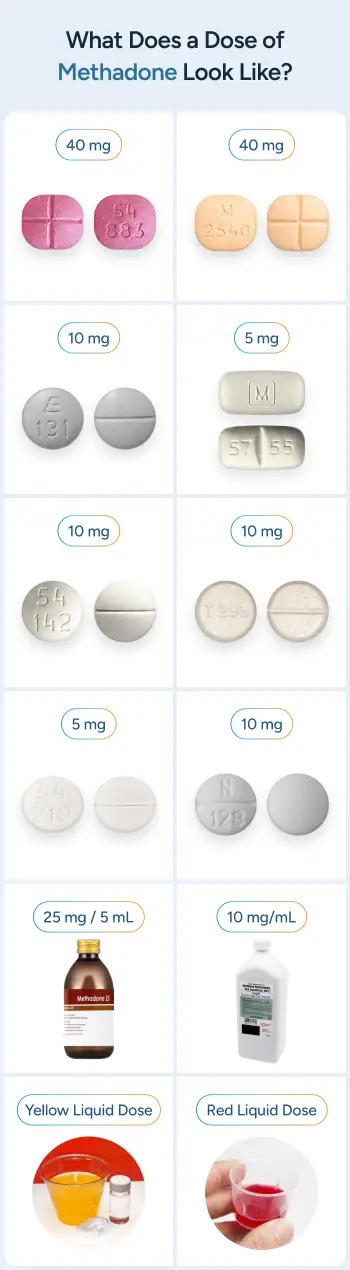
What does a dose of methadone look like?
Methadone comes in tablet, wafer, or liquid form, depending on the manufacturer.
Yes, like any medication, methadone can cause side effects. The short-term side effects of methadone are very similar to those of other opioids and commonly include:
Typically, these side effects are manageable and go away after the body builds up a tolerance. If you are experiencing side effects from methadone that aren’t going away, you should talk to your medical team, as your dose may need to be adjusted.
Taking methadone in the long-term causes you to build up a tolerance and potentially physical dependence. However, targeted, controlled dosing of a medication under a doctor’s supervision is not the same as living in addiction. Many patients on methadone treatment live happy and successful lives.
When taken as prescribed, Methadone is a safe and effective treatment for opioid use disorder.
While it does cause physical dependence, it is not as addictive as street drugs like fentanyl or heroin because of the dosage and how it’s administered.
Also, taking methadone is not just substituting one addiction for another. Methadone, like suboxone and naltrexone, is specifically designed to reduce cravings, alleviate withdrawal symptoms, and overall make you feel better so that you can focus on treatment and getting healthy.
Methadone has a longer half-life than other opioids, which means it stays in the body for longer. It also means symptoms often last longer than fentanyl or heroin withdrawal, especially if you have been taking a high dose for a long time.
Methadone Withdrawal Timeline
Withdrawal from methadone is very similar to that of other opioids. The main difference is that symptoms tend to last longer because methadone stays in your system longer than other opioid medications.
Symptoms come in waves and can range from feeling slightly uncomfortable to full physical withdrawal symptoms, where seeking medical support is vital.
What are the most common Methadone detox symptoms?
The most common withdrawal symptoms when detoxing from methadone are:
Can you overdose on methadone?
Like any opioid, if you take enough methadone, you can overdose. However, the fact that it is administered under the care of a doctor makes the risk of overdosing during methadone maintenance treatment extremely rare.
It’s also important to note that one of the most important benefits of methadone treatment is that it significantly reduces the risk of overdose death. People who take methadone are less likely to use illicit opioids such as fentanyl or heroin, which can vary widely in potency and may contain dangerous contaminants.
Yes, methadone treatment is covered under most major insurance plans, as well as Medicaid. However, coverage may vary, and there may be out-of-pocket costs depending on your plan and whether the provider is in network.
The medication itself isn’t expensive, but a large majority of the cost of methadone treatment goes to therapy and administrative costs. Typically, if you are prescribed methadone, you are an active patient at an outpatient or inpatient addiction treatment center.
Medically supervised detox is also covered by most insurance plans. If you are struggling with opioid addiction, it is important that you speak to a medical provider. The best way to begin your path to recovery is at a 24/7, medically supervised detox center that is Joint Commission Gold Seal accredited.