100% Confidential


Hangxiety, a mix of the words “hangover” and “anxiety.” It refers to the overwhelming feelings of anxiety or nervousness some people experience after drinking alcohol.
Hangxiety is a psychological response linked to how alcohol affects your brain and body.
Skip to: Causes | Prevention | Cure
Hangxiety feels like a wave of unease or dread that hits after drinking alcohol, often the morning after. It’s hard to relax or focus and can feel like a panic attack or severe stress to some people.
Common emotional symptoms include:
Physical sensations often accompany the anxiety, such as:
“If I lay still and try to sleep going through hangxiety I feel like I am about to explode. My whole body feels as it is being electrocuted. Even if I do sleep it usually lasts about a minute of the most vivid nightmares ever and I wake up in a panic.”
“My entire body felt like it was vibrating from the inside. There was an overwhelming sense of pure panic at simply existing—absolute dread and an intense mental terror that was impossible to escape.”
“The most unimportant things seemed so devastating during the anxiety. And, the only relief to get your brain to turn off would be to drink more, which would make the anxiety worse later.”
In a 2025 survey, 47% of patients report anxiety during their last hangover.
Binge drinking—or drinking a large amount of alcohol in a short period—significantly increases the likelihood of experiencing “hangxiety,” because it leads to rapid spikes and subsequent drops in blood alcohol levels.
Not everyone experiences hangxiety. Certain factors make some people more susceptible:

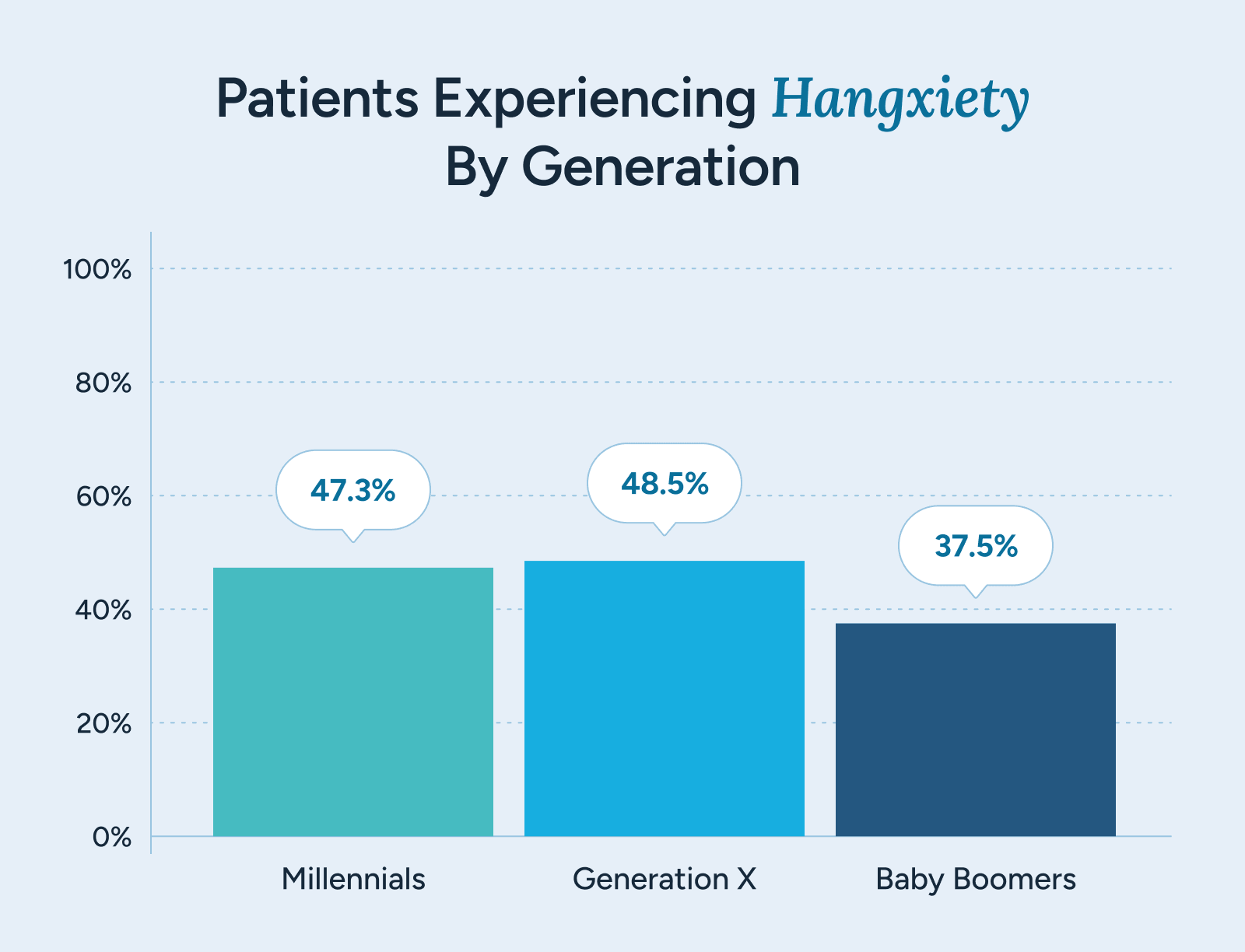
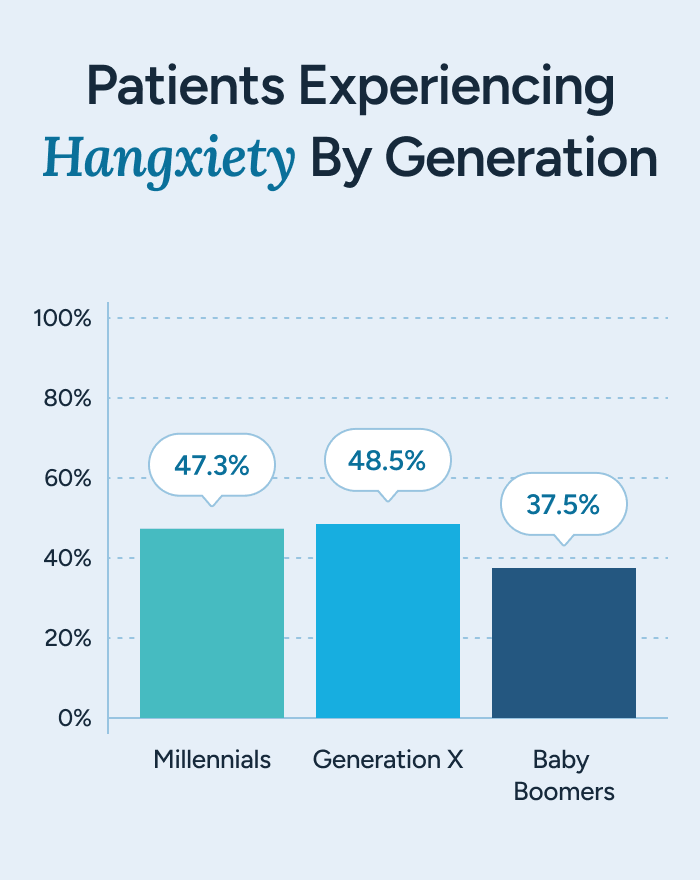
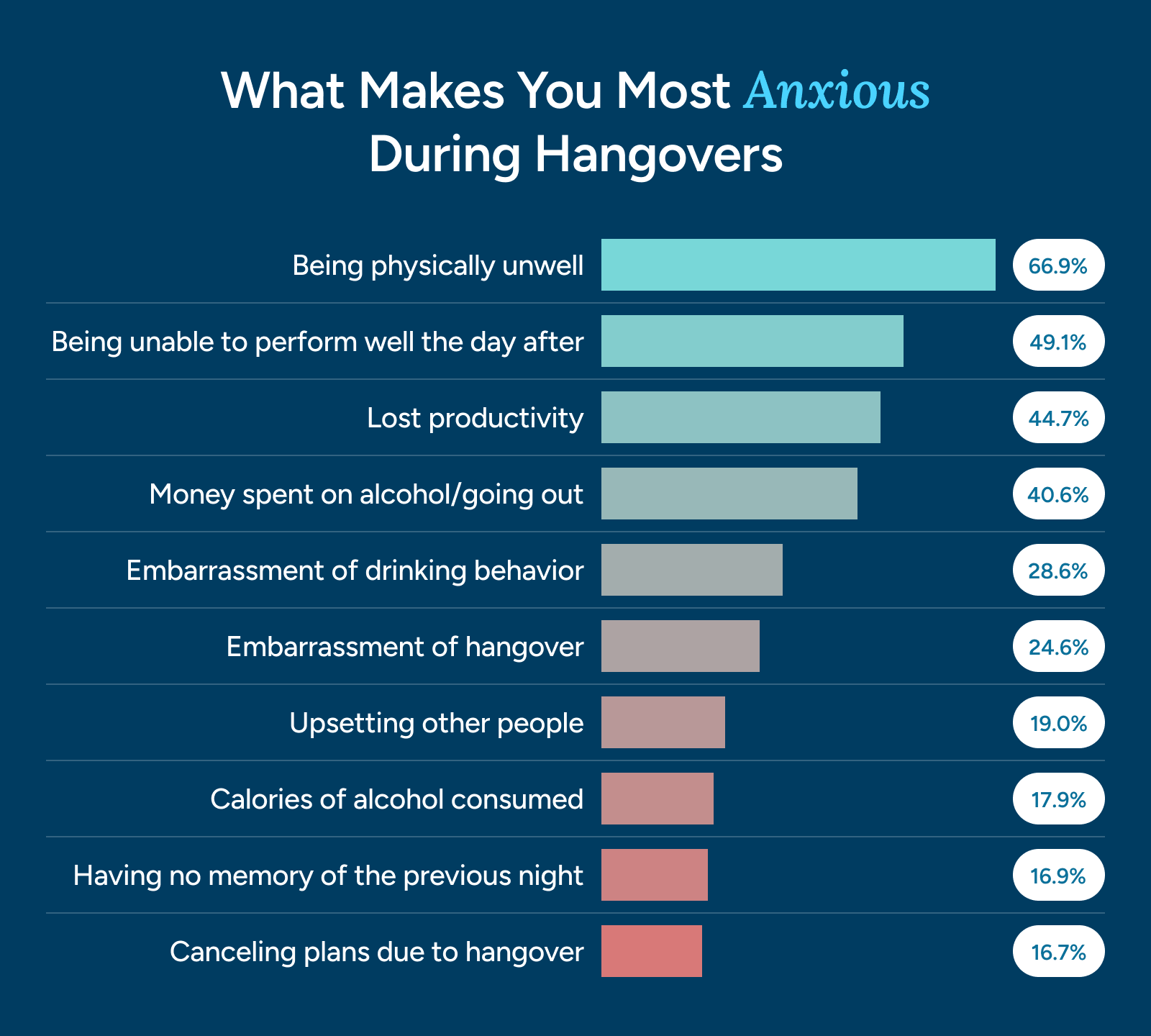
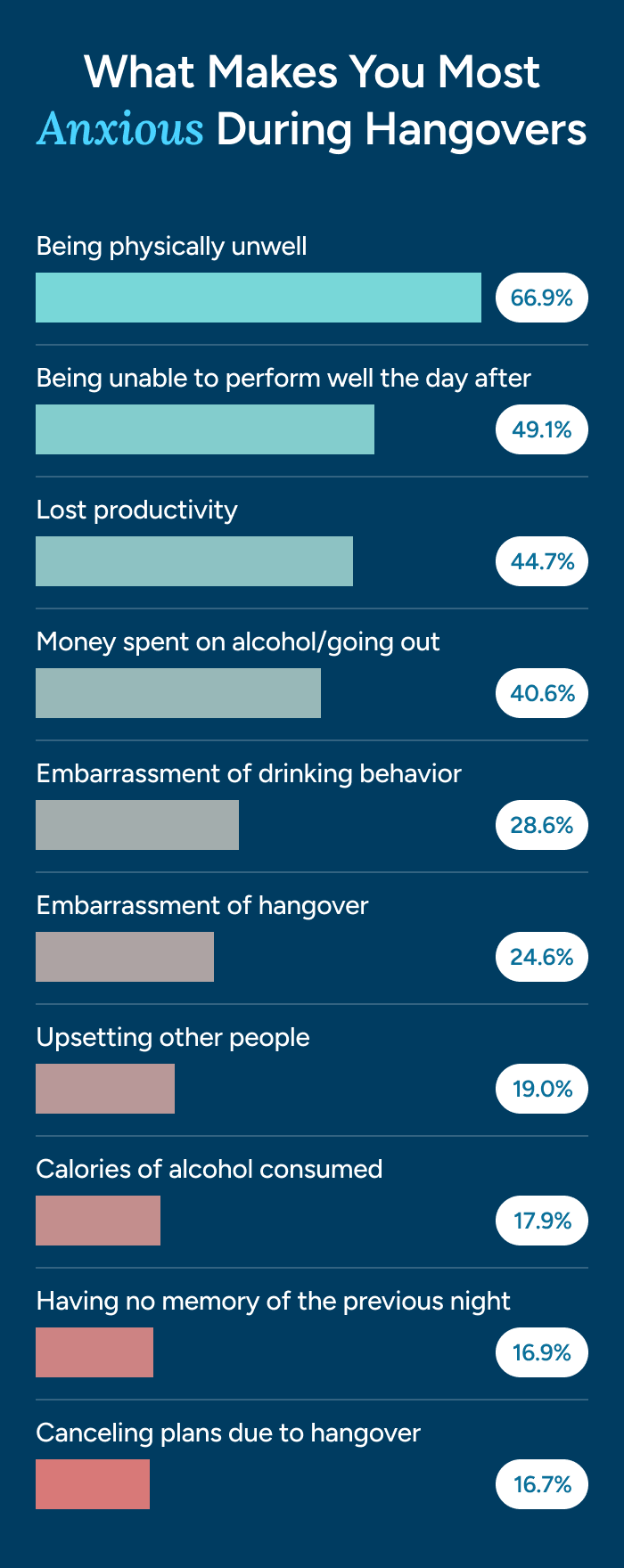
According to our data, patients most often feel anxiety because of feeling physically sick and being unable to perform well the next day. Financial and social regret are also common.
Drink in Moderation
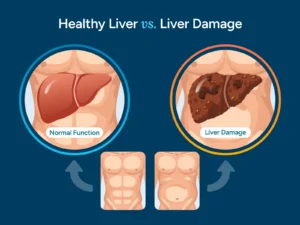
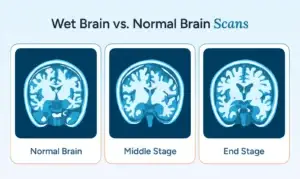
Limit yourself to no more than one standard drink per hour. Space drinks out by having water in between alcoholic drinks to give your body time to process the alcohol. The CDC recommends limiting drinking to one to two drinks per day. This will also help prevent other serious consequences like alcohol-induced dementia or alcohol-induced liver injury.
Stay Hydrated
Drink at least one glass of water (8-12 ounces) for every alcoholic beverage consumed to counteract dehydration. Start hydrating before your first drink and continue throughout the evening.
Avoid Caffeine
Combining alcohol with caffeine, like energy drinks, can mask the depressant effects of alcohol, leading to increased consumption and heightened anxiety. Caffeine is a stimulant that can exacerbate anxiety symptoms, especially during a hangover when the body is already stressed.
Eat Before Drinking
Choose a balanced meal rich in protein (e.g., chicken, eggs or tofu), healthy fats (e.g., avocado, nuts or olive oil), and complex carbohydrates (e.g., whole grains, sweet potatoes or quinoa). This combination slows alcohol absorption and helps stabilize blood sugar, which can reduce the risk of hangxiety.
Set Boundaries
Decide in advance how many drinks you’ll have, and consider bringing your own non-alcoholic options to social events to stay in control. If you feel pressured, rehearse responses like, “I’m taking it easy tonight” or “I’m pacing myself.” Apps like Sunnyside can also help you track and reduce your intake.
Consider The Alcohol
Lighter options like white wine, gin, vodka and light beer may result in milder hangover effects, including anxiety.
Time is the only cure for hangover symptoms, including anxiety. Taking care of your body may help lessen or speed up healing, including:
Hangxiety typically begins within hours after drinking stops and typically lasts 12 to 24 hours as the body processes the alcohol. For some people, mild symptoms may linger for up to 48 hours.
Anxiety lasting longer than a day could be a sign of underlying anxiety issues unrelated to alcohol or a sign of alcohol withdrawal from chronic alcohol use.
Monthly binge drinking leads to a 1.6x higher likelihood of developing long-term anxiety or depression.
Regular episodes of hangxiety may contribute to chronic anxiety and increase the risk of developing alcohol dependency.
If anxiety persists beyond two days or if you find yourself unable to stop drinking despite consequences like hangxiety, it’s time to talk to someone.
Sources