100% Confidential


Topamax is a seizure medication used off-label to help stop alcohol cravings in people with Alcohol Use Disorder (AUD).
The medication is sometimes considered when first-line medications like Naltrexone (Vivitrol) or Acamprosate (Campral) haven’t fully addressed the cravings or drinking urges.
Topamax is the brand name for the drug Topiramate.
Patients that respond best to Topamax usually have at least one of the following characteristics:
It is unlikely Topamax is a good choice if:
Topamax is often combined with other medications, such as Naltrexone (Vivitrol). While Topamax primarily targets cravings, Naltrexone reduces the likelihood of relapse by creating an aversion to alcohol.
Usually, patients start with Naltrexone. It’s backed by the most research and FDA-approved for addiction. It can also be given as a monthly shot (Vivitrol) to help you not skip a dose.
If you’re already using Naltrexone and need more support, acamprosate or Topamax may be considered.
If you struggle with chronic pain and have no history of abusing drugs like cocaine or meth, consider Gabapentin off-label.
Compare Alcohol Medications
You and your doctor should work together to find the medication(s) that help, then:
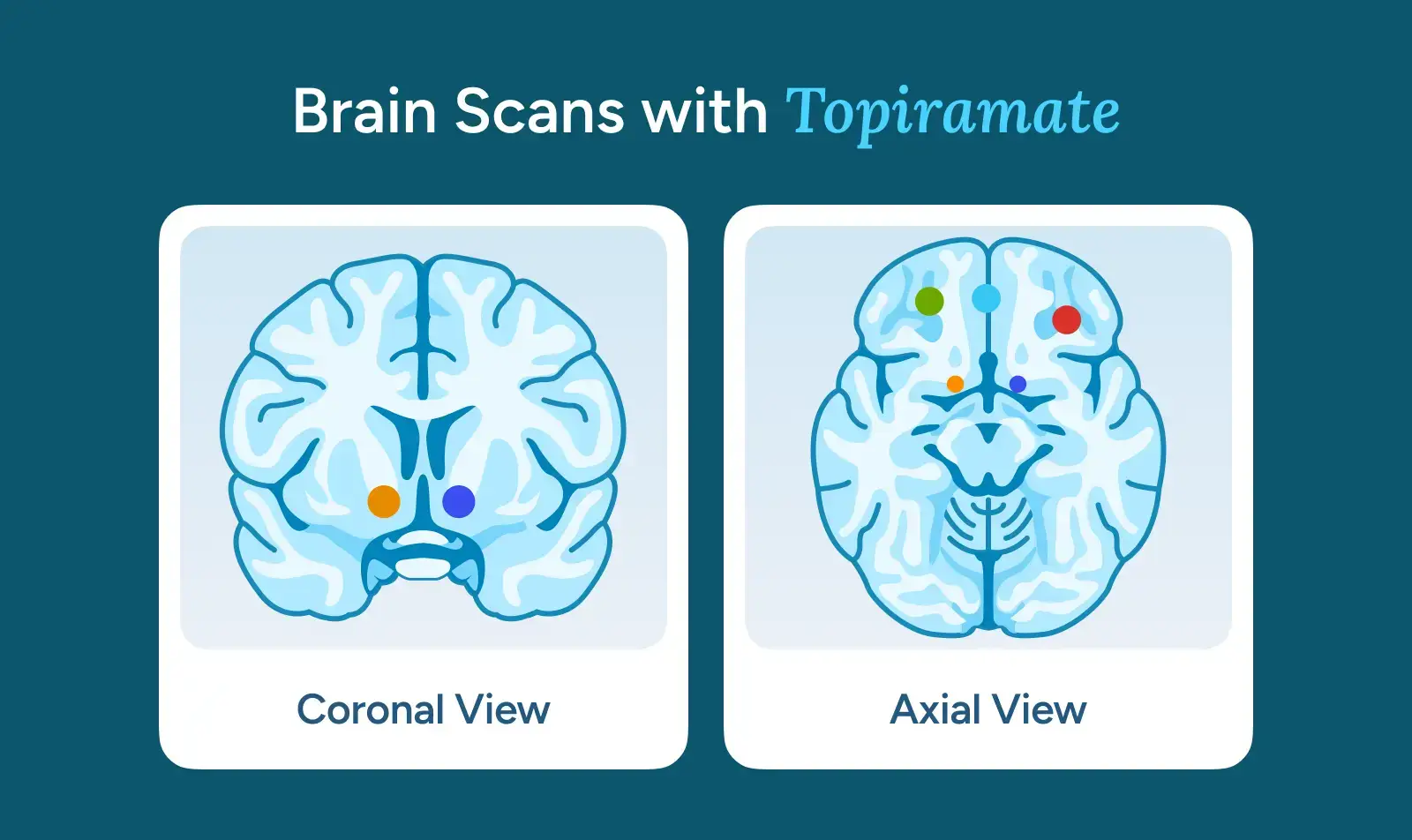
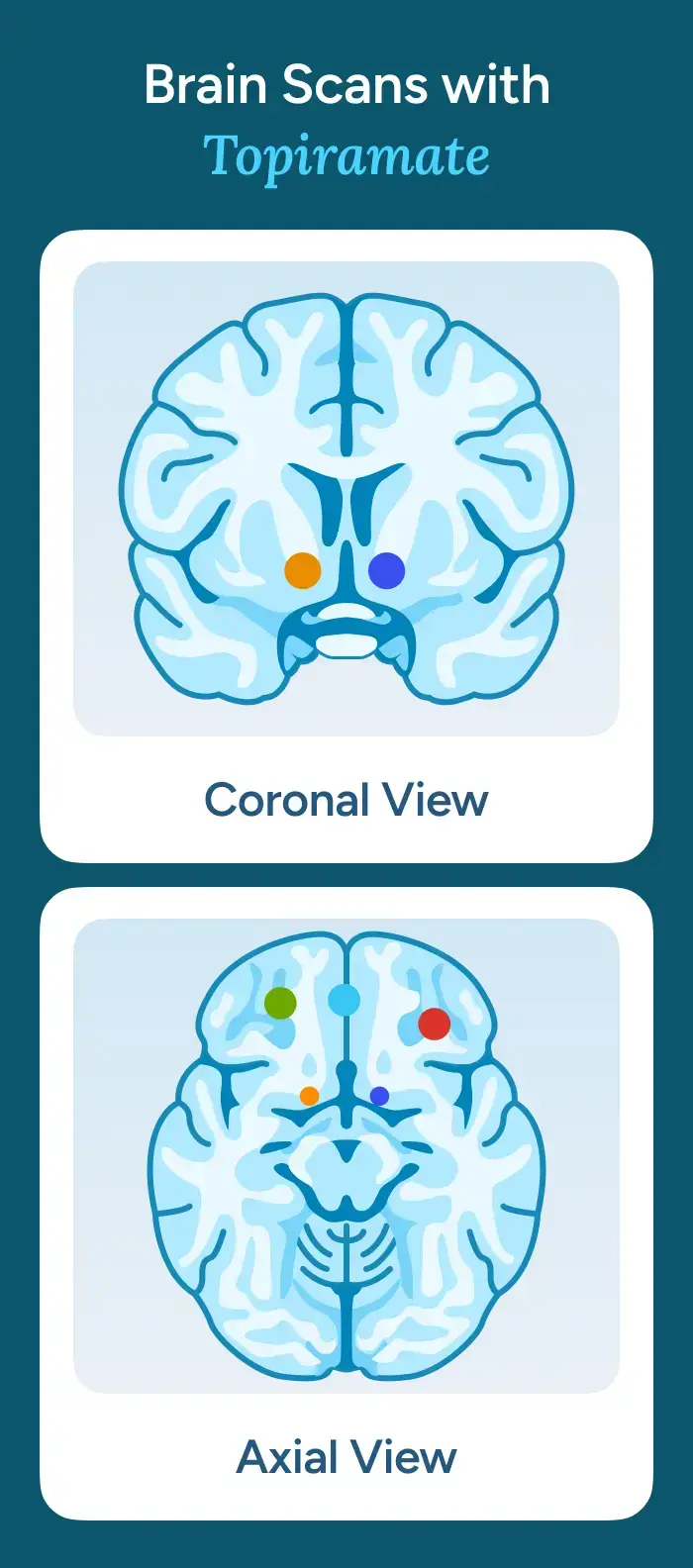
Topamax works by reducing activity in the ventral striatum and orbitofrontal cortex — two areas of the brain heavily involved in reward processing.
By decreasing the brain’s response to alcohol-related cues, Topamax makes alcohol less desirable, which helps reduce cravings and, in turn, heavy drinking.
Topamax was created to make neurons in the brain less likely to stimulate the undesirable action of seizures. For patients with alcohol issues, it makes neurons less likely to stimulate the undesirable alcohol cravings.
Topamax is also a GABA agonist that produces a relaxation effect and may also improve overall mental health.
Research generally has shown that one in three AUD patients respond positively to Topamax, experiencing reduced cravings and longer periods of sobriety. Though, patients who combine medication with therapy and other support systems usually get better outcomes.
The Johnson et al. 2004 trial not only found that patients taking Topamax had significantly fewer heavy drinking days compared to the placebo group, but the medication was also linked to improvements in both physical health and quality of life. 
While these results are promising, they also show that Topamax is not effective for the majority (around 66%) of patients.
Topamax is not technically FDA-approved for Alcohol Use Disorder (AUD). It’s unlikely the pharmaceutical company will pay for FDA approval since the trademark on the medication has expired and generics are available.
The use of Topamax “off-label” in AUD doesn’t suggest that Topamax is unresearched. Plenty of studies and the experiences of many patients show it can work.
Topamax treatment begins with a low dose, usually starting at 25mg per day, and gradually increasing based on patient needs and tolerability.
It can be increased by 25mg per day for the first 3 weeks, then increased by 50mg a week to a maximum of 300mg a day, if needed.
Topamax is particularly helpful during the early stages of recovery (the first or second year), where cravings are most intense and recovery support is still being built. Long-term use is not usually necessary.
No, Topamax does not give off a “high” or other effect that people would chase. Your body gets used to the medication and you will need to taper off of it, but you will not crave Topamax.
Most of the information on Topamax is about seizures and migraines since those are the FDA-approved purposes. While you may find stories in forums, please understand that is one person’s experience. There may be crucial information missing from these stories and it may not reflect what you will experience.
The benefit of using Topamax for alcohol issues is to stop cravings. Cravings are the urge to want to drink alcohol. Though Topamax does not stop cravings for everyone, for some it is life-changing.
“The winning combo for me was Topamax/Ondansatron. Literally no cravings whatsoever.”
“I stopped drinking with Topamax. I don’t remember having any side effects. I started drinking again when I stopped taking it. I switched to Naltrexone a couple of months ago and I find it’s working the same as Topamax, but I think the Naltrexone will work better long-term because it’s created an aversion to alcohol even when I don’t take it.”
“After Naltrexone and Antabuse failed for me due to the side effects of those, I am finally finding Topamax working. It greatly reduced my drinking urges. I would say the quantities I take make me tired sometimes, but the reduced urges are worth it.”
“I was on it for cravings, but I still craved alcohol as usual. However, it completely took away all my headaches and migraines. While I originally took it for alcoholism, I stayed on it for the headache relief.”
Stopping Topamax cold turkey can cause seizures even in people not taking it for epilepsy. Many people report blurry vision and dizziness, after skipping just one dose and even at low doses (25-50mg).
Flu-like symptoms, including diarrhea, are possible even when stepping down slowly.
“I was on Topamax for mannnny years. I weaned down to 25mg for a few months, but even a week after completely stopping the withdrawal effects were brutal. It was hard to see my phone, heart palpitations, anxiety.”
“I stopped because I couldn’t get my meds in time. For the first two days I was super energetic, almost manic. Starting new projects, talking loud and fast, not sleeping much. Then, it devolved into this horrific anxiety and depressed feeling. I was only on 25mg a day.”
“I personally didn’t have any bad side effects with withdrawal, but I was only on 25mg twice a day and followed the doctors advice.”
Topamax has a reputation for creating brain fog (jokingly referred to as “dopamax”). The most common side effects are confusion, memory issues, sleepiness, dizziness and depression. These side effects can be serious and why many patients stop the medication.
As with all medications, you have to weigh the benefits against the side effects.
Is Topamax helping your cravings and helping you stay sober?
“For me the side effects only got worse and I had to stop taking it completely. It made me sluggish, took away my appetite (I lost 10 lbs) and towards the end made me anxious.”
The recommendation is not to drink alcohol on Topamax. While there isn’t a lot of published research on the topic, drinking alcohol with Topamax generally makes side effects worse.
Alcohol does not seem to render Topamax ineffective, at least with the typical dosage (25-300mg). There have also been no reported fatalities or organ damage with this combination, though heavy drinking itself causes both.
Taking Naltrexone with Topamax is helpful to prevent binge drinking in case there is a slip-up.
“I started Topamax and Naltrexone and noticed a change immediately. I felt dizzy and uncomfortable, so make sure you’re in a safe environment. But, it TOOK AWAY ALL CRAVINGS! When I continued drinking, I felt dizzier and sicker. It made me put down the glass immediately, and I haven’t looked back. In fact, the smell or thought of a drink makes me gag now. Alcohol robbed many years of my life. I am willing to give anything a chance. This seems to work, with a few side effects…that hopefully will subside.”
Alcohol issues are complex and no medication is a cure.
Those who qualify for Topamax often require medical detox first. There’s no shame in reaching out for help.
Sources