

 100% Confidential
100% Confidential
100% Confidential

Get Help Today 24/7
Jersey City Addiction Treatment & Mental Health Resources Guide

Dr. Rostislav Ignatov, MD
Chief Medical Officer
Jersey City faces substantial behavioral health challenges, aligned with statewide trends in New Jersey. Overdose deaths across the state remain high, though recent data shows a slight decline: in 2023, New Jersey recorded 2,800 unintentional overdose deaths, down from 3,171 in 2022. Youth mental health concerns in the state are also rising, with reports indicating increasing rates of depression, anxiety, and self-harm among middle and high school students.
Despite this, Jersey City has access to a broad network of treatment resources, including hospital-based behavioral health services, outpatient clinics, school-based mental health supports, peer recovery networks, and state funded insurance via New Jersey Medicaid (NJ FamilyCare). Partnerships between school districts, local hospitals (such as Jersey City Medical Center), and community organizations also support overdose prevention, naloxone access, and targeted outreach.
However, gaps remain in treatment access among youth and in underserved neighborhoods. This guide is intended to help residents navigate available addiction, mental health, and substance abuse services in Jersey City and how programs like The Haven Detox – New Jersey provide safe, comprehensive care in a supportive setting for Jersey City residents.
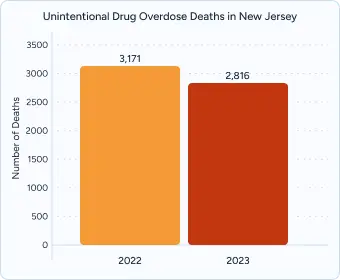
In 2023, New Jersey recorded 2,816 unintentional drug overdose deaths, down from 3,171 in 2022, marking the first drop in over a decade across all racial and ethnic groups.

The state Office of the Chief State Medical Examiner reported that in 2023, more than seven New Jersey residents died per day from overdose. Over 2,300 of the overdose deaths were determined to be opioid-related.
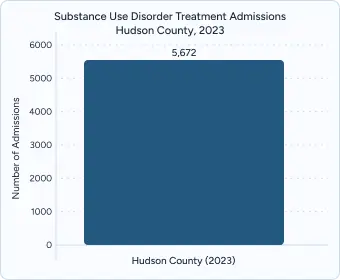
In 2023, there were 5,672 treatment admissions for substance use disorders among Hudson County residents.
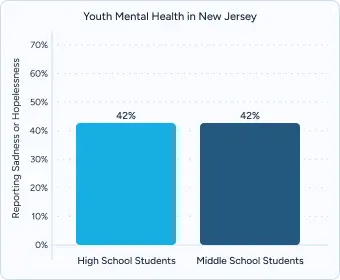
According to “Youth Mental Health in New Jersey: Current Status and Opportunities for Improved Services,” a Rutgers / State Policy Lab report, 42% of high school students endorsed feeling sad or hopeless most days, with similar emotional distress reported among middle school students.
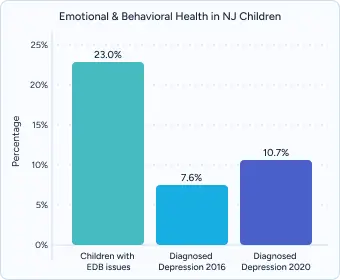
Emotional, developmental, or behavioral issues were reported for approximately 23% of NJ children in recent surveys, suggesting large numbers with diagnosable or potentially diagnosable conditions needing support.
Diagnosed depression or anxiety in children ages 3-17 increased from 7.6% in 2016 to 10.7% in 2020.

According to state-level youth mental health data, over 10.7% of children (age 0-17) in New Jersey were reported to be struggling with anxiety or depression in 2020, up from 7.6% in 2016.

Jersey City is supported by a network of statewide and local programs that provide access to mental health and addiction treatment. New Jersey has expanded its crisis response capacity through the 988 Mobile Crisis Outreach Response Teams (MCORTs), which now serve residents who call, text, or chat 988. These teams offer non-law-enforcement crisis intervention, including in-person response and follow-up care to connect individuals with ongoing treatment.
In Hudson County, Catholic Charities provides Mobile Response Stabilization Services, which operate around the clock to stabilize children and families in crisis directly in the community rather than defaulting to emergency room transport.
At the local level, JC Responds initiative, which connects residents to hotlines, walk-in services, and community healing programs, ensuring that mental health and substance use emergencies are met with timely support and linkage to longer-term resources.
The New Jersey Medicaid program (NJ FamilyCare) provides comprehensive coverage for behavioral health and addiction treatment for Jersey City residents. Benefits include crisis intervention, inpatient and outpatient psychiatric care, residential services, substance use disorder treatment, medication-assisted treatment (MAT), and support services such as peer and family programs, case management, interpreter assistance, and transportation when medically necessary.
New Jersey maintains policy standards for timely access to care for Medicaid members to ensure that urgent needs are addressed quickly:
NJ FamilyCare also maintains an online provider directory where members can search for local behavioral health providers, confirm which are accepting new Medicaid patients, and filter by specialty, languages spoken, and covered services.
The Haven Detox – New Jersey, located in Blackwood, NJ, provides comprehensive treatment services for individuals across New Jersey. The center offers both medical detoxification and residential treatment in a supportive, recovery-focused environment designed to promote healing and comfort. Programs at The Haven Detox combine evidence-based therapies, including cognitive behavioral therapy and holistic practices such as yoga, fitness, art therapy, and mindfulness-based activities. With pharmacogenetic testing like GeneSight, clinicians identify the most effective medications for each client’s unique needs.
Jersey City is supported by a wide range of public and community-based behavioral health resources that provide care for residents of all ages. Local psychiatric emergency screening services operate 24/7, offering crisis evaluations, stabilization, and referrals to appropriate treatment levels. NJ Mental Health Cares, a statewide referral line, helps residents connect to counseling, peer support, and crisis services.
Additionally, Jersey City Medical Center offers a School-Based Clinic at Snyder High School, providing onsite counseling services for students.
Jersey City residents have access to several peer-driven recovery resources that emphasize lived experience, social connection, and practical support. The Recovery Junction Recovery Center, located in Journal Square, is a peer-run community hub that provides one-on-one peer coaching, support groups, family-inclusive events, and workshops focused on life skills and recovery planning. The center is designed as a safe, welcoming space where people in recovery and their families can build community while accessing direct support.
The Mental Health Association in New Jersey operates the Peer Recovery WarmLine (877-292-5588), a telephone support service staffed by trained peers with lived recovery experience. Callers receive non-clinical support, guidance navigating services, and ongoing encouragement from people who have faced similar challenges.
Statewide, the New Jersey Division of Mental Health and Addiction Services also recognizes Peer Recovery Support Services (PRSS) as part of the treatment continuum, enabling residents to request peer- or family-run support as part of their care plan. These services help bridge the gap between crisis stabilization, formal treatment, and long-term community recovery.
For individuals transitioning out of inpatient or intensive outpatient treatment, Jersey City and Hudson County provide structured sober living environments that reinforce sobriety while supporting independence. Several Oxford Houses operate in Jersey City, such as Oxford House Palisade and Oxford House Bostwick, offering peer-run housing where residents share responsibilities, support each other’s recovery, and maintain accountability through established rules and sobriety standards.
Additional transitional housing and sober homes in the county are listed through directories such as Sober House Directory and ChooseHelp, which note available residences in Jersey City and surrounding neighborhoods.
Jersey City hosts a wide range of recovery meetings, reflecting the community’s diversity and needs. Alcoholics Anonymous (AA) meetings take place daily across the city, including at The Barrow Mansion, which holds beginner groups, discussion meetings, and closed sessions for individuals seeking a more private setting. Spanish-speaking residents can also access culturally and linguistically relevant AA meetings, such as Grupo Unidad, which meets in Jersey City.
Narcotics Anonymous (NA) also maintains a strong presence in Hudson County, with meetings held in multiple neighborhoods and available in both English and Spanish. Online directories list verified meeting times by format, location, and identity focus — including LGBTQ+ affirming groups and bilingual gatherings — ensuring that people can find a recovery space that feels safe and welcoming. Together, AA and NA provide vital peer-led networks that complement formal treatment by offering ongoing accountability, mentorship, and fellowship for individuals in all stages of recovery.
When selecting a treatment program in Jersey City, make sure it includes a comprehensive assessment that covers substance use history, mental health conditions, and family/social support systems. Many local programs (e.g., in Jersey City’s evidence-based rehab centers, outpatient clinics like SOBA New Jersey, or Addiction Treatment centers listed via Psychology Today) offer dual diagnosis screening so that co-occurring disorders like anxiety, PTSD, or depression are treated alongside addiction.
Look for evidence-based therapies—because these have strong data supporting their effectiveness:
Cultural competency is also essential. Treatment programs in Jersey City should provide services in Spanish and other languages, employ bilingual staff, and offer or refer to culturally specific or identity-affirming support groups.
A strong continuing care plan begins while in treatment and includes aftercare or transitional support, not just discharge. Look for programs that schedule follow-ups, relapse prevention coaching, and step-down levels of support such as outpatient therapy or peer recovery check-ins. Local providers, such as those listed in Jersey City’s rehab directories, often include aftercare planning as part of their structure.
Programs that engage family therapy or education tend to have better outcomes. Ask whether the program supports family involvement (if safe and desired), or offers separate support if family involvement isn’t possible or healthy. Many dual diagnosis centers in NJ include family counseling components.
Also check whether there is rapid return to care if risk rises—if relapse occurs or mental health worsens. Programs that have crisis lines, ongoing monitoring, or mobile outreach can close gaps quickly. For instance, NJ’s Certified Community Behavioral Health Clinics (CCBHCs) are designed to provide continuous, coordinated care for those with significant behavioral health needs.
Aftercare or transitional support is an important part of recovery. Look for programs that schedule follow-ups, relapse prevention coaching, and step-down levels of support such as outpatient therapy or peer recovery check-ins. Local providers, such as those listed in Jersey City’s rehab directories, often include aftercare planning as part of their structure.
Family therapy or psychoeducation therapy tend to give patients better outcomes. Ask whether the program supports family involvement (if safe and desired), or offers separate support if family involvement isn’t possible or healthy. Many dual diagnosis centers in NJ include family counseling components.
Also check whether there is rapid return to care if risk rises—if relapse occurs or mental health worsens. Programs that have crisis lines, ongoing monitoring, or mobile outreach can close gaps quickly. For instance, NJ’s Certified Community Behavioral Health Clinics (CCBHCs) are designed to provide continuous, coordinated care for those with significant behavioral health needs.
Professional treatment represents an investment in recovery success, offering immediate access, personalized care, and comprehensive services designed to address the complex nature of addiction and mental health conditions.
Residents of Newark, NJ can access immediate crisis intervention and placement into treatment through both public and private providers.
Insurance verification in Newark is supported by NJ FamilyCare and its managed care organizations, including Horizon NJ Health, Amerigroup, Aetna Better Health, UnitedHealthcare, and WellCare. These plans cover crisis services, inpatient and outpatient psychiatric care, medication-assisted treatment (MAT), and residential rehabilitation. For uninsured or underinsured residents, Essex County, Rutgers UBHC, and nonprofit partners provide sliding-scale fees, charity care, and linkage to state-funded services. Case managers and patient navigators assist with prior authorization, ensuring patients transition into treatment with minimal delay.
Most Newark behavioral health providers offer same-day crisis assessments and individualized treatment recommendations. Intake specialists coordinate “warm handoffs” between emergency departments, crisis screening centers, detoxification programs, and longer-term outpatient or residential services. Providers frequently maintain communication with family members, schools, and referring agencies to support continuity of care and improve long-term treatment engagement.
Most Newark providers schedule intake assessments within a few days, though availability depends on provider capacity. University Hospital’s Psychiatric Emergency Screening Service (PESS) offers 24/7 same-day crisis evaluations, and many community providers, including Rutgers University Behavioral Health Care (UBHC), can begin therapy within 24–72 hours when clinically appropriate. This ensures that residents experiencing a crisis do not face long delays before starting treatment.
Yes. NJ FamilyCare (New Jersey’s Medicaid program) covers outpatient counseling, psychiatric care, inpatient treatment, and medication management at little to no cost for eligible residents. Managed care organizations such as Horizon NJ Health, Amerigroup, UnitedHealthcare, Aetna Better Health, and WellCare extend these benefits and also cover crisis services. Behavioral health copayments have been eliminated for Medicaid members, reducing financial barriers to accessing care.
Yes. Newark’s large Hispanic and Latino population has access to Spanish-language Alcoholics Anonymous (AA) and Narcotics Anonymous (NA) meetings, as well as bilingual services at organizations like La Casa de Don Pedro and Ironbound Community Corporation. Local hospitals and clinics, including those within the RWJBarnabas Health system, employ bilingual clinicians to provide culturally and linguistically responsive care.
Yes. Newark residents without insurance can receive care through Federally Qualified Health Centers (FQHCs) such as Newark Community Health Centers, which provide behavioral health services on a sliding-scale basis. Nonprofits funded by the NJ Division of Mental Health and Addiction Services (DMHAS) also offer grant-funded treatment and peer recovery support. Crisis hotlines, including 988, remain free for all residents regardless of insurance status.
Yes. NJ Transit provides discounted fares for low-income riders, seniors, and people with disabilities through its Reduced Fare Program. NJ FamilyCare covers non-emergency medical transportation (NEMT), arranged through LogistiCare, to behavioral health appointments. Some private providers and hospitals in Newark also coordinate transportation support, including partnerships with rideshare services.
New Jersey maintains a statewide 988 Suicide & Crisis Lifeline, available 24/7 by call, text, or chat. In Essex County, University Hospital’s PESS operates 24/7 and can admit patients for psychiatric evaluation or stabilization. The MHA-NJ Peer Recovery WarmLine (877-292-5588) also provides non-clinical peer support outside of regular hours.
Yes. NAMI New Jersey offers family education, peer support groups, and one-on-one guidance for loved ones navigating treatment resistance. Al-Anon and Nar-Anon groups in Newark also provide confidential peer-based support for families affected by substance use. DMHAS funds Family Peer Support Services, giving families access to trained specialists with lived experience.
Newark offers culturally responsive programs, including Spanish-language counseling, LGBTQ+-affirming peer support groups, and community-based organizations addressing cultural needs. NAMI NJ’s Latino Mental Health Initiative and LGBTQ+ outreach programs provide education and tailored resources statewide. Faith-based and immigrant support organizations in Newark, such as La Casa de Don Pedro, also integrate mental health and addiction support.
Yes. Youth and young adult programs in Newark are offered by Rutgers UBHC, which provides transition-age services for those ages 16–25, including academic support, relapse prevention, and career counseling. NAMI NJ’s Young Adult programs also provide peer-led groups and mentorship. Colleges like Rutgers–Newark and Essex County College partner with local providers to deliver student wellness and behavioral health programs.
Let’s talk about what’s going on — no judgment. (We’ve been there before ourselves). No one will know you inquired and there is no commitment to call.
24/7 Support
No Commitment
100% Private

Why Wait?
Get Answers Now
You’re here because you know you need help. Let’s talk through it together. There’s no commitment and it’s 100% confidential even to check your insurance.
100% Confidential
Why Wait?
Get Answers Now
You’re here because you know you need help. Let’s talk through it together. There’s no commitment and it’s 100% confidential even to check your insurance.
100% Confidential
