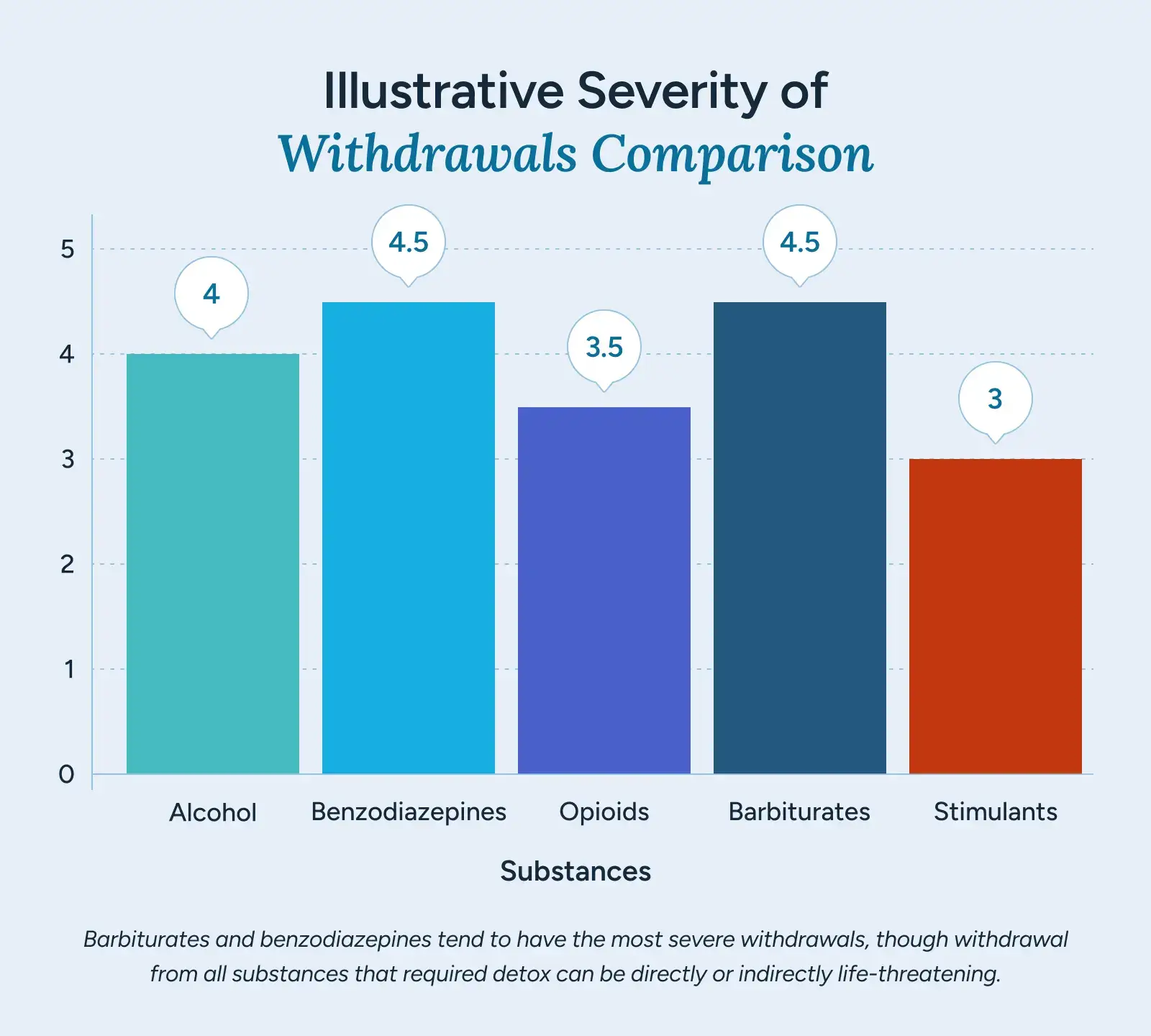
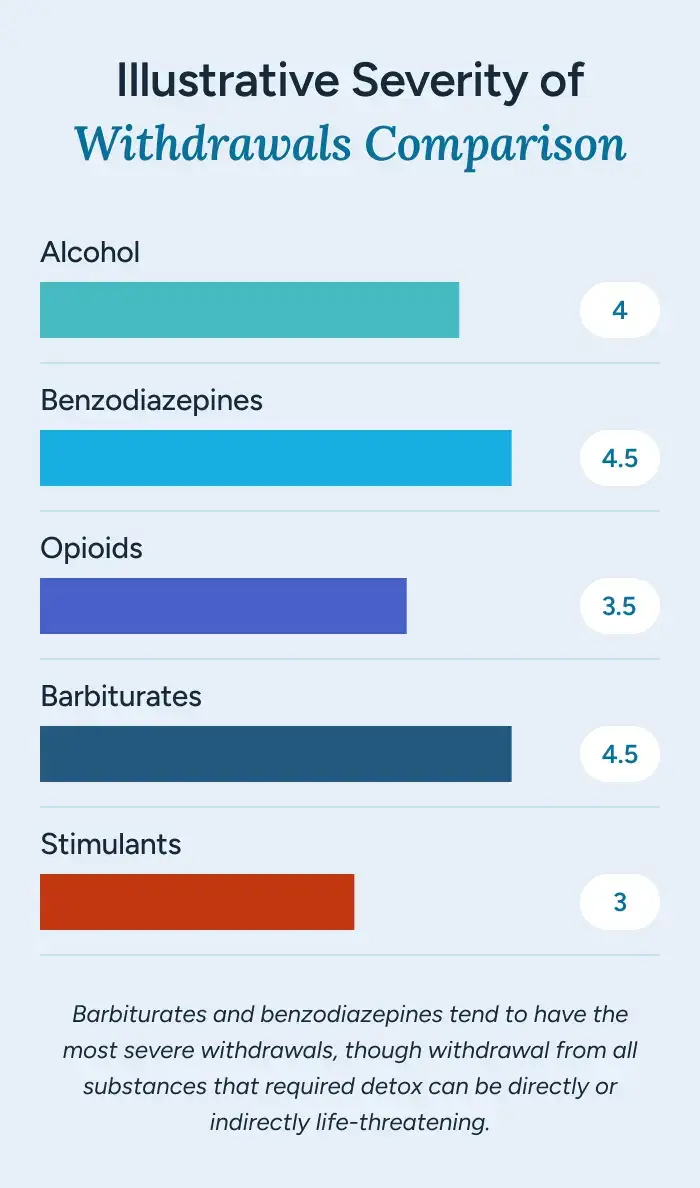
While most people struggling with drugs or alcohol could benefit from 24/7 support during the first week of sobriety, medical detox is not always required or covered by insurance.
The Top 5 Signs You Need Medical Detox
1. Physical Dependence
If you experience symptoms like vomiting, alcohol shakes or severe emotional instability a few hours after stopping drug use, medical detox can help by providing medications to ease discomfort.
2. Severe Withdrawal Symptoms
Serious symptoms like tremors, seizures or hallucinations are clear indicators that detox under medical care is essential to prevent life-threatening complications.
3. Frequent Relapses
Attempting to detox on your own greatly increases the risk of relapse, which can be fatal. Tolerance can decrease with even short periods of sobriety, making previous doses lethal. If you relapsed because of intense cravings or withdrawal symptoms, medical detox offers a safe, supportive environment.
4. Co-Occurring Medical or Mental Health Issues
Withdrawal is taxing on the body, especially the cardiovascular and respiratory systems. Patients with chronic medical conditions (e.g., heart disease or signs of liver disease from drinking) are at increased risk of serious or even fatal complications that require oversight by medical professionals.
Mental health issues like anxiety, depression or PTSD that worsen during withdrawal should be managed in supervised detox to avoid risks such as suicidal thoughts, severe mood swings or psychosis.
5. Mixing Substances
If you’re regularly using multiple substances (e.g., alcohol and opioids), the detox process is more complex and requires medical monitoring to safely manage interactions and withdrawal symptoms.
Skip to the detox criteria for: Alcohol | Opioids | Benzodiazepines | Barbiturates | Stimulants
A Simple Guide to Substances That May Require Medical Detox
If you experience withdrawal symptoms from alcohol, opioids, benzodiazepines, barbiturates or stimulants, detoxing without medical supervision can be dangerous — even life-threatening.
These substances dramatically alter brain and body chemistry. Medically-supervised detox minimizes the discomfort of withdrawal symptoms and prevents dangerous complications such as seizures or cardiac events.
Learn More: What happens in detox?
Alcohol Requires Medical Detox
Withdrawal Severity
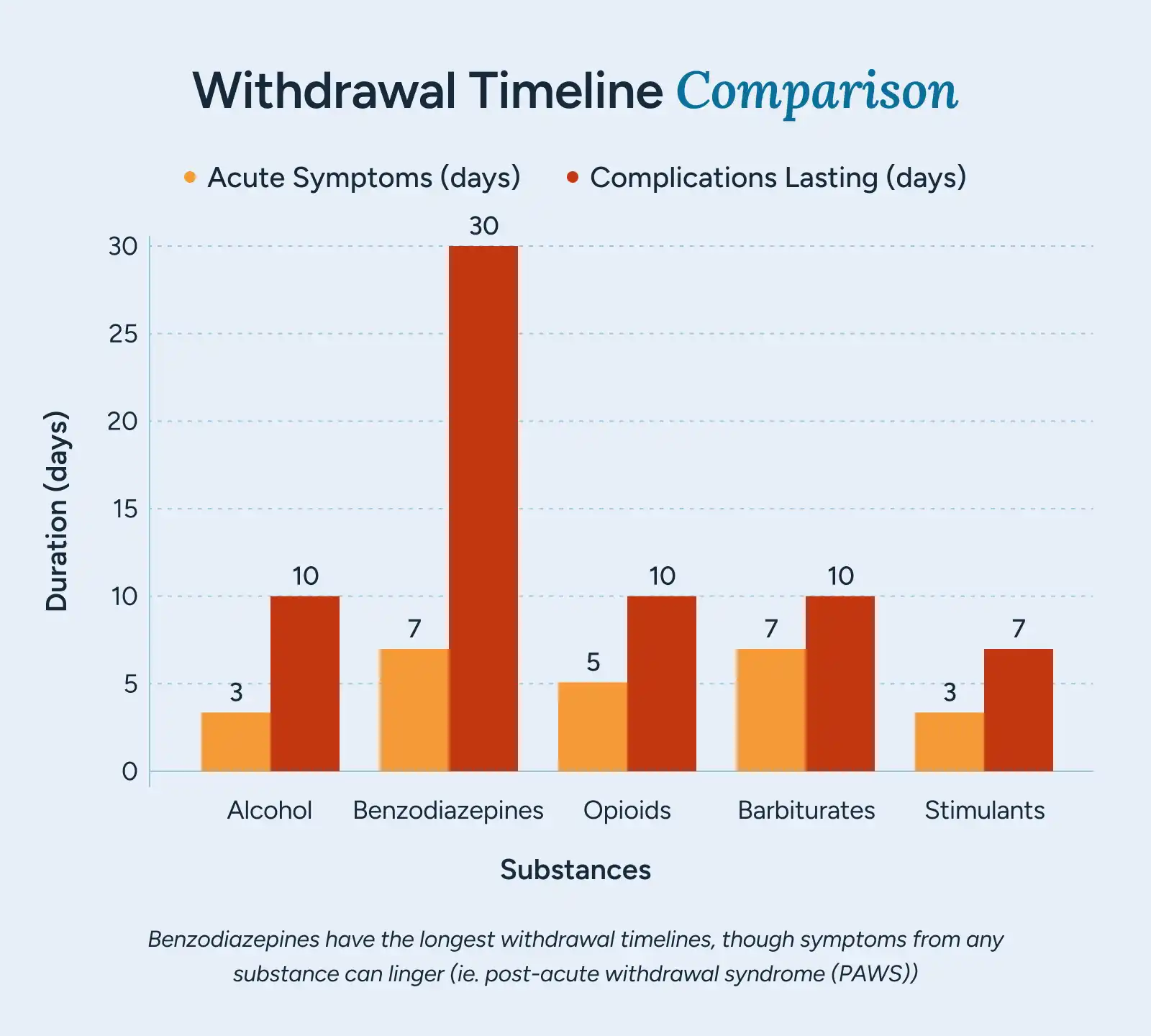
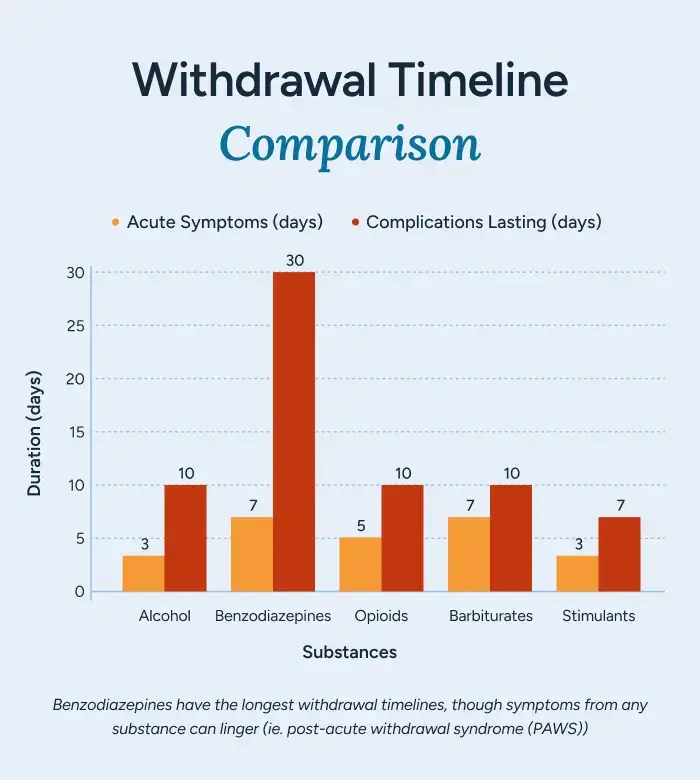
- Moderate to severe lasting 3-7 days
- Possible life-threatening complications lasting up to 10 days in extreme cases
When Inpatient Detox Is Required
Going to a detox facility or hospital for alcohol detox is critical if any of the following conditions apply:
- Long-term or heavy use, defined as:
Drinking 14+ drinks per week for men or 7+ for women over an extended period
Binge drinking 5+ drinks for men or 4+ drinks for women within two hours multiple times a week.
- History of seizures or delirium tremens (DTs).
- Co-occurring medical or mental health conditions or medication interactions.
- Unsuccessful outpatient detox attempts.
- Repeated withdrawal attempts (due to the “kindling effect,” where symptoms worsen with each detox attempt).
When Outpatient Detox Is An Option
Detoxing from alcohol while at home with the help of an on-call physician is possible if all conditions are met:
- Mild alcohol use without a history of seizures, DTs or medical complications
- A loved one that can monitor in a stable home environment
- Visiting a doctor daily or using telehealth services
Why Medical Detox Is Necessary
- To manage serious medical complications like seizures or delirium tremens (DTs), which can lead to heart failure or death if left untreated
- To check hydration and vitamin levels, especially vitamin B1 (thiamine) which can cause Wernicke-Korsakoff syndrome (WKS).
- To make withdrawal symptoms more manageable
- To prevent relapse during intense withdrawal symptoms
DTs have a mortality rate of up to 40% if left untreated 
Opioids Require Medical Detox
Withdrawal Severity
- Moderate to severe lasting 5-10 days
- Intense physical symptoms like dehydration, vomiting, muscle pain and restlessness
When Inpatient Detox Is Required
Detoxing from opioids in a detox or hospital setting is required for:
- Long-term or heavy use, defined as daily use for several months or longer.
- Use of Carfentanil (Drop Dead), Fentanyl (China White, Duragesic), Heroin (Smack), Oxymorphone (Stop Signs, Opana), Morphine (M, MS Contin), Oxycodone (Percs, OxyContin, Percocet), Hydromorphone (Dilaudid), U-47700 and Meperidine (Demerol).
- Co-occurring medical conditions or psychiatric symptoms such as depression, anxiety or cardiovascular complications.
- Failed outpatient detox or a history of relapse.
When Outpatient Detox Is An Option
Detoxing at home (ambulatory detoxification) is possible with:
- Mild to moderate use without co-occurring medical or psychiatric conditions.
- Less potent opioids like Buprenorphine (Suboxone), Codeine (Tylenol with Codeine), Tramadol (Ultram), Methadone, Hydrocodone (Vicodin, Norco) or Tapentadol (Nucynta).
- The use of buprenorphine (Suboxone) or methadone which requires regular medical check-ins and a taper of usually several months to stop.
Why Medical Detox Is Necessary
- To manage intense physical symptoms like severe dehydration, heart irregularities and pain
- To prevent relapse and fatal overdose due to reduced tolerance after even short periods of sobriety.


Benzodiazepines Require Medical Detox
Withdrawal Severity
- Moderate to severe lasting 7-10 days, though tapering can take weeks or months
- Life-threatening complications like seizures, psychosis or heart irregularities may persist for several weeks in extreme cases
When Inpatient Detox Is Required
Going to a detox facility or hospital for help with “benzo” withdrawals is required for:
- Long-term or heavy use, defined as daily or near-daily use for several months or longer.
- History of seizures, delirium or psychosis during withdrawal.
- Co-occurring medical conditions or significant psychiatric symptoms (e.g., severe anxiety or suicidal ideation).
- Use of Alprazolam (Xanax), Lorazepam (Ativan), Clonazepam (Klonopin), Diazepam (Valium), Temazepam (Restoril) or Chlordiazepoxide (Librium).
When Outpatient Detox Is An Option
Detoxing from benzodiazepines at home with the help of a physician is possible if all of the following apply:
- Mild use without a history of significant psychiatric symptoms.
- A stable home environment with a loved one to monitor the patient.
- A much more gradual tapering plan that can take months with regular check-ins with the healthcare provider.
Why Medical Detox Is Necessary
- To safely taper dosage and manage life-threatening complications like seizures, psychosis, heart irregularities or even death.
- To make withdrawal symptoms more manageable
- To prevent relapse.


Barbiturates Require Medical Detox
Withdrawal Severity
- Severe lasting 7-10 days
- Psychological withdrawal symptoms like intense cravings, depression or anxiety often persist for weeks after physical symptoms subside
When Inpatient Detox Is Required
Medical detox is required for barbiturates with:
- Long-term or heavy use, defined as daily or near-daily use over several months.
- Patients with a history of seizures, delirium or severe withdrawal symptoms.
- Co-occurring health conditions like respiratory issues or psychiatric complications.
- Especially with Phenobarbital (Luminal), Secobarbital (Seconal, Reds, Red Birds), Pentobarbital (Nembutal, Yellow Jackets) and Amobarbital (Amytal, Blue Heavens, Blue Birds).
When Outpatient Detox Is An Option
Detoxing from barbiturates at home under medical supervision is only possible for:
- Mild to moderate use of barbiturates like Butalbital (Fioricet, Fiorinal).
- No history of severe withdrawal.
- No co-occurring conditions.
- A stable home environment with daily medical monitoring to manage symptoms.
Why Medical Detox Is Necessary
- To safely manage life-threatening risks like sudden seizures, psychosis, severe confusion or agitation and respiratory failure / cardiovascular collapse.
- To make withdrawal symptoms more manageable
- To prevent relapse

Stimulants Require Medical Detox
Withdrawal Severity
- Moderate to severe lasting 3-7 days.
- Psychological symptoms like intense cravings, severe depression, anxiety or suicidal thoughts often persist beyond the physical withdrawal period
When Inpatient Detox Is Required
Going inpatient for stimulant use is only required for:
- Daily or heavy, long-term use of drugs like Methamphetamine (Crystal, Ice) or Cocaine (Blow, Crack).
- Co-occurring psychiatric conditions such as psychosis, severe depression or suicidal thoughts.
- Cardiovascular complications or severe behavioral issues.
When Outpatient Detox Is An Option
The withdrawal from stimulants can be managed at home with help from a medical provider if:
- Mild to moderate use without co-occurring medical or psychiatric conditions.
- A stable home environment with medical monitoring.
- Abuse of stimulants like Lisdexamfetamine (Vyvanse), Modafinil (Provigil), Armodafinil (Nuvigil), Amphetamine (Adderall), or Methylphenidate (Ritalin, Concerta).
Why Medical Detox Is Necessary
- To stabilize extreme mood fluctuations, prevent self-harm and address severe depression, psychosis or suicidal ideation.
- To manage cardiovascular risks
- To prevent relapse


Substances Not Typically Requiring Medical Detox
Medical detox is not necessary for drugs with no or mild withdrawal symptoms, though seeking an evaluation from a doctor or treatment center is always recommended.
Just because detox isn’t required doesn’t mean these substances are safe or non-addictive. These drugs can still cause significant harm to physical and mental health, damage relationships or lead to other life disruptions if use continues unchecked.
For example, drugs like hallucinogens or inhalants may not cause withdrawal symptoms but still lead to risky behavior, long-term mental health issues and cognitive damage. Even cannabis can cause cravings, anxiety and mood disturbances that lead to negative consequences with finances, relationships or mental health.
- Marijuana (Cannabis)
- LSD (Acid)
- Psilocybin (Magic Mushrooms)
- MDMA (Ecstasy, Molly)
- Ketamine (Special K)
- Salvia
- Kratom
- Mescaline (Peyote)
- Inhalants (Nitrous Oxide, Whippets)
- Spice (Synthetic Marijuana)
- DXM (Cough Syrup)
- Kava
- Most medications if taken as prescribed (Gabapentin, Adderall, Ritalin)
If a substance is causing harm or interfering with your ability to function, it’s crucial to seek professional support.
Therapy or outpatient addiction treatment can help you understand and address the root causes of addiction and regain control of your life without requiring any inpatient stay.
Finding a Detox
The Haven Detox Group offers medical detox and substance use treatment at locations across the United States. Learn more about our treatment options or find a center that fits your needs.
Preventing Relapse Post-Detox
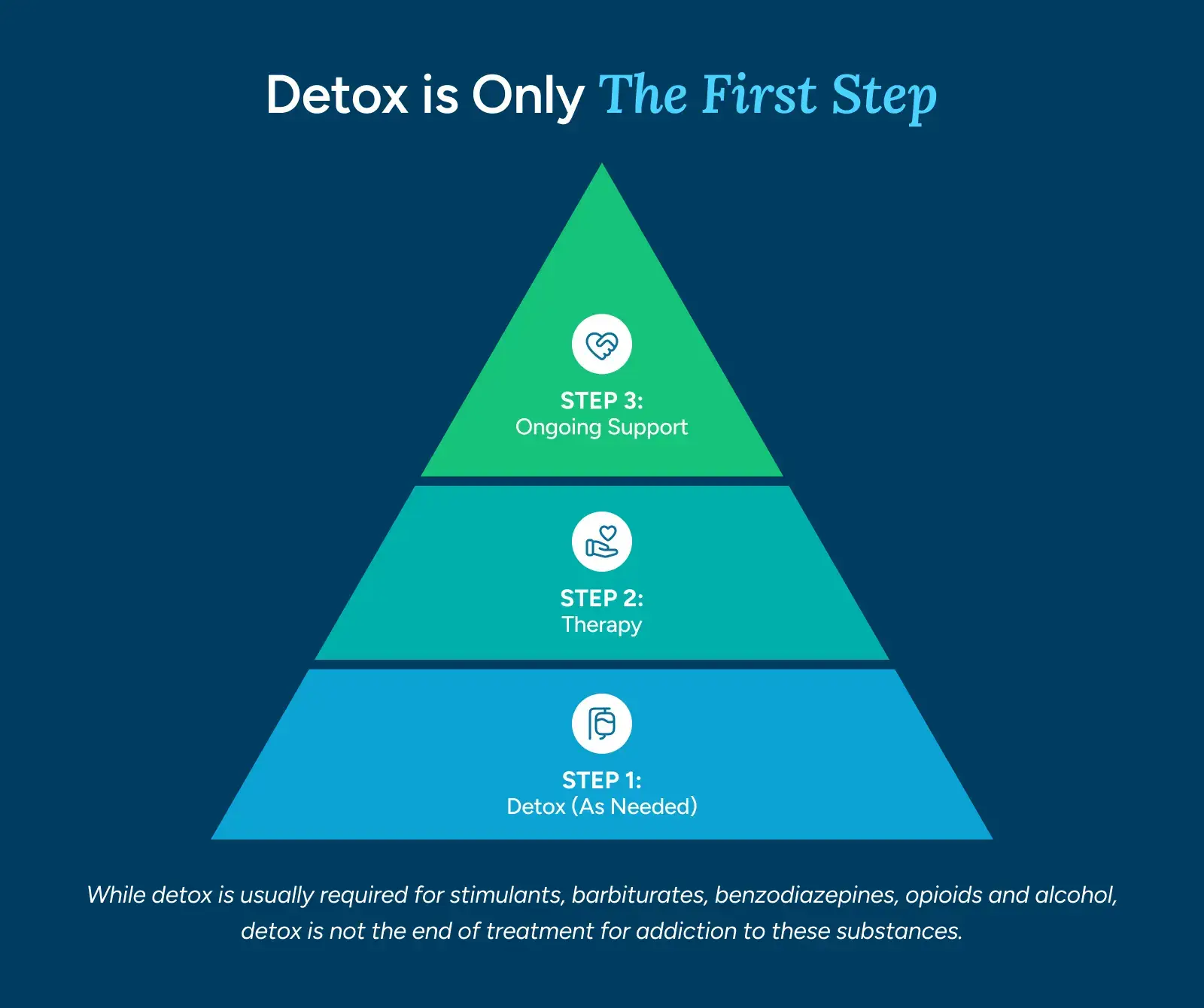
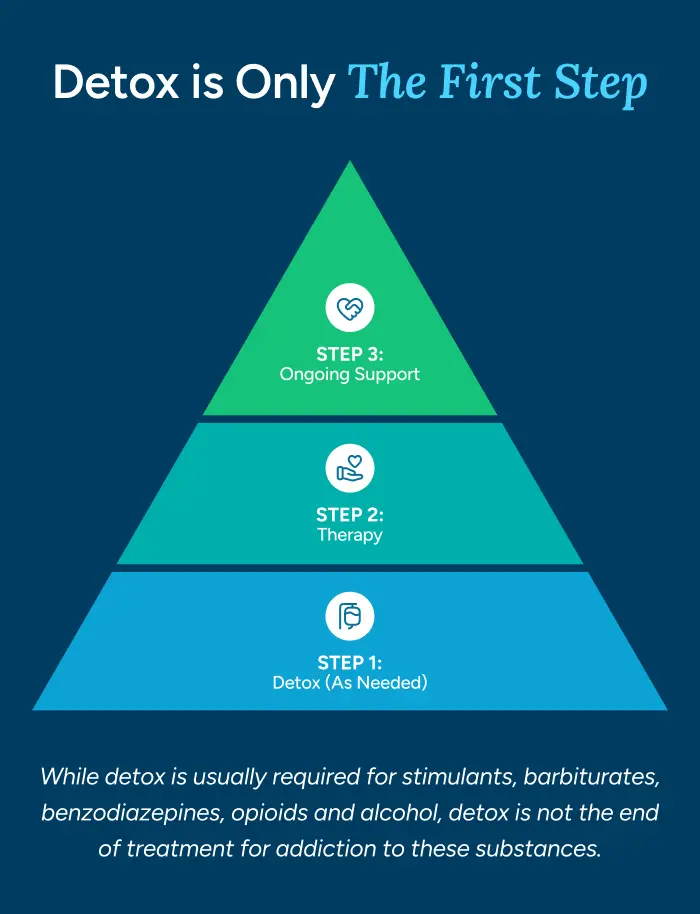
Medical detox safely rids the body of the substances, but it does not address the underlying psychological or emotional causes of substance use.
After completing detox, you should continue with therapy-centered treatment to address the underlying causes of addiction and develop the tools needed to maintain long-term sobriety.
Learn more about substance use treatment options at The Haven Detox Group.
Sources
- Gupta R. “Prospect & Management for Delirium tremens” – A Review. Journal of Emerging Technologies and Innovative Research. Published August 2021. Accessed December 23, 2024. Delirium Tremens Review
- National Institute on Alcohol Abuse and Alcoholism (NIAAA). Alcohol Use Disorder: From Risk to Diagnosis to Recovery. Last revised May 2025. Alcohol Use Disorder and Withdrawal Management
- American Society of Addiction Medicine (ASAM). The ASAM Clinical Practice Guideline on Alcohol Withdrawal Management. Published 2020. Alcohol Withdrawal Management Guideline
- Substance Abuse and Mental Health Services Administration (SAMHSA). TIP 63: Medications for Opioid Use Disorder. Last updated October 2024. Medications for Opioid Use Disorder
- National Institute on Drug Abuse (NIDA). Prescription Opioids. Updated June 2021. Accessed September 14, 2024. Prescription Drug Misuse


 100% Confidential